

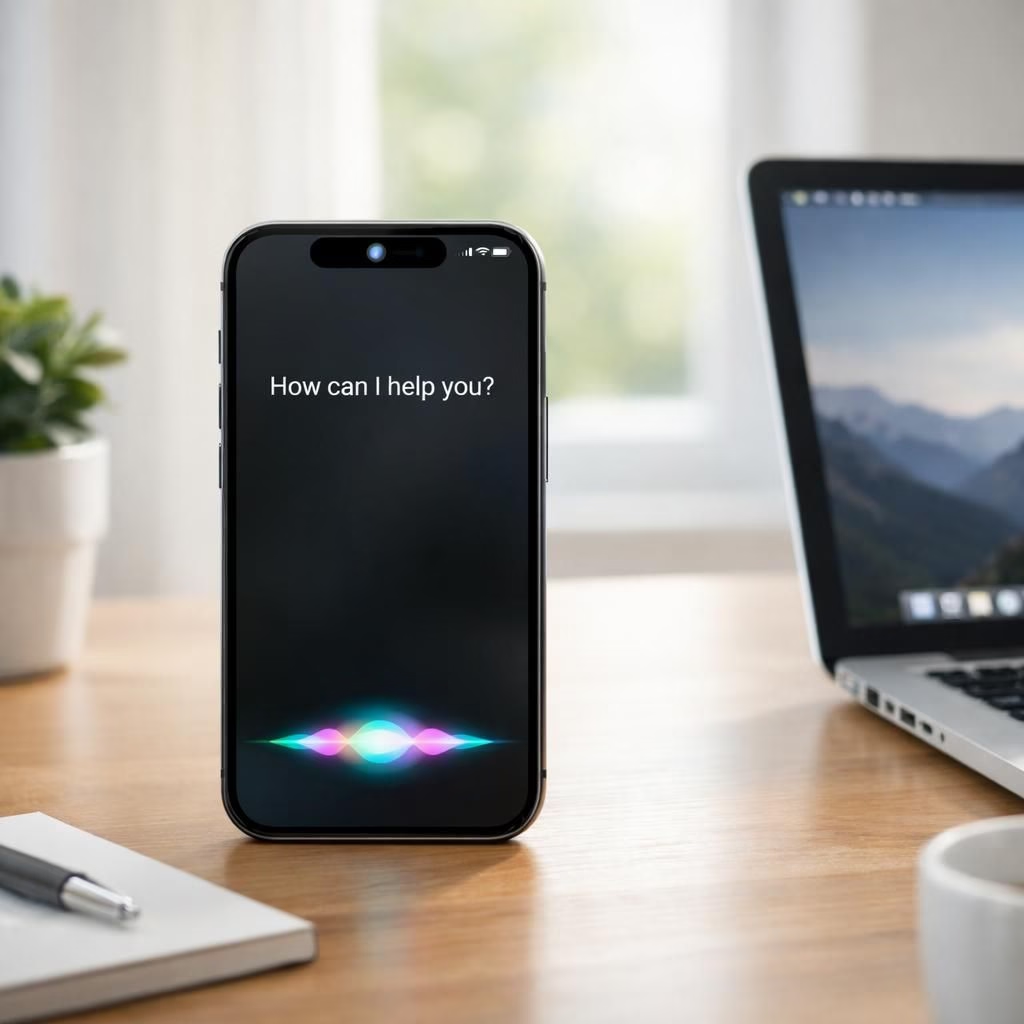
Welcome to WWDC 2026’s friendlier side, where Apple trades mystery for helpfulness and a little mischief. The keynote leans hard into artificial intelligence, and the stars of the show are Siri AI and iOS 27. If you like your tech with a wink and a workflow that actually saves you time, you’re in the right place. For search engines and readers alike, the two big keywords are Siri AI and iOS 27.
Siri AI Gets a Long-Awaited Upgrade
At the center of the stage sits Siri AI, a complete rebuild of Apple’s voice assistant. This isn’t a rumor or a beta test; it’s a practical upgrade with a conversational, context-aware personality. Siri AI can read on-screen content and patiently sift through messages, mails, and photos to answer questions. It remembers conversations, and the new Siri app keeps history synced across iPhone, iPad, Mac, Apple Watch, and even the Dynamic Island for quick access. The goal is not just to be smart, but to feel helpful in everyday tasks.
Apple demonstrates Siri AI as a real assistant rather than a novelty. Instead of vague prompts, you get context-aware responses and follow-ups. The integration across devices means you ask something on your iPhone and get the same context on your Mac, with your watch quietly participating in the background. It’s not a flawless future, but it’s a readable one with practical value. The innovation isn’t only about voice; it’s about a smoother on-screen experience, because Siri AI can read and reference on-screen content to inform its answers.
There is also a new Siri app with a conversation history that travels with you. If you’re tired of repeating yourself across devices, this is the feature you’ll enjoy. The updates will roll out to iPhone 16 models or later, iPhone 15 Pro and Pro Max, and compatible iPads and Macs. It’s a broad rollout that signals Apple intends Siri AI to be more than a novelty—more like a reliable sidekick who remembers where you left your notes and what you were planning to do next.
As the keynote progressed, the team highlighted how Siri AI behaves with context. It can answer questions that reference what you’re actively viewing or reading. Siri AI also syncs across devices, so you don’t lose track of your conversations when you switch from iPhone to Mac. This is not a distant dream; it’s a feature set designed to be immediately useful in daily life, with a touch of personality that makes interactions feel less robotic and more human.
iOS 27: Glass UI Refines Every Tap
Beyond Siri AI, iOS 27 arrives with refinements to the Liquid Glass design. Apple offers a user-adjustable transparency slider so you can tailor how much glass you want to see, or switch to a more translucent mode for readability in bright light. It’s a nice reminder that interface aesthetics should serve clarity, not just vibes. The update also brings a richer Maps Flyover, with crisper imagery that helps you imagine your route before you get there.
Apple ships iOS 27 for iPhone 11 and newer, signaling a mid-generation refresh that feels significant without forcing upgrades on users who just want stability. The synergy with Siri AI means you can ask questions about what you see on maps or in messages and get contextual answers that reference on-screen content. The pairing of iOS 27 and the new UI is designed to reduce friction and increase delight in daily use. The approach is practical: more control over transparency, better visibility, and features that actually support real-world tasks rather than novelty experiments.
To balance progress with practicality, Apple keeps the system familiar for most users while nudging developers toward smarter integrations. The updated UI is not a radical departure; it’s a refined, more legible version of the glass aesthetic, with accessibility improvements baked in. If you’ve ever squinted at a translucent overlay in bright sunlight, iOS 27’s slider is a welcome tweak that respects your time and attention. In short, iOS 27 respects your eyes as much as your curiosity, and that’s precisely the kind of UX move that earns a nod from long-time fans of the platform.
macOS Golden Gate and the Apple Silicon Era
macOS Golden Gate lands with its own small parade of upgrades. It features Siri AI integrated into Spotlight and can reference on-screen content to respond to queries. It also brings UI refinements that focus on consistency and ease of use. Apple ends some support for Intel-powered Macs as part of a broader shift toward Apple Silicon, a move that aligns with the broader strategy of unified hardware and software experiences. It’s a decision that matters more to developers and power users than to casual readers, but the impact ripples across the ecosystem.
iPadOS 27 mirrors the iPhone story with iPad-specific improvements, while watchOS 27 expands AI-powered cues, with follow-up questions and revamped Smart Stack. Live Translation in Messages helps cross-lingual chats, and a more personalized coaching approach under Workout Buddy adds a little extra motivation to workouts. This is not just about added features; it’s about cohesive cross-device workflows and a smoother sense of continuity. The tech narrative feels practical, not gimmicky, which is exactly the kind of optimism one hopes to find in a mid-year update cycle.
tvOS 27, visionOS 27, and Developer Tools
tvOS 27 promises faster app launches and more responsive system animations, a small but satisfying uplift for media consumption and gaming. For Apple Vision Pro, visionOS 27 adds updates that enhance the mixed-reality experience without turning it into a complicated tech demo. Apple kept details brief during the keynote, but the direction is clear: AI helps you see better, faster, and more intuitively. The emphasis remains on practical enhancement rather than a parade of flashy demos.
On the developer side, Xcode 27 debuts with built-in coding agents from Anthropic, Google, and OpenAI. Developers can work with models like Claude and Gemini alongside Apple’s own solution. That’s a practical nod to a more collaborative developer ecosystem where different AI tools can play to their strengths rather than compete for your attention. All announced software updates enter beta today, with public betas in the coming weeks and a full rollout planned for September. The cadence is refreshingly predictable for a year that promised more intelligence in your devices.
For readers who care about the big picture: Apple is not abandoning its hardware roots in favor of a cloud-only future. The company is weaving AI into the core of its software layers, aiming for a smoother, more helpful user experience across iPhone, iPad, Mac, Apple Watch, Apple TV, Vision Pro, and beyond. The emphasis on context, continuity, and usability suggests that the new era is less about flashy demos and more about everyday convenience. And yes, the tech presentations were very much aware of how much time we spend asking questions and getting answers in real-world situations.
Original article: Apple WWDC 2026 coverage. A big thank you to the original source material for guiding this recap and for the detailed notes that helped shape this post.
We’d love to hear how you’re planning to use Siri AI and iOS 27 in your daily routine. Share your thoughts in the comments below and tell us what features you’re most excited about. If you have a favorite tip or a caveat you’ve already discovered, drop it in the discussion so others can benefit from your experience.
Practical tips to try this week
- Ask Siri AI to summarize your latest messages or emails across devices so you’re ready for meetings faster.
- Use the iOS 27 transparency slider to improve readability in bright light while navigating maps or messages.
- Experiment with cross-device queries: ask Siri AI to reference on-screen content during a note or draft to see how it stitches context together.
FAQ: Siri AI and iOS 27 explained
- Which devices support Siri AI?
- The update targets iPhone 16 models or later, iPhone 15 Pro and Pro Max, and compatible iPads and Macs.
- When is iOS 27 available?
- iOS 27 is designed to run on iPhone 11 and newer models, with a broad rollout in the season ahead.
- Will Intel Macs continue to be supported?
- No—macOS Golden Gate marks a shift toward Apple Silicon, with continued focus on unified experiences across devices.
- What about developers?
- Xcode 27 brings built‑in coding agents from Anthropic, Google, and OpenAI, enabling work with Claude, Gemini, and Apple’s own models.