

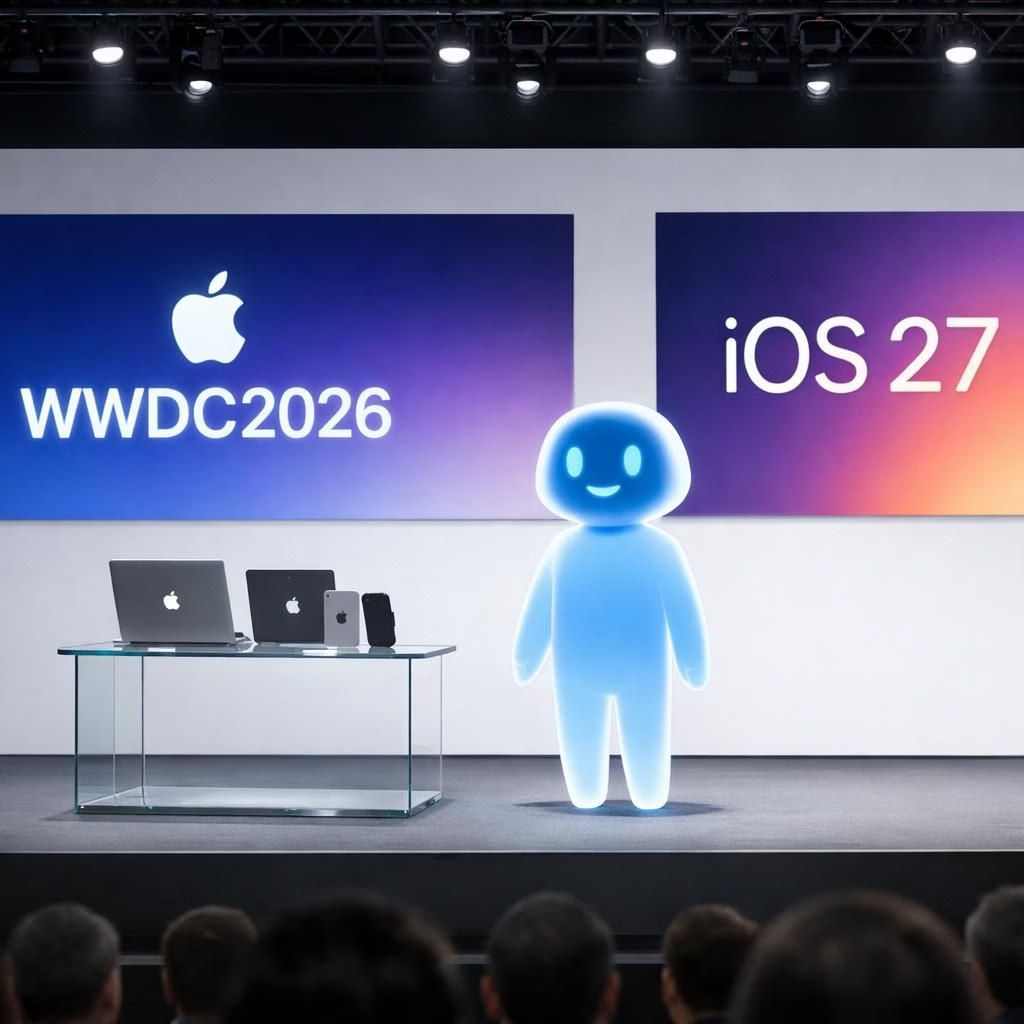
In the WWDC2026 keynote, Apple rolled out WWDC2026 with a wink, polished the look of Siri, and signaled a friendlier, more practical approach to AI that feels less like a lab and more like a helpful assistant you actually want to invite to coffee. The crowd heard about deeper partnerships with Google and Nvidia to push a next‑gen AI model, and iOS27 lives on devices and in the cloud without becoming a data hoarder. The overall vibe was optimistic without bragging, practical without being dull, and fueled by a sense that your phone can behave like a patient, useful teammate. This WWDC2026 moment sets a refreshed Apple playbook—one that blends advanced tech with everyday usefulness.
WWDC2026 Highlights: AI partnerships, iOS27 maturation, and a polished Siri
The keynote framed a multi‑year strategy: a robust AI foundation, smarter personal assistants, and a careful hand on privacy knobs. Apple announced a collaborative AI effort with Google and Nvidia, designed to train a more capable model while keeping on‑device responsiveness and user control front and center. This team approach isn’t about one big cloud brain; it’s a distributed, performance‑minded strategy that lets devices learn from you without leaking your secrets. The emphasis on practical AI means you’ll see features that anticipate needs—like better context for reminders, Safari that understands workflows across apps, and Siri that can handle routine tasks with fewer prompts. The result: smarter predictions, fewer taps, and less friction, all packaged in the familiar, friendly Apple aesthetic. WWDC2026 signals a real shift toward usable AI that respects user boundaries while still delivering impressive results. WWDC2026 didn’t just announce tech—it narrated a more confident future for iOS27 and the Apple ecosystem.
iOS27 Deep Dive at WWDC2026 Era: Foundation Models and daily UX
On the software side, Apple teased the third generation of its foundation models, hinting at deeper integration across apps, services, and on‑device experiences. The Foundation Models update is pitched as a backbone for smarter search, more natural language understanding, and better multimodal interactions, all while keeping latency low and privacy intact. The messaging is pragmatic: you get better results with less data shared externally, and developers gain a coherent framework to build richer features without reinventing the wheel for every app. The day’s demos showed on‑device inference meeting cloud support, a balance that can reduce round‑trip delays and still offer powerful capabilities when a network isn’t perfect. The bottom line is clear: iOS27 isn’t just about new icons or modes; it’s about a more capable, more reliable everyday experience fueled by thoughtful AI engineering. iOS27 is framed as a platform upgrade that users feel in their daily routines, not just a headline in a newsletter. The WWDC2026 moment here signals that the integration between iOS27 and the underlying foundation is becoming the standard rather than an optional experiment.
Apple also highlighted enhancements to Siri that feel less like a script and more like a trained assistant. The assistant is tasked with predicting needs, offering proactive suggestions, and staying out of the way when you don’t want help. The tone was light—Siri is still friendly, a bit witty, and now more capable of following through on multi‑step tasks without constant handholding. Developers will notice an easier path to ship features that rely on natural language understanding, while everyday users will appreciate fewer taps for common actions and more reliable results. The emphasis on on‑device stability and privacy‑preserving design means you can expect smoother interactions even when network quality is unpredictable. The combination of foundation models, smarter Siri, and a refined iOS27 UX points to a future where your phone is more intuitive without feeling invasive.
Foundations, privacy, and cross‑vendor synergy
Beyond features, the presentation leaned into architecture and governance. The third generation of Apple’s foundation models is positioned to serve as a shared core across apps and services, with on‑device capabilities that reduce the need for constant cloud calls. That’s good for speed, battery life, and privacy. The collaboration with Google and Nvidia underscores a broader industry shift toward more capable AI that still respects platform boundaries and user consent. This is not a race to push the most raw neural power to the cloud; it’s a careful, collaborative effort to deliver real value while keeping users in the driver’s seat when it comes to personal data. The discussions touched on safety, reliability, and practical deployment notes, leaving developers with a clear pathway to harness the upgrades without compromising user trust.
Regulatory notes and practical takeaways
Industry watchers picked up on the regulatory dimension as well. According to Yahoo Finance and general coverage, the EU Commission has raised questions about AI compliance, a reminder that technology moves fastest when it navigates legitimate rules with transparency. Apple responded with a commitment to clarity and controls, signaling that the company intends to meet regulatory expectations while continuing to push consumer benefits. This isn’t a story of hurdles; it’s a reminder that high ambition in AI apps must walk hand in hand with governance. The takeaway for users is simple: as iOS27 sharpens, you’re getting smarter tools that are engineered with privacy and accountability in mind. For developers and partners, it’s a nudge to design with compliance in mind from the start, not as an afterthought once a feature ships.
From a product‑experience perspective, WWDC2026 and iOS27 together promise more consistent behavior across devices, better cross‑app workflows, and a steadier rhythm of updates that emphasize usability alongside power. The AI model collaboration, the third‑gen foundation models, and the focus on privacy‑centric design are all signals that the era of smart devices won’t come at the expense of your control over data. Apple’s messaging remains upbeat and practical: upgrade is not the enemy of simplicity; it’s the engine that powers a more helpful, connected daily life.
For developers, the new frameworks imply a more coherent toolset, clearer interoperability, and opportunities to deliver features that feel both familiar and delightfully novel. For users, the practical upshot is faster access to smarter suggestions, more capable voice interactions, and a sense that technology is quietly doing more of the heavy lifting in the background—without getting in the way. And for everyone following the coverage, including Mashable, CNBC, Engadget, Apple Machine Learning Research, and Yahoo Finance, the takeaway is that WWDC2026 was less about a single blockbuster reveal and more about laying a durable, user‑focused foundation for iOS27 and beyond.
Original coverage and thanks to the editorial teams behind Mashable, CNBC, Engadget, Apple Machine Learning Research, and Yahoo Finance for the material that informed this piece. If you enjoyed the refresh, please consider sharing your thoughts below and telling us how you plan to use iOS27 and the new AI features in your daily routine. Your perspective helps shape the ongoing conversation about Apple’s evolving AI and platform strategy.
Credits and attribution: Mashable for the headline and initial coverage, with ongoing insights from CNBC, Engadget, Apple Machine Learning Research, and Yahoo Finance. Thank you for the original material that informed this synthesis. Mashable provides the starting point for this recap.
External sources
Practical takeaways for readers
- Enable on‑device features in iOS 27 settings to protect privacy.
- Explore the upgraded Siri and smarter suggestions to save time.
- Review app permissions and minimize data sharing where possible.