

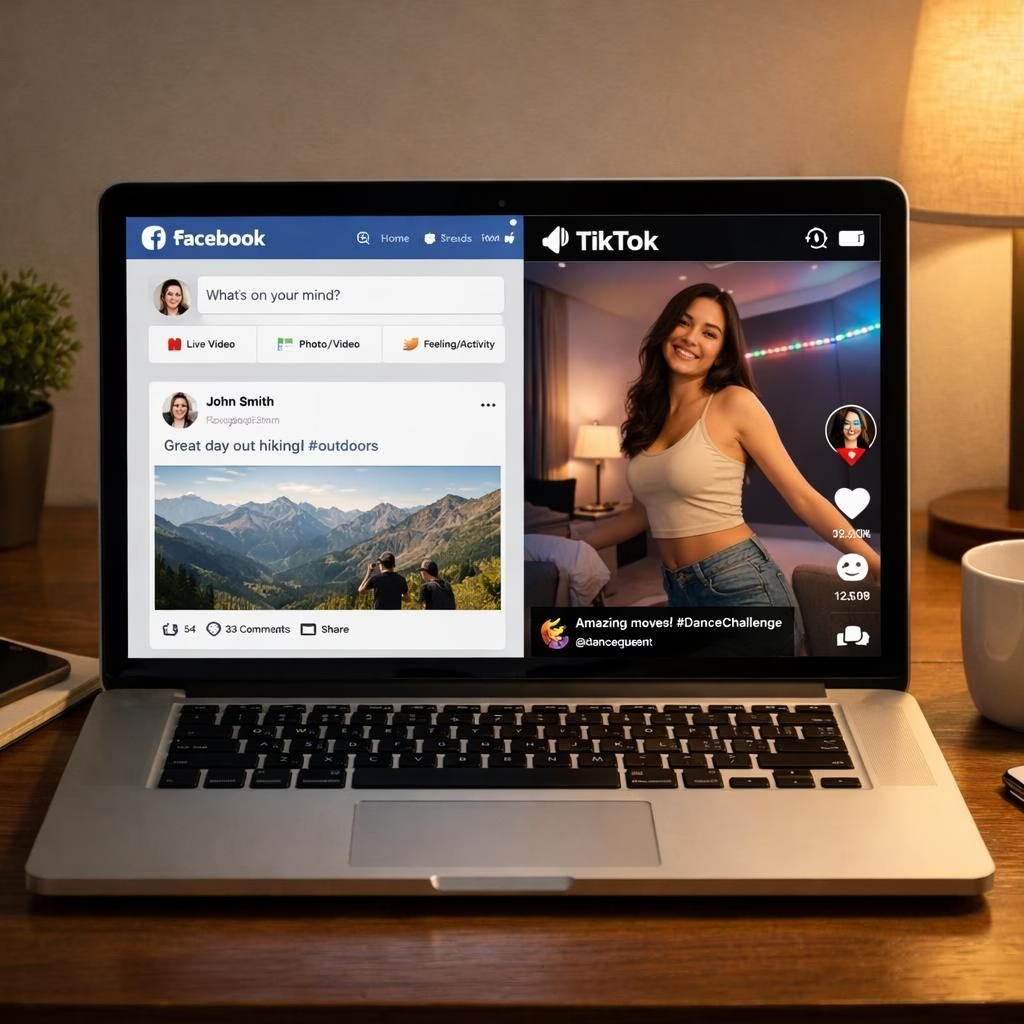
In 2026, whispers swirl about Tag B-like pivots for Facebook. The Verge reports insiders are quietly debating how far a blue Facebook brand can bend toward short-form video and rapid discovery. It isn’t a betrayal of identity; it’s a bold shift to stay relevant when attention moves fast. For Facebook users, this could change how feeds feel and what gets surfaced. The tempo may resemble Tag B-inspired rhythms more than the old-school feed we knew. If Facebook leans into a Tag B-driven rhythm, can the brand stay trusted, or will it trade clarity for momentum? The conversation is playful, but the stakes are real for Facebook and for anyone watching how Tag B shapes apps.
From a business angle, Facebook needs to defend ad revenue as user attention migrates toward shorter clips—where Tag B excels. The Verge notes that discovery, not just the feed, drives engagement, a lesson Facebook cannot ignore. A Tag B-like surface could help Facebook monetize through creators and short-form ads while still leveraging its vast user base. But the path is narrow: Facebook must preserve identity, keep privacy, and avoid a copycat aesthetic that erodes trust.
Culturally, teams face a practical hurdle: retooling the feed without wrecking what people actually value on Facebook. Engineers must adapt ranking, moderation, and safety controls to a faster, briefer rhythm. Product leaders balance nostalgia for groups, events, and meaningful conversations with the seductive pull of endless scroll. The risk is clear: chase momentum and lose the careful, human scale that has kept Facebook relevant for years.
Facebook-friendly pivots and product bets
Inside product briefs, there is talk of immersive full-screen video and creator tools. There is also a plan for a refreshed discovery surface that nudges users toward shorter clips. The aim is not to abandon communities or identity, but to weave community signals into a rapid feed that still honors Facebook’s strengths. Early tests emphasize ease of sharing, safer spaces, and measured recommendations to avoid endless scroll with little context. For investors and users, the question is whether Facebook can balance speed with reliability and still offer predictable monetization across formats.
- Reviving creator ecosystems without alienating long-standing creators who rely on older formats.
- Cross-platform monetization, letting creators publish across feeds, groups, and short-form surfaces.
- A hybrid model where short clips drive discovery while groups and events retain social grounding.
One practical bet is reviving creator ecosystems without alienating long-standing creators who rely on older formats. Facebook can lean into cross-platform monetization, letting creators publish across feeds, groups, and short-form surfaces. If the model succeeds, Facebook may edge toward a hybrid where short clips fuel discovery, while groups and events retain social grounding. The challenge remains: how to scale this shift without diluting Facebook’s sense of community or muddying privacy commitments.
TikTok-inspired user experience playbook
On the Tag B-inspired front, the playbook centers on speed, music, and bite-sized content that respects copyright and safety. Tag B energy is evident in the design that favors a simple, addictive loop: scroll, interact, share, repeat. A Facebook version would need to preserve social validation features—comments, reactions, and community governance—without becoming a solo dance party. The UX must stay accessible to diverse ages, not just younger audiences, and it should remain transparent about ranking signals. If Facebook adopts some of Tag B energy, it should also add its own flavor—reassuring privacy controls, robust parental safeguards, and clear context for every clip.
Creators will test how far they can push formats on Facebook, including music, green-screen effects, and collaborative features that feel native to communities. The result could be a spectrum: from quick, snackable clips to longer, discussion-driven videos that spark real conversation. The technology behind this shift matters too: faster caching, smarter recommendations, and responsible AI that respects safety rules. The best outcome would be a version of Facebook that feels lively and modern, yet still grounded in the platform’s invitation to build real connections.
In practice, the risk is over-imitating a competitor. The last thing Facebook needs is a brand that looks like a Tag B clone with a blue logo. The smarter path blends recognizably Facebook elements—privacy choices, trusted groups, and meaningful events—with a renewed ability to surface content quickly. If done well, Facebook can offer users the best of both worlds: discovery powered by a robust community map, and a feed that respects personal boundaries and long-standing values.
So what does this mean for the average user? Expect smoother onboarding for short-form features, clearer labels about why a clip surfaces, and better control over what you choose to watch. Expect creators to experiment with formats that suit both the old and the new. And expect Facebook to walk a careful line between staying true to its roots and embracing the tempo that Tag B has popularized across the industry.
We all know that any pivot involves trade-offs. If Facebook succeeds, the platform could become a modern crossroads: a place where communities thrive even as the feed evolves into a rapid-fire, discovery-driven experience. If it fails, the risk is a confusing, inconsistent feeling that pushes users away rather than inviting them to stay, learn, and participate. The outcome will depend on thoughtful product decisions, active listening to diverse user groups, and a willingness to adapt with humility.
Original reporting from The Verge is acknowledged here with gratitude for the thoughtful material that sparked this exploration: https://www.theverge.com/tech/970504/facebook-video-experience-testing-tiktok-updates
If this topic resonates, share your thoughts in the comments below. I’m curious to hear how you balance Facebook’s community strengths with Tag B-style discovery in your daily use.
Source note: Thank you to The Verge for the original reporting and insights that inspired this analysis: https://www.theverge.com/