

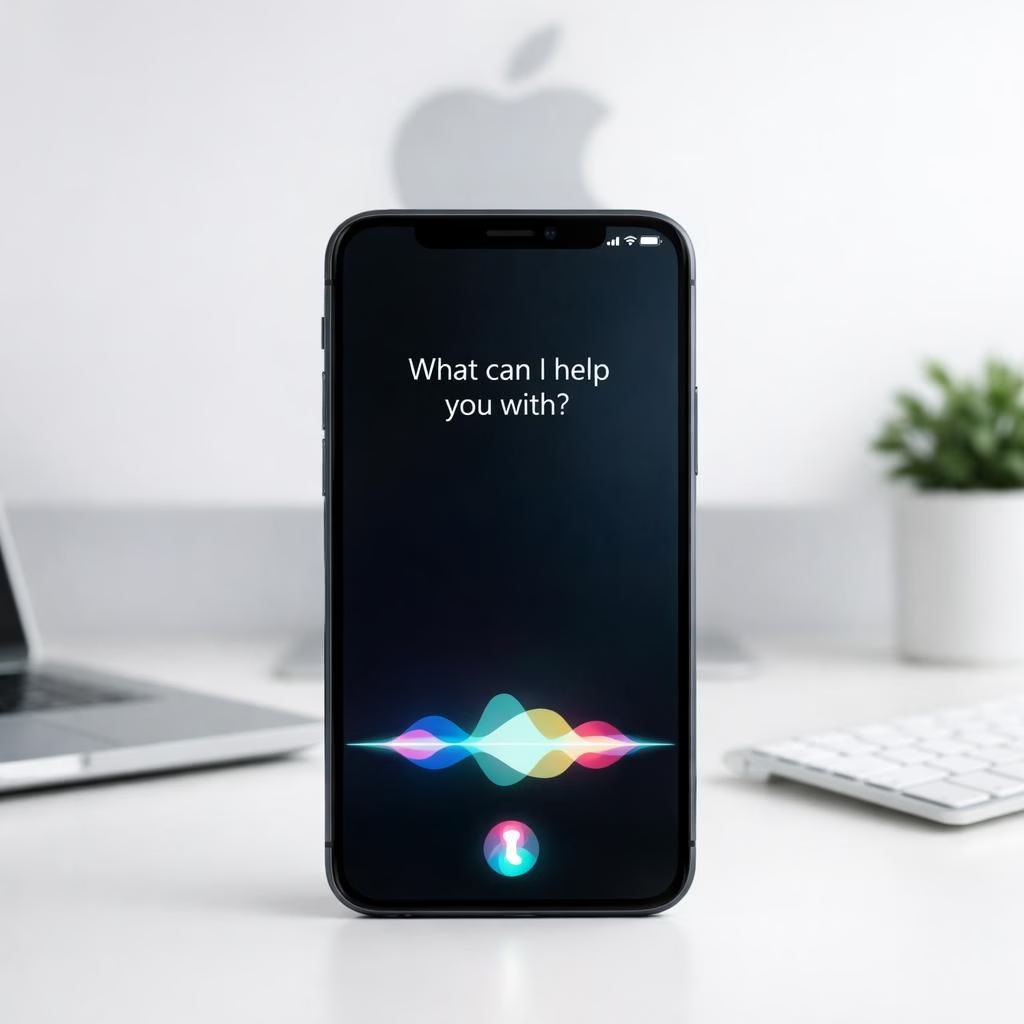
Welcome to a breezy, not-quite-nerdy look at WWDC 2026, where Siri AI arrived with a wink and Apple Intelligence pledged to tidy the backstage. The keynote theater buzzed with talk of smarter assistants, on-device learning, and a plan to keep your data safer. It’s easy to roll your eyes at tech theater, but the underlying shift is real: better interactions, stronger privacy, and tools that actually feel useful in daily life. The chatter may be glossy, yet the core promise remains: more capable AI that respects your time and your device’s energy budget.
Siri AI Gets a Spark at WWDC 2026
The big tune-up for Siri AI centers on on-device inference, bigger context windows, and more natural conversations. Apple pitched a version of Siri AI that understands you better without needing to pull every detail through the cloud. The improvement isn’t just about snappy responses; it’s about reducing friction. You say, “Remind me about the meeting at 3 PM,” and Siri AI sorts the context, fetches the right thread, and sets a reminder with minimal taps. It’s the kind of upgrade that feels invisible until it saves you time in the middle of a busy day.
Behind the curtain, Apple talked up privacy-forward design. The idea is to let Apple Intelligence reason locally when possible, and only peek at your data when absolutely necessary. The result is smarter interactions that don’t drag your battery life down or demand a private detective’s amount of data access. Developers get a clearer path to integrate these capabilities into apps without turning your phone into a data factory. In short: smarter talk, safer data, and fewer awkward misunderstandings.
From a product perspective, this Siri AI refresh isn’t just about voice. It’s about a more predictive assistant that can anticipate needs with minimal prompts. If you often check a calendar while walking your dog, Siri AI can surface the right reminders, add events, or suggest routes without turning your commute into a data-extraction exercise. The practical upshot is less friction and more flow in daily tasks, which is exactly the sort of improvement people notice, even if they don’t shout about it on social media.
Apple Intelligence Expands the Toolkit
Apple Intelligence is the broader umbrella under which these upgrades live. The third generation of Apple’s Foundation Models is positioned to run efficiently on iPhones and Macs, not just in the cloud. Apple ML Research described a path toward models that can be customized for apps without shipping raw data to distant servers. This quiet backbone makes features feel faster, safer, and more reliable. Think enhanced photo and video experiences, smarter search results, and smarter summaries across native apps, all while keeping user data closer to home.
iOS 27 serves as the natural home for this work, weaving the new Foundation Models into everyday tasks. Expect more context-aware suggestions, stronger privacy controls, and energy-conscious inference that won’t burn through battery life. The developer angle is equally important: better tools, clearer documentation, and predictable performance so apps can rely on Apple Intelligence to do the heavy lifting without turning the phone into a heat source. In practice, this translates to smarter maps with fewer stray routes, more context-aware messages that don’t feel intrusive, and a more cohesive experience across devices.
Security and privacy remain central to Apple’s narrative. The idea is to provide powerful AI capabilities without sacrificing control. Users can opt into richer experiences while deciding exactly what gets learned, stored, or summarized. The result is a balance between convenience and consent, a balance that matters as AI features touch more corners of your digital life. The year 2026 becomes less about flashy demos and more about durable improvements that work when you need them, not just when the spotlight is on.
For developers, the message is clear: there are safer, more scalable ways to integrate advanced AI into apps. The Foundation Models are designed to be modular and privacy-preserving, which lowers the barrier to experimentation while keeping user trust intact. In the end, Apple Intelligence aims to offer a toolkit that makes apps smarter and interactions more human—without the usual caveats about data leakage or opaque processing.
What This Means for Everyday Users
- Smarter voice interactions that understand context without shouting for attention.
- More helpful, proactive suggestions that actually feel useful rather than pushy.
- Better on-device processing that preserves privacy while delivering speed.
- Consistent experiences across iPhone, iPad, and Mac thanks to a shared intelligence backbone.
- Clearer privacy controls that let you govern what gets learned and stored.
The tone of the WWDC 2026 coverage from outlets such as PCMag, The Economist, WIRED, and Axios underscores a common thread: Apple’s effort to combine practical AI capabilities with a strong privacy stance. The shift isn’t about chasing the next viral feature; it’s about building dependable, secure, and useful AI that fits into real life. That distinction matters when you’re deciding whether to enable a new AI-powered feature or keep it off until you’ve read the fine print—and yes, the fine print might be long, but the payoff can be meaningful.
Security Tips in 2026 are increasingly about thoughtful design rather than reactive patches. Apple’s approach appears to lean toward transparency and control, giving users more options to customize how AI behaves and what it learns. If you’re curious about how these technologies will affect your daily routine—whether you’re a power user, a casual user, or somewhere in between—the present moment at WWDC 2026 suggests we’re in for a more capable and privacy-conscious era of intelligent devices.
In sum, the WWDC 2026 lineup didn’t just update features; it reframed expectations. Siri AI is no longer a novelty feature; it’s a more capable companion. Apple Intelligence isn’t merely a marketing umbrella; it’s the scaffold for more thoughtful, privacy-respecting AI across the Apple ecosystem. The combination promises to make your devices feel a little smarter, a little faster, and a lot more respectful of your personal space.
Have thoughts? Share your perspective in the comments below, and tell us how you plan to use Siri AI and Apple Intelligence in your daily routine.
Special thanks to the original coverage and sources from PCMag for documenting the big announcements at WWDC 2026. You can read the original article here: Siri AI, Apple Intelligence, iOS 27: All of the Big Announcements From WWDC 2026.