

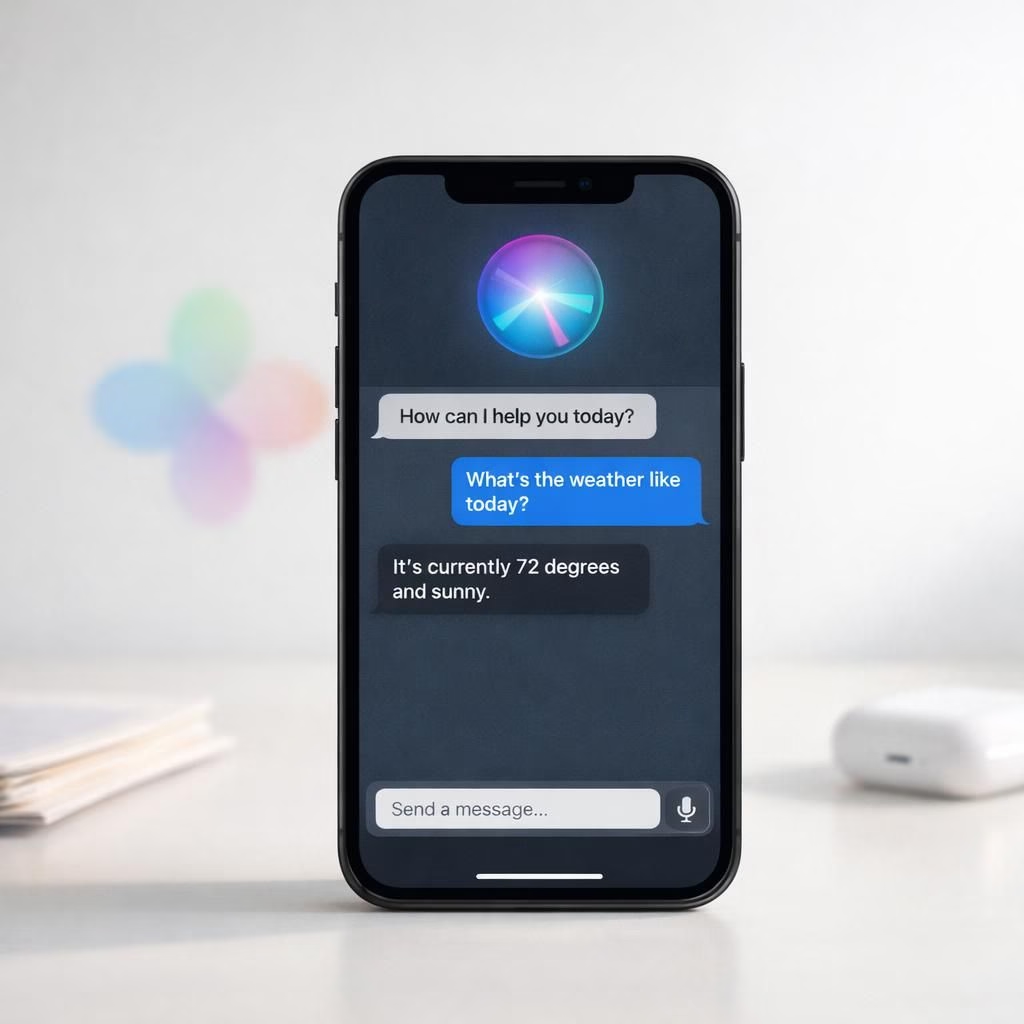
Remember when Siri could barely keep up with a grocery list? Today, Siri AI has found its groove, powered by Apple Intelligence, and it is a friendlier, more capable co-pilot. The WWDC 2026 reveal proves this is not a cosmetic facelift. It is a thoughtful reimagining of what a digital assistant can do when it actually understands your context, helps you organize your photos, and acts across apps without shouting for attention.
Under the hood, Apple Intelligence has been designed to be personal, conversational, and privacy-forward. It taps your on-device data to stay useful without flooding you with data you didn’t ask for. In one potluck demo, Siri AI pulled together separate text messages and presented a clear plan, while also suggesting drinks using the World Knowledge Service. You can return to that ongoing chat inside the Siri app, pick up where you left off, and keep references handy as you go about your day. This is all part of the system, built on Apple Intelligence, which ties the experiences together across devices.
Siri AI: Practical Uses
In practice, Siri AI shines on everyday tasks. It can identify people and places from photos using on-screen awareness, offer travel suggestions, and draft messages when you’re stuck. It stays in a live thread across messages and apps, letting you continue a conversation or switch to a fresh one without losing context. The integration across iPhone, iPad, CarPlay, and AirPods makes the experience feel cohesive rather than a jumble of windows. Siri AI keeps up with your day and your sense of humor, which helps the tool feel less like a gadget and more like a helpful sidekick.
A potluck demo shows how Siri AI can listen to a list, then propose food pairings. The feature stays inside the Siri app, so you revisit the chat later without breaking your flow. This is a big shift from past updates that treated Siri as a one-off helper rather than a persistent partner. Siri AI conversations can remain accessible across your devices, thanks to the tight integration with Apple Intelligence.
Apple Intelligence: Architecture and Privacy
Apple Intelligence forms the backbone of the system. The system orchestrator routes queries to the right model, processing on-device whenever possible and tapping cloud resources only when needed. Privacy stays front and center: personal data remains on the device and confidential compute techniques protect data in the cloud. Apple shares models with trusted partners, but you never see your raw requests in transit or storage. This balance is a deliberate design choice to keep the experience fast and private.
In practice, AFM Cloud Pro and the World Knowledge service deliver high-quality responses while maintaining privacy. Siri AI conversations can stay local, and signals may travel to the cloud only in a privacy-preserving way to improve accuracy. The result feels practical, not like a generic chatbot, and it respects your daily rhythms. Apple Intelligence makes the experience feel as seamless as possible, with the assistant moving in concert with your apps and settings.
Federighi stressed that Siri AI remains an integrated part of the system experience, not a standalone chatbot. Apple’s privacy guarantees stay intact, even as the company partners with Google and Nvidia to extend private cloud compute. The system orchestrator decides where to run a given task, balancing privacy and speed. This approach keeps your data as secure as it is useful, and it makes the whole ecosystem feel cohesive rather than cobbled together.
Overall, Apple Intelligence aims to blend on-device intelligence with selective cloud access in a way that keeps you in control. The approach feels deliberate, transparent, and surprisingly human in its planning and execution. Siri AI becomes less about clever lines and more about getting real tasks done with fewer taps and less friction. The combination of on-device context and privacy-first cloud computing makes the assistant feel like a thoughtful partner rather than a noisy helper.
Past revamps taught Apple to slow down and listen. Now the company emphasizes on-device awareness and privacy-first cloud compute, extending to trusted partners while preserving user trust. The outcome is a more natural, efficient assistant that feels like a helpful partner rather than a distant gadget. The blend of Siri AI and Apple Intelligence keeps the flow of daily life intact while reducing friction and surprise.
In the end, the goal is a seamless, privacy-first experience that helps you move through your day with fewer interruptions. The two pillars—Siri AI and Apple Intelligence—work together to turn a phone into a proactive assistant that actually makes life easier. The result is credible, practical, and a touch witty, which makes it easy to use in daily life. This isn’t a sci‑fi dream; it’s a thoughtful, usable upgrade that respects your timing and your privacy.
Special thanks to the original article for the foundation. You can read the source here: Original article (thank you).
We’d love to hear your thoughts—please share them in the comments below.
Getting Started with Siri AI
- Enable Siri and Voice Control in Settings; allow Hey Siri to wake the assistant.
- Try asking Siri AI to summarize a conversation or draft a note across apps.
- Experiment with cross‑app tasks, like planning an event or routing to a saved location.
FAQ
- What makes Siri AI different from earlier versions?
It uses on‑device context plus privacy‑preserving cloud compute to act across apps, with conversations that stay across devices. - Is my data shared with Google or Nvidia?
No. Apple uses a system orchestrator to route queries and runs models on-device or in privacy‑preserving cloud, with strict data controls. - Will Siri AI read my messages?
It can reference your own messages to stay on track, but data handling relies on Apple’s privacy framework to protect your information.
External sources
- Apple Newsroom — Official coverage of Siri AI and Apple Intelligence updates.
- The Verge — Independent tech coverage of WWDC and AI features.
- Bloomberg Technology — In‑depth reporting on AI strategy and privacy considerations.