

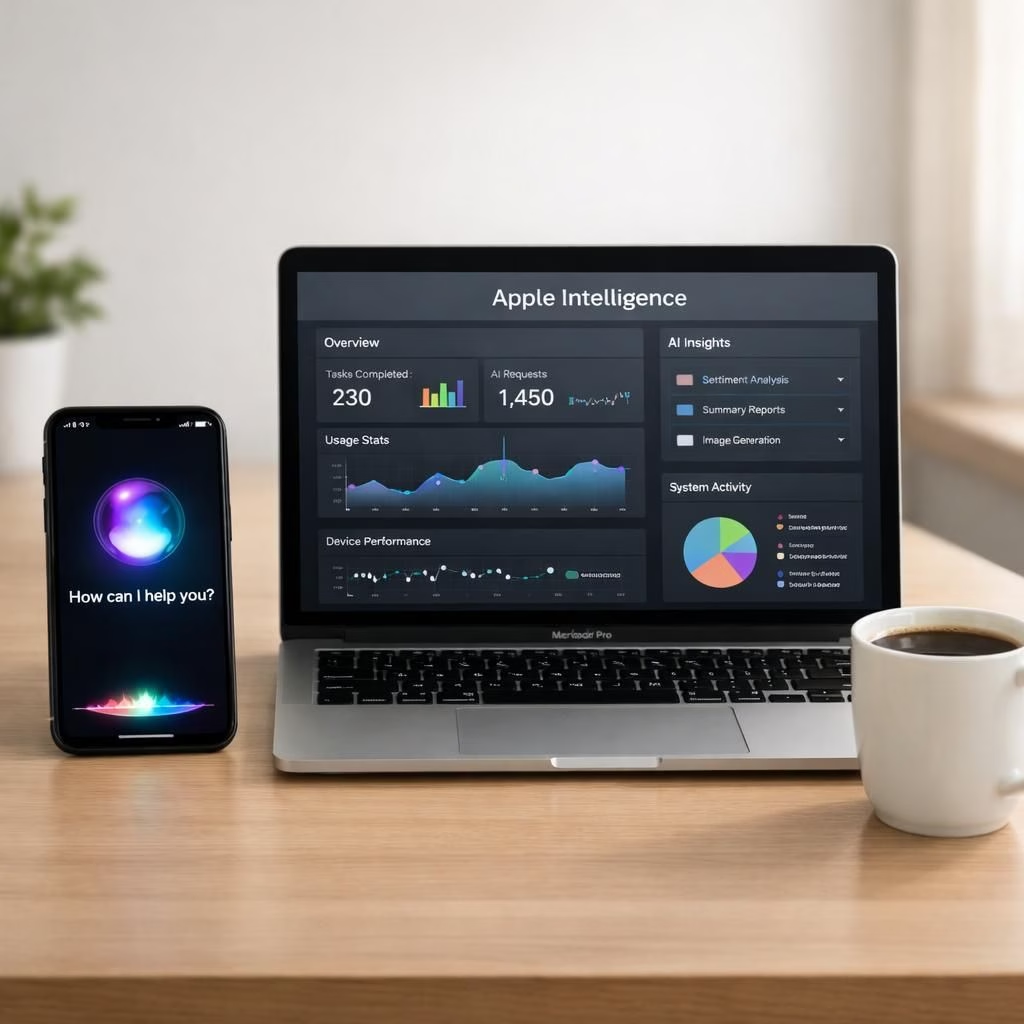
Welcome to a bright corner of the tech world where Siri AI steps into the spotlight and Apple Intelligence aims higher than a battery bar at full. At WWDC26, Apple framed these tools as practical teammates, not novelty; together they promise hands-free efficiency while respecting privacy.
The conversation around these updates leaned into practical relevance rather than pure novelty. Apple Intelligence was framed as an umbrella for multiple intelligent capabilities, from smarter recommendations to smoother workflows across devices—with on-device processing that keeps data on your hardware while still delivering fast results. The first impression is that Siri AI is getting smarter, but not louder; it speaks when it should, and it stays quiet when you want quiet.
Siri AI at WWDC26: Live Highlights
When the spotlight hit Siri AI, the emphasis was action over anticipation. The updates promise faster voice recognition, better natural language understanding, and tighter integration with apps you already use. Narratives hovered around on-device processing to reduce latency and preserve user control, a welcome reminder that not all power needs to travel to a cloud server just to feel alive. The on-device improvements are paired with smarter context awareness, so you won’t have to repeat yourself mid-conversation. In short, Siri AI becomes a more reliable partner for everyday tasks like setting up meetings, drafting quick messages, or predicting the next song based on your commute. This is the kind of incremental enhancement that compounds into real usefulness, especially for hands-on users who want consistency and speed without a big “buzz” every time they wake the device.
In the hands-on demos, Siri AI showed smarter follow-ups and better interpretation of ambiguous requests. The tone was confident but approachable; the goal was to underscore capability without implying arrogance. Apple Intelligence teased smoother cross-device experiences, so you can start a request on your iPhone and continue on a Mac or iPad without friction. This aligns with the broader system promise: tighter integration across devices that respects privacy. Across the room, developers nodded at the possibility of building smarter shortcuts and automations that feel intuitive rather than engineered.
Apple Intelligence: A Bold Step Beyond Siri AI
Where Siri AI handles interaction, Apple Intelligence covers the bigger picture. The keynote framed this as an ongoing effort to turn data into context, context into convenience, and convenience into better outcomes. It’s the difference between a helpful assistant that can place a call and a system that can anticipate your calendar conflicts, suggest optimal routes, and auto-suggest content that actually matters to your day. The vision is a living ecosystem where the devices talk to each other in a privacy-preserving way, sharing just enough signal to be useful while keeping sensitive details under lock and key. The practical upshot is fewer taps, smoother transitions, and a sense that your devices truly know your preferences—without feeling invasive.
Two recurring themes emerged: continuity and control. Continuity means your iPhone, Apple Watch, and Mac glance at your patterns and propose a sensible next step—without you having to ask every time. Control means you stay in the driver’s seat, with clear privacy settings, transparent data handling, and visible options to opt out or tweak behavior. Apple Intelligence aims to be reliable enough that you’ll reach for it before grabbing a calendar invite or checking your notes, yet respectful enough that you can easily opt out if you’re in a mood for digital independence. This is the kind of balancing act that keeps power in check while still delivering helpful, almost prescient experiences.
From an instructional standpoint, the updates remind us that AI in consumer devices works best when it remains a tool, not a replacement for human judgment. The emphasis on on-device processing, opt-in data sharing, and user-centric controls is a refreshing counterpoint to doom-laden headlines about AI taking over the home. The WWDC26 session felt more pragmatic than prescriptive, focusing on empowerment, speed, and accuracy rather than flashy promises. If you invest in the ecosystem, you should see tangible benefits in speed, accuracy, and ease of use without feeling like you have to re-learn your devices.
For developers, the combination of Siri AI improvements and Apple Intelligence openness signals more opportunities for practical integrations. Expect better voice-driven workflows, more reliable automations, and deeper collaboration across apps that respect privacy boundaries. The underlying message remains optimistic: a smarter, more responsive Apple environment is not just a cool trick; it’s a framework that can genuinely simplify life while staying conscious of user choice. In the end, the balance of innovation and restraint is what keeps the story engaging rather than alarming.
As we look toward the weeks and months ahead, it’s worth watching how third-party apps adopt these tools. Will we see a wave of delightful, privacy-respecting features that actually save time? Will the ecosystem deliver on the promise of more natural conversations with our devices? The early signs point to a future where Siri AI and Apple Intelligence work in harmony to make everyday tasks feel almost invisible—until you need them. If Apple keeps this cadence, the next updates may feel less like a reveal and more like a natural extension of a well-tuned digital life.
Please share your thoughts in the comments. Your experiences with Siri AI and Apple Intelligence help others understand what actually works in real life, not just in keynote demos.
Original article: The Verge coverage of Siri AI and Apple Intelligence at WWDC26. Thank you to The Verge for the original reporting and thoughtful coverage that inspired this rewrite.
Further reading
Frequently asked questions
- What is Siri AI, and how does it help in daily tasks?
Siri AI is the on-device voice assistant designed to handle quick tasks, reminders, and messages with faster responses and less reliance on cloud processing.
- How does privacy get protected with these updates?
The updates emphasize on-device processing and opt-in data sharing, reducing unnecessary data transmission while keeping controls in the user’s hands.
- Will third-party apps integrate with Siri AI?
Developers can build smarter workflows that respond to natural language prompts and integrate with apps while respecting privacy boundaries.
- Where can I learn more about WWDC26 announcements?
Check official coverage from The Verge, Apple’s Newsroom, and trusted technology publications for deep-dive analyses and demos.