

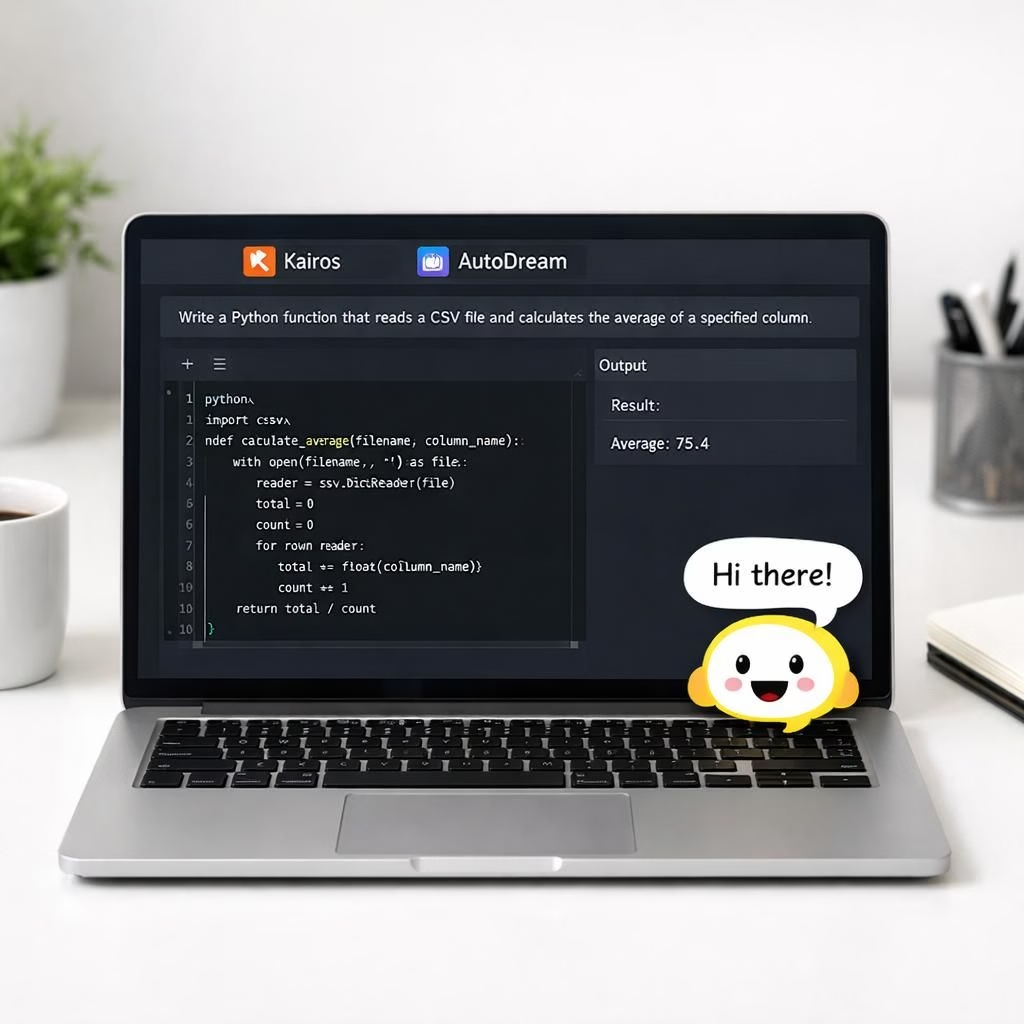
Memory and Tag B are not just buzzwords here; they anchor Claude Code’s rumored next moves. Following a leak reported by Ars Technica, we glimpse a roadmap where memory persists across sessions and Tag B takes on more proactive roles. The notes describe Kairos as a daemon that keeps running after Claude Code is closed, nudging with prompts and surfacing relevant actions when the moment is right. AutoDream is pitched as memory hygiene for developers, scanning transcripts, trimming near-duplicates, and turning scattered notes into durable memories that speed future work, while the tone remains clear: memory-driven continuity and developer-facing Tag B are being prioritized.
memory and automation: Kairos, AutoDream, and the continuity promise
Kairos is described as a persistent memory companion that survives the terminal shutdown and checks in with proactive prompts. The goal is a smoother, more seamless flow across sessions, not a stubborn data dump. AutoDream acts as memory caretaker, surveying conversations, removing duplicates, reconciling contradictions, and shaping memories into durable, well-organized forms. The idea is to give Claude a working sense of history so it can re-engage with context, preferences, and past goals without begging the user for a quick refresher.
Memory hygiene is not about collecting every datum; it’s about distilling what’s essential across contexts. A built-in memory model would let Claude recall user preferences, past decisions, and project constraints across sessions, reducing repetitive questions and keeping teams aligned.
Undercover mode, memory safety, and automation in open source contributions
The leak mentions an Undercover mode that would let contributions to public repositories appear as ordinary user actions, without announcing AI authorship. Prompts reportedly stress protecting internal codenames and project data, while advising against phrases that reveal Claude Code or AI authorship. This raises ethical questions about transparency and attribution, yet the ambition seems to be smoother collaboration and less friction in open source work—balanced with safeguards that respect both privacy and accountability. In practice, this could mean more seamless collaboration and fewer bureaucratic pauses, all kept in check by clear rules of engagement.
Buddy, UltraPlan, and the orchestration of work: lighter touches meet serious automation
The leak also hints at Buddy, a small, companion-like watcher that sits beside the input box and occasionally offers a comment in a speech-bubble style. It’s described as a gentle nudge rather than a shove, designed for a few touchpoints without overwhelming the user. UltraPlan is presented as a feature to draft an advanced plan you can edit and approve, with execution windows ranging from 10 to 30 minutes. Voice Mode aims to enable spoken interaction, Bridge mode connects to remote sessions controlled from external devices, and a Coordinator tool would coordinate software engineering tasks across multiple workers via parallel processes and WebSocket communication. If realized, these tools could turn Claude Code into a more efficient, collaborative partner without stealing the show from human teammates.
memory-centric collaboration: coordinating across multiple workers with automation
The leaked references describe a Coordinator that orchestrates tasks across several workers, using parallel processes and WebSocket channels. The vision is a memory-aware orchestration engine that keeps track of who did what, when, and why, while automating routine checks, handoffs, and status updates. The potential is a smoother workflow where memory helps avoid repeated questions and Tag B handles repetitive sequencing, leaving humans more room to focus on creative or high-impact work. Even if these features are not fully live yet, the concept points toward a future where memory and Tag B work in tandem to accelerate development and collaboration.
In summary, the leak sketches a future where Claude Code normals are nudged toward memory-first design and Tag B-assisted collaboration. The goal is not to replace human judgment but to relieve cognitive load, reduce context-switching, and keep teams moving through their tasks with clearer memory trails and smarter Tag B.
Special thanks to Ars Technica for the original report and thoughtful coverage: Ars Technica coverage. We appreciate the thoughtful material that sparked this exploration.
Have thoughts about these possibilities? Share your ideas with us in the comments below.
Practical steps for memory-focused workflows
- Define what memories matter: Identify which settings, goals, and context should persist across Claude Code sessions.
- Run memory hygiene checks: Use routines like AutoDream to prune duplicates and reconcile conflicting notes.
- Let memory guide interaction: Allow Claude Code to surface relevant history at the right moments to reduce repeating decisions.
- Balance openness with safety: When contributing to open-source, apply safeguards that protect internal data and attribution.
FAQ
- What is Claude Code’s memory feature? It aims to persist user context across sessions, reducing repeated questions.
- What about Undercover mode? It could streamline collaboration but raises questions about transparency and attribution that need safeguards.
- Will these features ship soon? These are leaked references; there’s no official confirmation yet.
- How does memory affect teamwork? It can lower cognitive load and help teams stay aligned across sessions.