

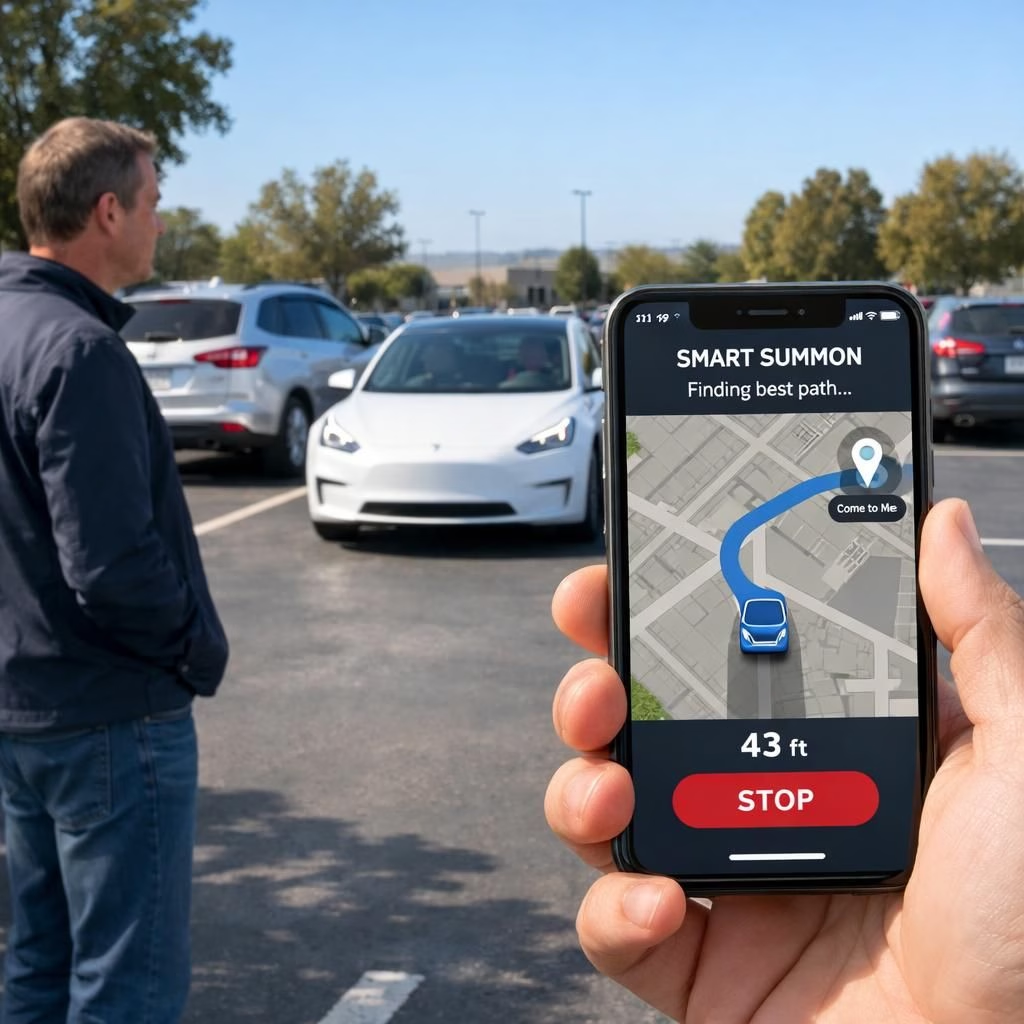
In 2026, Tesla and Smart Summon drew cautious curiosity as the National Highway Traffic Safety Administration closed its probe into the feature that lets you move a car over short distances from a phone app. The scope covered more than 2.59 million vehicles and focused on low-speed incidents, mainly collisions with obstacles. There were no injuries or fatalities, which is reassuring, but not a guarantee of perpetual safety. The closure does not rule out a safety defect, and the regulator reserves the right to take further action if warranted.
Tesla Smart Summon: Safety Update and NHTSA Review
What is Tesla’s Smart Summon? It is the ability to remotely maneuver a car in parking lots or private property while you supervise with the app. The aim is convenience—move your vehicle to you or offload groceries without stepping outside in the rain or a chilly breeze. Reuters noted that most incidents involved the car striking obstacles such as parked cars, doors, or gates. Incidents often occurred early in a summon session when visibility or situational awareness was limited. This isn’t a confession that the car is defective, but it is a reminder that real-world use demands human judgment and a clear line of sight.
Smart Summon: Practical Tips for 2026 Drivers
Tesla responded to the probe with a series of over-the-air software updates. The updates aimed to improve obstacle detection, fix camera reliability, and refine responses to moving objects like gates. The company also worked to mitigate environmental factors such as snow and condensation, which can affect camera performance and reduce visibility. In practice, these updates have translated into smoother starting and stopping, fewer false positives, and better handling of objects that might otherwise pop into frame out of nowhere. Drivers should still keep an eye on the path and be ready to intervene, especially in busy parking structures and while pulling into a tight space.
Despite closing the probe into the Smart Summon feature, the broader regulatory lens remains fixed on Tesla’s Full Self-Driving system, now under an engineering analysis affecting about 3.2 million vehicles. An engineering analysis is a deeper dive than a standard safety probe. It can lead to a recall if design flaws pose significant risks. This dual oversight shows how regulators balance innovation and safety. Software updates can shift the risk profile in real time. The FSD analysis does not cancel Summon work. It means drivers should expect ongoing scrutiny and more data to come in the months ahead.
What does this mean for the everyday user? For one, the update cadence matters. OTA patches mean that features like Smart Summon evolve as nimbly as a patch of ice on a driveway—sometimes helpful, sometimes temperamental. The best-practice takeaway is to use Smart Summon with intention. Ensure a clear line of sight. Keep bystanders at a respectful distance. Maintain manual supervision during complex maneuvers. The technology is impressive and rarely boring, yet it remains imperfect enough to keep community forums lively and polite at the same time. If you enjoy gadgetry with a hint of theater, you’ll appreciate the evolving dialogue between software developers and regulators as both sides refine expectations and risk controls.
For engineers and enthusiasts, the numbers offer a narrative. About 2.59 million vehicles were touched by the probe. Many incidents were low-speed and occurred near obstacles. That means a lot of real-world data to analyze, learn from, and translate into better camera calibration, obstacle hashing, and motion planning. The push toward more robust obstacle detection, resilient camera arrays, and consistent responses to moving barriers such as gates remains a work in progress. In practice, the updates make Smart Summon feel more dependable, while reminding users that the safest option is still to supervise closely, especially around doors and entryways. Tesla is not claiming flawless perfection; it’s showing a commitment to incremental improvement one OTA at a time.
As the regulatory spotlight widens to include FSD, the news cycle continues to highlight the tension between smart car magic and public safety. The 2026 landscape is not a victory lap but a checkpoint: a sign that speed of software evolution must be matched by speed of oversight. If the automotive industry wants more ambitious automation, the feedback loop between regulators, engineers, and drivers must stay fast and friendly. In that spirit, readers are invited to engage with the ongoing story, ask questions, and stay curious about how transport tech shapes everyday life.
Source attribution: Special thanks to Reuters for the original reporting that informed this article. Original material can be found here: Reuters.
We invite all readers to share their thoughts in the comments and continue the conversation about how Smart Summon and related tools fit into a safe, practical daily routine.