

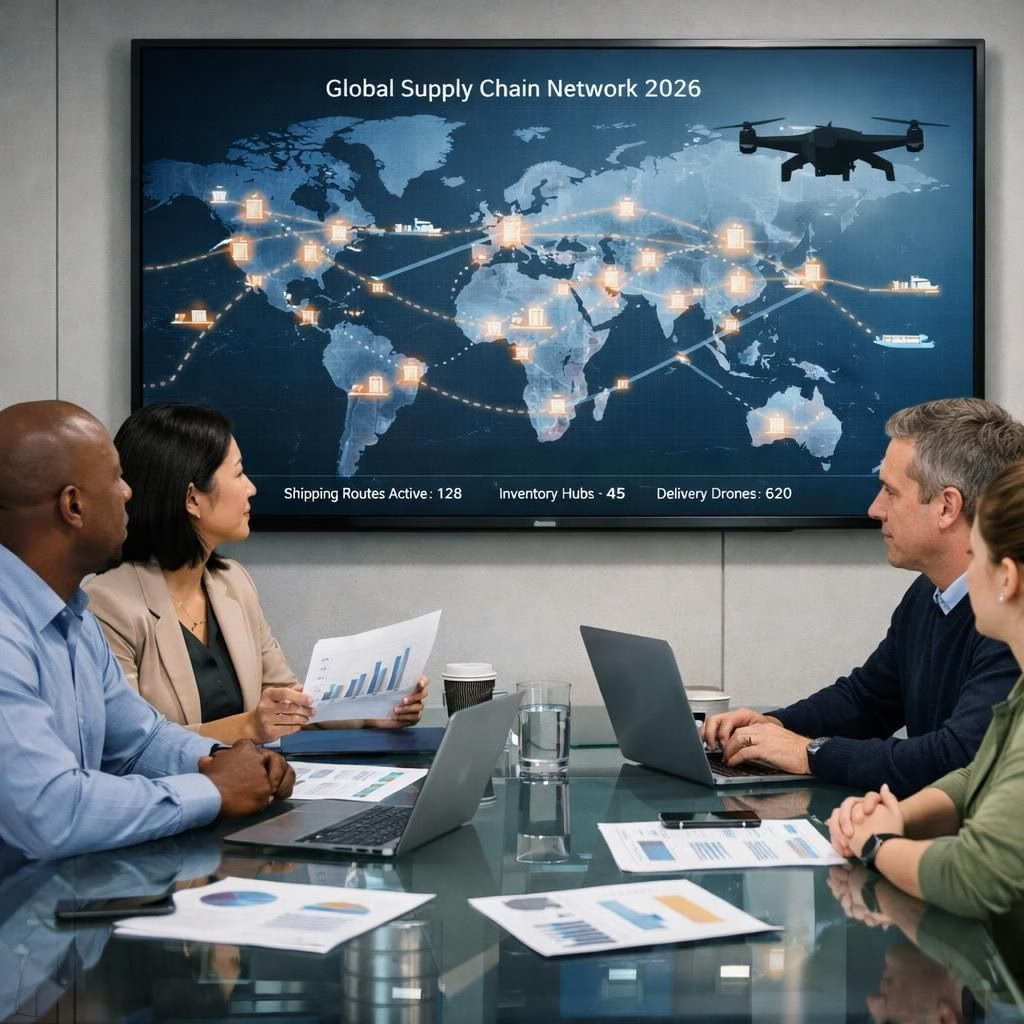
defense-tech and economic-warfare no longer sit on separate shelves in policy libraries. At Fortune Brainstorm Tech 2026, Anduril CEO Brian Schimpf reframed modern warfare as a contest to disrupt infrastructure and choke supply lines. The old image of battles at sea and in skies gave way to a ledger of critical assets: data centers, refineries, and shipping lanes. Drones, even inexpensive ones, have turbocharged economic disruption, letting small units punch far above their weight. This is the new normal of conflict, and it demands a different kind of resilience from nations and their suppliers.
defense-tech and economic-warfare reshape modern security
Schimpf pointed to assets that underpin modern economies: data centers, oil refineries, and pivotal shipping routes. He noted that cheap drones enable large-scale economic-warfare strikes, lowering the bar for disruption. The result is a shift from destroying hardware to debiting the balance sheets of rival economies. In practice, this means defenses must target not just hardware, but the chains that feed them. The framing is bold, but it sticks to observable shifts: infrastructure is the target, and resilience is the weapon. In the defense-tech conversation, the emphasis on economic-warfare as a strategic tool becomes explicit.
defense-tech and economic-warfare: the germanium factor and supply chains
The germanium angle shows why raw materials matter. Schimpf said Anduril wants to secure supply of germanium years out, and that China has spent years strengthening its grip on critical minerals. The risk is clear: if you can’t access the minerals, you can’t build the magnets and sensors that drive defense-tech devices. So Anduril is broadening its lens beyond weapons to the broader supply chain, from rare-earth magnets to copper materials, to reduce national-security vulnerabilities. Another line of thought in the defense-tech corner is that supply chain risk is a form of battlefield exposure. Japan, Europe, and the U.S. all watch the same chokepoints, and the germanium story becomes a metaphor for strategic patience and redundancy.
defense-tech and economic-warfare: growth, valuations, and patience
As valuations in the defense sector rise, Schimpf cautions against an IPO rush. He calls the moment a ‘hype-y time’ and notes Anduril is growing quickly but not in a hurry to list. The bubble argument rests on the idea that sky-high valuations may be unsustainable if growth softens. Yet the company remains focused on long-term defense and supply-chain challenges, not a quick exit to the market. This stance sits well with engineers, operators, and policymakers who prefer durable capabilities to dazzling headlines.
In practice, that means building more than weapons: it means securing capabilities that keep networks running, ensuring data integrity, and maintaining the pipelines that feed both industry and the front lines. Schimpf’s caution about IPO enthusiasm reflects a common worry in the defense-tech world: sustainability matters more than a spike in quarterly numbers. The aim is to scale thoughtfully, integrate across the supply chain, and push for outcomes that endure beyond a single funding round.
defense-tech as a coordinating framework also demands cross-border partnerships that reduce risk and speed up delivery of critical inputs. The late-2020s reality mixes advanced sensors with reliable logistics, and that blend requires patient, long-horizon planning rather than quick wins.
Concluding note: the long view isn’t a relic of old defense budgets. It’s a method to align tech talent with material supply, legal clarity, and cross-border partnerships that resist shocks. Anduril’s approach—focusing on long-horizon defense and supply-chain resilience—fits a 2026 reality where conflict comes with a spreadsheet and a map.
Original article: Fortune Brainstorm Tech conference coverage. Thank you to Fortune for the original material: https://fortune.com/2026/brainstorm-tech
Would you weigh in on defense-tech vs economic-warfare? Share your thoughts in the comments below.
Practical steps for defense-tech resilience
- Policy and standards: harmonize export controls and cyber norms to protect critical assets in a defense-tech ecosystem without slowing legitimate innovation.
- Supply-chain diversification: map chokepoints, diversify suppliers, and stock strategic inputs to reduce vulnerability to shocks in defense-tech and related sectors.
- Public-private collaboration: align research, funding, and procurement to accelerate resilient capabilities across the defense-tech landscape.
- Risk monitoring: create dashboards that track dependencies on critical minerals and data-center infrastructure to anticipate disruptions linked to economic-warfare.
FAQ
- What is the core idea behind defense-tech and economic-warfare?
They describe how modern conflicts leverage infrastructure and supply chains to constrain rivals. The focus is on resilience and access to critical inputs as a strategic advantage. - Why are rare minerals like germanium important?
They enable high-performance magnets and sensors that power advanced defense-tech devices. Access to these minerals shapes capability and future competitiveness. - Is this approach about satellites or ground weapons?
It’s about a broad system: sensors, networks, transport, and the inputs that keep them running. Weapons are part, but not the sole focus.
References
- CSIS on economic statecraft and supply chains
- RAND: Managing supply-chain risk in defense
- Fortune Brainstorm Tech coverage
- Original source