

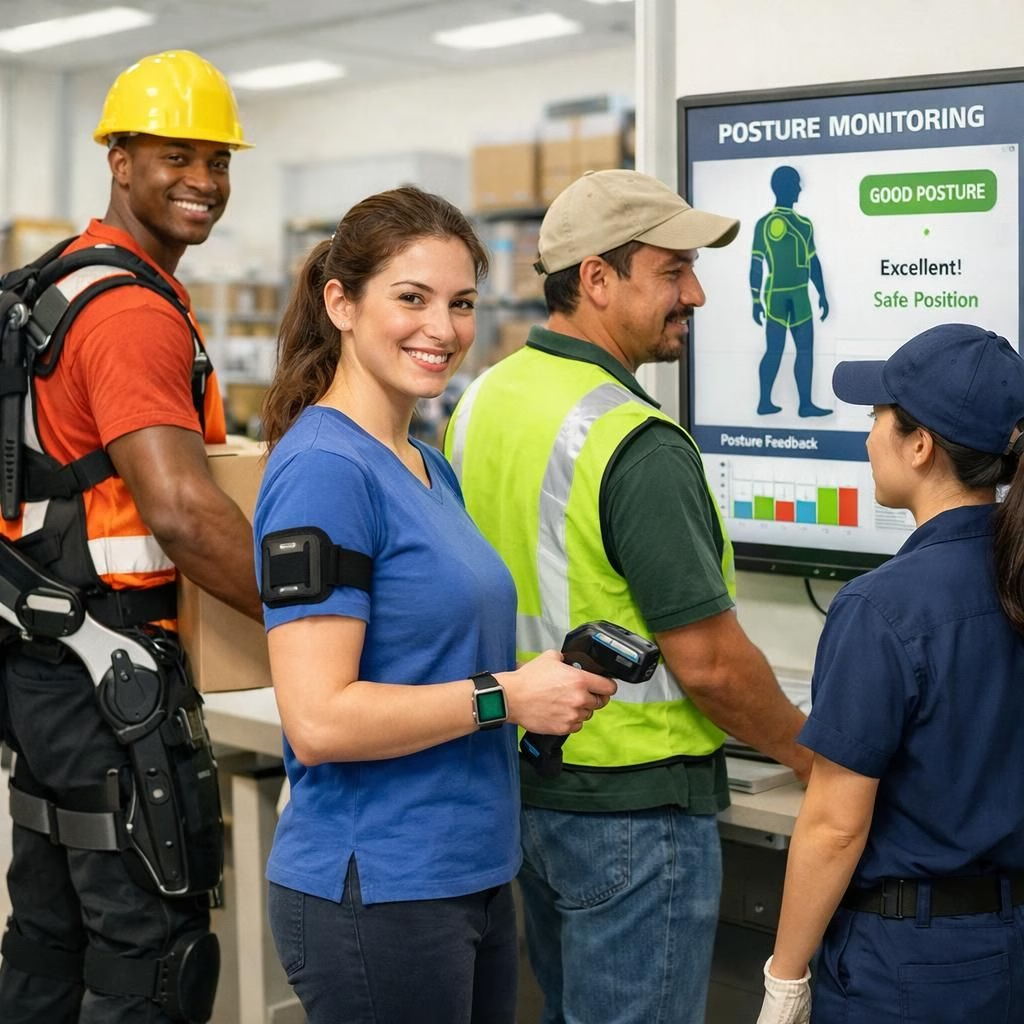
In 2026, MSD Prevention and Worker Safety get a practical upgrade as frontline tech puts real people at the center of the safety story. The National Safety Council reports that more than 80% of workers using prevention tech see reduced MSD symptoms or no negative impact, a stat that reads less like doom and more like proof that well-designed tools work.
Frontline workers from manufacturing, construction, healthcare, and logistics participated in the MSD Solutions Lab survey. Conducted with funding from Amazon, the lab has been active since 2021 and aims to flip the script from top-down safety mandates to collaborative safety design. The recent findings draw on responses from over 400 non-managerial workers and confirm that prevention technology can tangibly lighten the physical load, if used wisely.
MSD Prevention Tech Makes a Real Difference
Innovations that directly support the body—such as exoskeletons and robotics—correlate with fewer MSD symptoms. When a worker can lean, lift, or position themselves with a helping device, the risk signals drop. Monitoring tech—wearable sensors and computer vision—helps workers spot ergonomic risks before they become discomfort, letting them adjust posture, lift technique, and tool grip in real time. The key is not novelty; the key is fit for the job and fit with the worker’s daily routine.
Across technology types, the biggest predictor of success remains active worker involvement. When teams participate in selecting the tools and in training, results improve. This mirrors a core NSC safety principle: workers are not merely users of safety tech; they are co-authors of its effectiveness. When operators contribute feedback, safety gains stick, and morale climbs along with productivity. MSD Prevention often delivers the strongest outcomes when teams blend technology with practical know-how.
Worker Safety Through Frontline Involvement
In practice, this means design-by-translation: gear and software that speak the language of shop floors, not glossy brochures. The data show that tools work better when they align with workers’ workflows, not when they require a heroic leap of faith. For example, wearables must be comfortable, exoskeletons must be light, and computer vision should respect the normal pace of a busy workday. When these conditions are met, workers report less strain, more focus, and a higher sense of safety on the job.
To turn insights into action, NSC suggests a few best practices. First, invite frontline workers to participate early and often in selecting equipment, setting performance goals, and piloting pilots. Second, provide hands-on training that respects existing skills, with clear feedback loops so concerns are addressed quickly. Third, celebrate small wins publicly to reinforce a culture of safety rather than fear of new gear. Finally, document outcomes and share them across teams to build a growing evidence base that benefits all industries—manufacturing, construction, healthcare, and transportation and warehousing alike.
- Co-design programs with workers to ensure tools match real tasks.
- Start small with pilots and scale only after demonstrated benefits.
- Measure outcomes beyond injury rates, including job satisfaction and fatigue.
- Keep communication open and avoid blaming tech when issues arise.
- Provide ongoing training and refreshers as tools evolve.
What does this mean for 2026 and beyond? It means a safety ecosystem that respects workers’ expertise while delivering practical protection. It means smarter posture, smarter lifting, and smarter teamwork—where human judgment and machine assistance work in harmony rather than opposition. The NSC’s ongoing research and collaboration push for solutions that protect workers in diverse contexts—from the assembly line to the delivery dock.
For more context, the NSC’s Frontline Worker Perceptions of MSD Prevention Technology report highlights that technology is not a magic wand; it is a set of tools that works best when designed with and for the people who use it. If your organization is exploring prevention tech, start with worker partners, set clear expectations, and monitor progress with transparent metrics. The goal is real reduction in MSD symptoms and meaningful improvements in how people perform their jobs safely.
Original article and thanks: Linkback attribution: Thank you to the National Safety Council for the original article Frontline Worker Perceptions of MSD Prevention Technology. Original source: nsc.org/msd.
We’d love to hear your thoughts—how have you seen MSD Prevention or Worker Safety tools change your daily work? Share in the comments and join the conversation.
FAQ: MSD Prevention and Worker Safety
What is MSD Prevention technology?
MSD Prevention technology encompasses devices and software designed to reduce musculoskeletal strain by supporting posture, lifting, and movement. Examples include exoskeletons, assistive robots, wearables, and computer-vision feedback.
How does frontline involvement boost outcomes?
When frontline workers help select gear and training, tools align with real tasks, leading to practical safety gains, higher adoption, and better morale. This is a core part of MSD Prevention success and supports Worker Safety.
Are wearables comfortable for long shifts?
Most modern wearables are designed for all-day use, with lightweight materials and breathable sensors, but comfort varies by task. Fit, placement, and breaks matter for sustained MSD Prevention benefits.
How should organizations start?
Begin with a one-department pilot, involve frontline workers from day one, set measurable goals beyond injury rates, and scale only after demonstrated benefits. Document outcomes and share learnings across teams to expand the impact of MSD Prevention.
References
Original source: PR Newswire
External resources: NSC – MSD resources, OSHA musculoskeletal disorders