

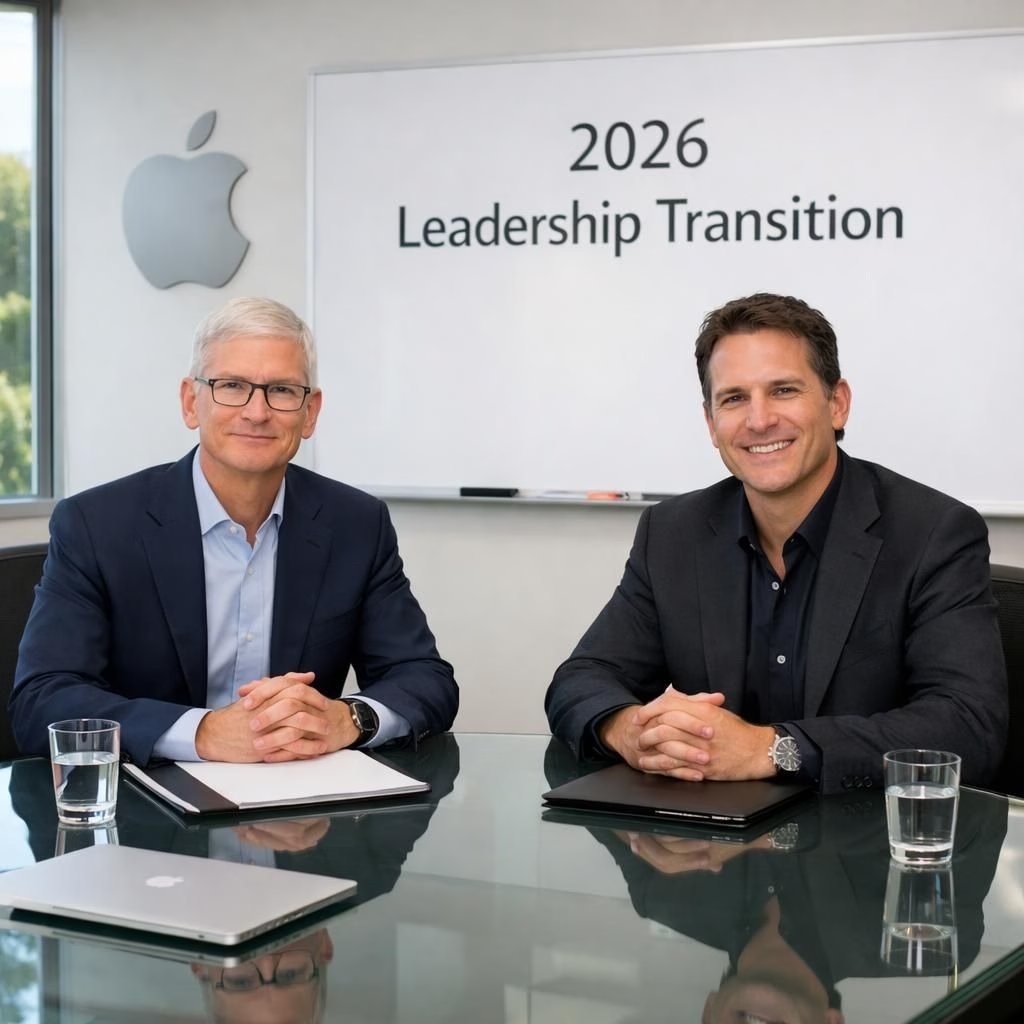
leadership and Tag B headlines collide as Apple reveals a staged Tag B for 2026. Tim Cook will step into the role of executive chairman, guiding strategy while John Ternus becomes CEO starting September 1, 2026. This is not a panic move but a deliberate, board-approved plan built on years of planning and patience. The long view is in charge here, and the emphasis is on continuity, not chaos. The company’s tone remains practical, not theatrical, which suits Apple’s brand of calm confidence.
Cook will remain a guiding force, staying involved in global policy and corporate strategy while giving Ternus the space to lead product teams, chip design, and sustainability initiatives. The Tag B is designed to be seamless, with a summer handover and a close collaboration period that reads as thoughtful governance rather than a dramatic swap. Investors generally welcomed the move as orderly and strategic, not a power grab. Apple keeps the mission intact while signaling a willingness to learn from its own internal talent.
leadership and transition: Apple’s 2026 roadmap
On the board, Arthur D. Levinson steps back from the non-executive chairman role after a long stint, becoming lead independent director. The change is presented as continuity, not upheaval. Levinson praised Cook’s tenure, noting how the era reshaped Apple into the “world’s best company” by many metrics. Cook responded with gratitude, calling Levinson a steady hand and a source of practical wisdom. The messaging focuses on value, ethics, and long-term planning rather than flashy headlines.
In practice, the leadership shift means a more hands-on approach for Ternus in hardware and design, while Cook remains the public face for policy and global strategy. Ternus, who joined Apple in 2001, rose through hardware engineering and joined the executive team in 2013. He was named vice president of hardware in 2021 and has steered critical efforts in durability, materials, and sustainability. Under his watch, the company advanced recycled aluminum usage and innovative manufacturing methods without sacrificing performance. The new CEO’s track record is crisp evidence of a methodical, product-first mindset that aligns well with Apple’s ambitions.
leadership and transition: Who is John Ternus?
John Ternus is technically savvy and has the instinct to balance speed with reliability. His leadership has shaped flagship products, including the most recent iPhone revisions, newer Macs, iPads, and AirPods. He prioritized durability, module design, and supply chain efficiency, all while keeping a humane view of workers and partners. This background helps explain why Apple trusts him to steer the company through a fast-changing tech landscape. He has repeatedly explained that mentorship from Cook and Jobs helped shape his approach to leadership and product quality.
The plan also preserves continuity in governance. Cook will monitor strategy while offering a steady hand for policy, privacy, and environmental goals. The formal handover will occur later in the year, with a cadence of meetings, reviews, and a deliberate transfer of decision rights. The board’s unanimous vote reflects confidence in Ternus and a shared belief that Apple’s core principles endure with new leadership. In practical terms, this is not a revolution; it is a calibration. Apple remains a hardware and services behemoth, still driving silicon development and user privacy as its north stars.
What this means for Apple’s products and platform strategy is a blend of continuity and curious exploration. The company’s silicon shift, from Intel-era ideas to homegrown chips, remains a cornerstone. Apple will likely accelerate on-device intelligence, battery efficiency, and sustainable materials. The leadership team will push for more integrated services and hardware experiences, while ensuring privacy remains a fundamental principle. In short, the company stays loyal to its past while taking measured bets on the future.
Industry observers note that the internal succession reinforces a trend: Apple tends to prefer nurturing its own talent rather than chasing external celebrities. This approach reduces disruption and supports a longer horizon for product cycles. The executive suite will continue to emphasize user trust, data protection, and environmental stewardship. As Apple moves into its next era, analysts expect Ternus to emphasize manufacturability, supply chain resilience, and a more transparent product roadmap. The plan is not merely to innovate but to do so with a sense of responsibility that mirrors Apple’s public commitments.
From a cultural perspective, the Tag B is framed as an invitation to every employee to contribute. Apple’s values around privacy and user control won’t be diluted by new leadership. Instead, the leadership team aims to maintain the company’s reputation for quiet confidence, strong ethics, and relentless iteration. The result could be a more cohesive product ecosystem, where hardware and services feel tightly interwoven and genuinely user-friendly. For customers, this means continued reliability and a path to new experiences, not a sudden overhaul.
Given the broader tech environment in 2026, Apple’s leadership Tag B is likely to be watched closely by competitors and investors alike. The company has the resources to sustain its growth trajectory, with revenue hovering in the hundreds of billions and a market value nearing historic highs. The Tag B plan shows a desire for stable evolution rather than abrupt changes. It also signals that Apple values internal growth, mentorship, and long-term goals over flashy drama. The tone is measured, the plan is patient, and the people are seasoned.
In closing, the switch in roles is more about strategic clarity than about glamor. Tim Cook’s enduring role as executive chairman provides continuity, while John Ternus brings technical depth and a deep understanding of Apple’s operations. The two leaders share a commitment to the brand’s core promises: privacy, performance, and people. The leadership Tag B story for 2026 reads as a well-scripted chapter in a long-running company tale, one that keeps Apple focused on the future while honoring its past.
Original article: Reuters coverage. Thank you to the original source material for the inspiration and details.
For additional context, see Apple’s official newsroom coverage: Apple Newsroom, and related reporting from Reuters: Reuters coverage.
References
FAQ: Leadership transition
- What does this mean for Apple’s product roadmap? It signals continuity with a strong emphasis on internal talent and a cohesive hardware-software ecosystem.
- When does the change take effect? The formal transition begins in September 2026, with a staged handover during the summer and fall.
- How might investors respond? The plan aims to reassure markets with a well-planned, gradual shift focused on long-term growth and governance stability.
We invite readers to share their thoughts in the comments below.