

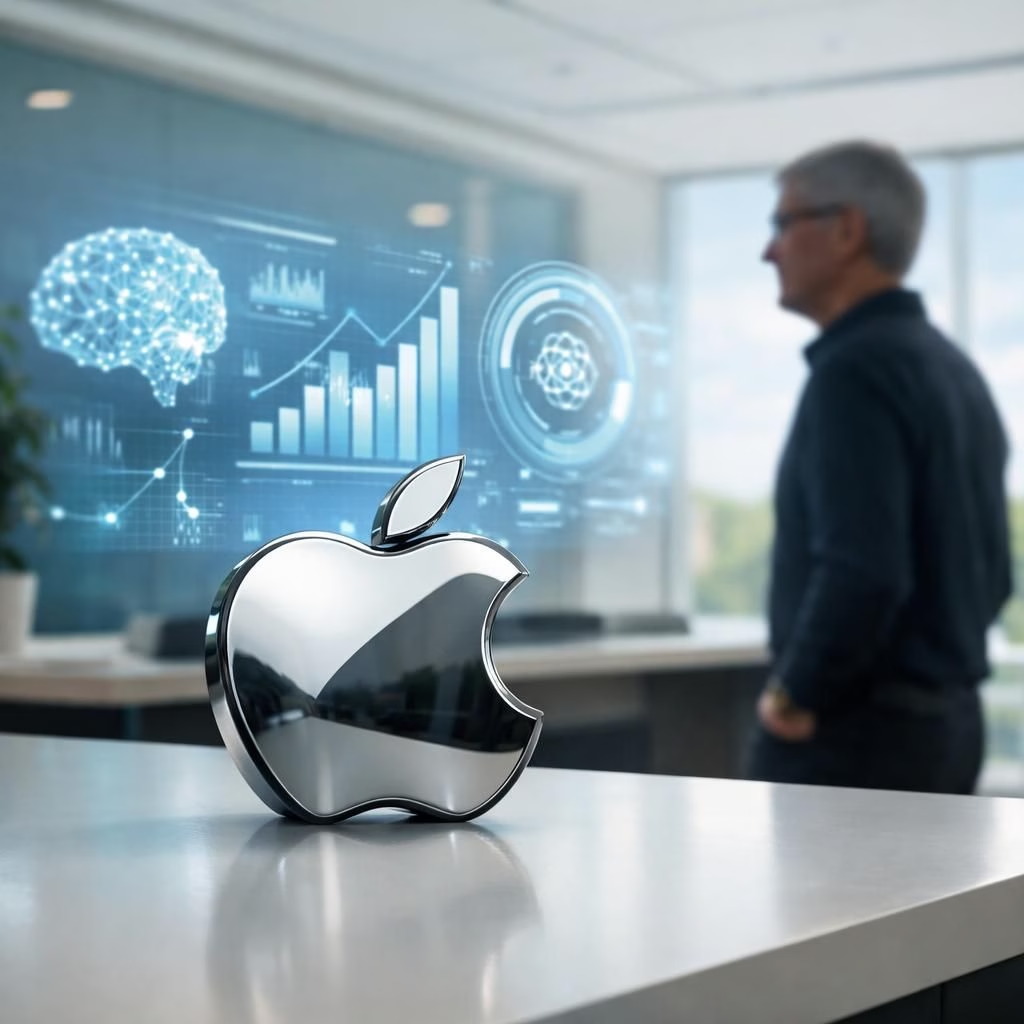
In a move that sits squarely in Apple tradition and AI-fueled ambition, Tim Cook will step down as CEO after nearly 15 years, handing the reins to John Ternus, who will lead starting September 1, 2026. The company frames the transition as a chance to blend steady leadership with AI-powered momentum across devices, services, and silicon.
The market reacted with a shrug rather than a roar, with Apple shares dipping less than 1% in late trading after the news. No dramatic fireworks, just a quiet acknowledgment that change has a way of arriving politely at the company’s headquarters. In other words, the stock market said, “We’ll watch this unfold, but we’re not hitting the panic button.”
Cook’s seat will be relinquished to an insider whose fingerprint is heavy on hardware: John Ternus, the longtime hardware engineer who has been steering Apple’s product design and development efforts. Cook will transition to executive chairman, a role designed to keep the leadership current while preserving the continuity that investors and customers alike expect from Apple.
Apple AI Leadership Pivot in 2026
From the outside, the move reads as a fusion of Apple’s architectural temperament with a growing appetite for AI-driven optimization. Apple’s leadership has repeatedly stressed that AI is not an add-on but a core capability that powers product experiences, services, and silicon efficiency. In a world where AI accelerates software updates, supply chain decisions, and personalized user experiences, Apple signals that leadership will continue to lean into the intersection of hardware excellence and AI-enabled software. This is not a sudden about-face; it’s a measured stepping-stone toward a future where AI sits at the heart of Apple’s strategy, not on the periphery.
Across devices, wearables, and the health ecosystem, the AI lens influences every decision from battery life to on-device privacy and performance. The leadership transition is framed as a way to preserve Apple’s cadence of innovation while inviting a sharper focus on AI-enabled features that customers can feel. In practical terms, expect ongoing enhancements to processors, machine learning frameworks, and services that rely on on-device intelligence to preserve privacy and speed.
What John Ternus Brings to Apple and AI Innovation
John Ternus isn’t new to Apple’s inner circle. Over 25 years at the company, he has risen through the hardware ranks, joining as a design-minded engineer in 2001 and climbing to senior vice president of Hardware Engineering by 2021. He has shepherded the hardware that underpins Apple’s most recognizable products, from iPad and AirPods to multiple generations of iPhone, Mac, and Apple Watch. His track record emphasizes a bias for elegant, reliable hardware that can support ambitious software ambitions and AI capabilities without compromising user experience.
With a hardware-first mindset, Ternus has been central to product design decisions that marry form with function. His leadership style is often described as collaborative and detail-oriented, focused on how components fit together in service of the whole user experience. The AI dimension comes in as Apple increasingly fuses on-device AI with software services, a combination that benefits from Ternus’s hands-on approach to engineering discipline and product integration. This transition thus aims to maintain Apple’s tradition of design excellence while accelerating AI-enabled improvements in speed, privacy, and personalization.
Apple AI Strategy: Hardware-Enabled Intelligence
Under Ternus’s stewardship, AI strategy is likely to emphasize hardware-software co-design. Expect upgrades to silicon that empower more efficient on-device AI, better power management, and stronger performance envelopes for devices that people rely on daily. Apple’s wearables and health initiatives stand to gain from deeper AI integration, enabling more proactive health insights, improved safety features, and seamless cross-device experiences. In practice, these efforts translate into faster, smarter products that feel less like a collection of features and more like a cohesive, intelligent ecosystem.
Investor and Employee Perspective: Routine Reassurance and New Opportunities
Investors tend to favor leadership that respects Apple’s long-term playbook. The Cook era will be remembered for expanding market reach, doubling the footprint of Apple Stores, and growing Services into a substantial revenue pillar. The transition to Ternus as CEO is framed as a continuation rather than a radical departure: the company’s strategy remains anchored in designing premium hardware, accelerating on-device AI, and expanding services that leverage Apple’s vast installed base. For employees, the shift signals continuity in engineering culture, with a renewed emphasis on delivering robust hardware and software experiences while pushing AI-enabled features to new product categories.
On the product roadmap, expect ongoing investments in silicon design, software optimization, and ecosystem partnerships that leverage AI responsibly. Apple’s governance around privacy, security, and user control will continue to shape how AI features are built and deployed, ensuring that the shift remains aligned with customer trust as a core value. The leadership change is less about a new voice and more about a new cadence of execution—an adjustment that could accelerate AI-inflected improvements across the portfolio.
Ultimately, the transition underscores a simple truth: Apple’s success has always depended on combining engineering rigor with a keen eye for user experience. AI is not a buzzword here; it’s a design constraint and a growth lever that will be managed hand-in-hand with hardware excellence. The combination of an insider with deep hardware chops and a board that has weathered prior leadership changes provides a continuity that many in the market will interpret as confidence rather than caution.
Source: Reuters — thank you to Reuters for the original reporting and context that informed this analysis.
We invite readers to share their thoughts in the comments.
What this means for Apple users: practical takeaways
- Hardware-first focus remains: Expect continued emphasis on silicon improvements that boost on-device AI performance without compromising privacy.
- AI features get tighter integration: More seamless experiences across iPhone, iPad, Mac, Apple Watch, and services.
- Customer trust stays central: Apple’s privacy commitments guide how new AI capabilities are designed and deployed.
FAQ
- Who is John Ternus? A veteran Apple hardware executive who has led hardware engineering for years and is stepping into the CEO role after Tim Cook.
- When does the leadership transition take effect? September 1, 2026, with Cook moving to executive chairman.
- Will AI change Apple’s product strategy? The company indicates a continued emphasis on on-device AI and silicon-driven performance.