

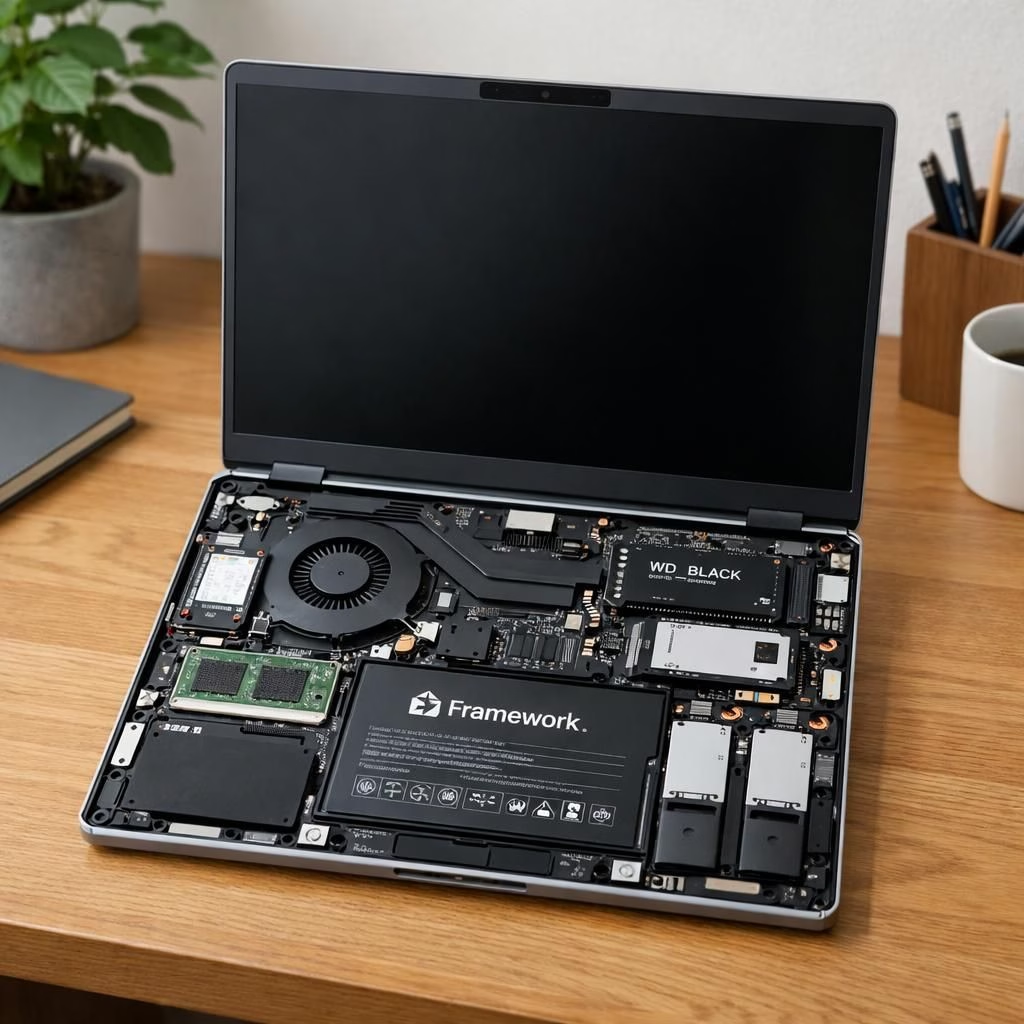
When people ask for a hardware story with a brain and a sense of humor, the Framework Laptop 13 Pro delivers as the first major revision to the original laptop. This modular upgrade keeps repairability at the core while adding polish that nods to tinkerers and professionals alike.
Framework upgrades for Laptop 13 Pro enthusiasts
The revision leans into a repairable, swappable ethos. The chassis remains slim, but it gains smarter heat management and better accessibility for disassembly.
It keeps the popular philosophy of modular components and user-serviceable parts, bridging the gap between consumer gadgetry and actual hardware knowledge. Reviewers across Ars Technica, The Verge, Engadget, Gizmodo, and Tom’s Hardware watched the redesign with a mix of curiosity and grin, noting how the approach invites a hands-on mindset rather than a sprint to the repair shop.
The device also makes the most of external GPU expansion, with an ecosystem that allows a user to flex from laptop productivity to desktop-class performance when needed.
What changed in the Framework Laptop 13 Pro revision
- More accessible internals and a plan that supports upgrades without replacement.
- Smarter heat management and easier disassembly for DIY repairs.
- External GPU expansion and modular storage options for flexible performance.
- Linux-friendly configurations and longer usable life for a wider audience.
The Framework approach for Laptop 13 Pro modularity
Under the hood, the approach leans into a reworked chassis, more accessible internals, and a plan that welcomes upgrades without forcing a full replacement.
It supports a pluggable GPU path via an external kit, enabling a shift from on-the-go productivity to more demanding tasks when you need it. Reviews noted that the upgrade keeps a focus on repairability, while the broader ecosystem offers options for peripherals and storage upgrades, with Linux-friendly configurations often praised as a strong fit for the core audience.
Beyond the chassis, observers pointed to the redesigned enclosure and thermal layout, which improve heat dissipation and battery life in practical tests. Some outlets mentioned the new generation carries Intel Core Ultra Series 3-level performance, aiming to be a MacBook Pro for Linux users in the eyes of hardware enthusiasts. The overarching narrative remains: you buy a portable that can reasonably evolve with your needs, rather than a throwaway device that requires a whole new model every 18 months.
The conversation around 2026’s revision centers on longevity, repairability, and flexibility. The ecosystem around the framework is not about chasing novelty; it is about sustainable upgrades and clear, accessible repair paths that empower users to extend the device’s life and adapt to new workloads without breaking the bank.
Have you tried customization or the eGPU path? Share your experiences in the comments below; your input helps others decide how far this modular approach can take them.
External sources and further reading help contextualize this revision. For original reporting, see Ars Technica’s overview below.
Practical upgrade steps
- Verify your current modules and check official teardown guides before swapping any components.
- If you plan to use an eGPU, consult the approved external kit and ensure driver support for your Linux distribution.
- Consider adding or swapping drives and memory to extend usable life for demanding workloads.
- Keep an eye on firmware and kernel updates that improve hardware compatibility and thermals.
FAQ
- Is the Framework Laptop 13 Pro truly repairable? Yes. The model emphasizes serviceability with documented teardowns and standardized connectors that invite community-driven upgrades.
- Does it run Linux well? In practice, configurations are Linux-friendly, with many users reporting smooth setups and strong community support.
- What about battery life in real use? Practical tests show solid endurance, with thermal optimizations helping efficiency under load.
- How long will upgrades stay relevant? The modular approach aims to extend the device’s life by design, reducing the need for a full replacement every year or two.
Have you tried customization or the eGPU path? Share your experiences in the comments below; your input helps others decide how far this modular approach can take them.
External sources and further reading help contextualize this revision. For original reporting, see Ars Technica’s overview below.
External sources
References
Original article reference: Ars Technica — Framework Laptop 13 Pro is the first major revision to the original Framework Laptop. Thanks to Ars Technica for the original reporting.