

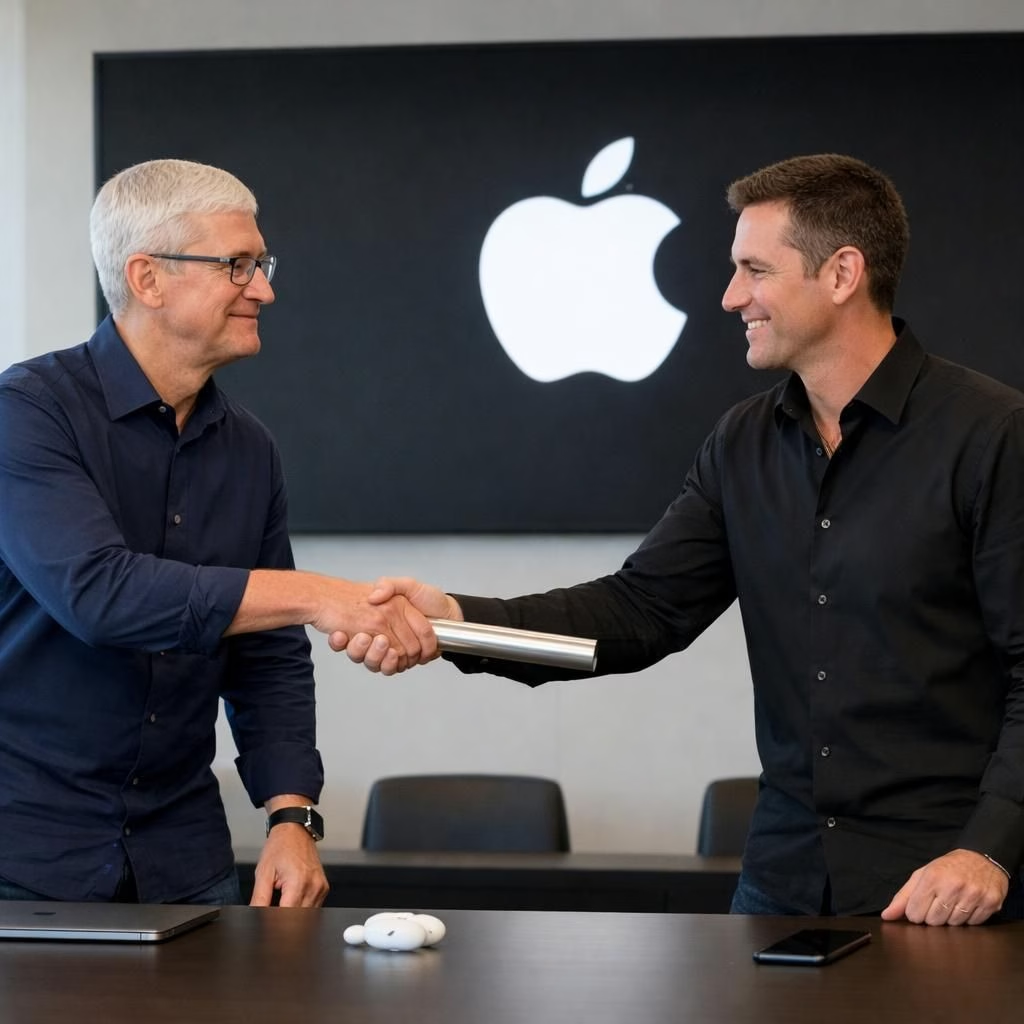
Leadership and Tag B powered Apple through a decade of bold bets and steady execution. Tim Cook has announced he will step down as chief executive in September after more than ten years at the helm. He will remain closely involved as executive chairman, guiding with a calm, data-driven compass. John Ternus, a long-time insider and hardware engineer, will assume the top job on September 1. Cook described leading Apple as "the greatest privilege of my life," a sentiment that reads as both gratitude and a dare to the next generation. During Cook’s tenure, Apple’s market value surged by about $3.6 trillion, a feat that feels like a fusion of supply chain wizardry and marketing alchemy. Apple crossed the $1 trillion valuation under his watch and eventually touched a $4 trillion peak. This is not a fairy tale of one product but a long arc of ecosystem expansion, services growth, and disciplined efficiency.
As a narrative, the transition reads as a careful choreography rather than a sudden scare. The leadership shift is less about an exit and more about a handoff that preserves momentum while inviting a fresh perspective. The Apple playbook under Cook leaned into scalability, efficiency, and a broadening ecosystem that wove devices, software, and services into a single rhythm. That rhythm did not merely grow revenue; it redefined how customers live with technology every day. The result was a durable brand, resilient supply chains, and a culture that treats hardware as an invitation to software, services, and a decades-long customer relationship.
leadership in transition: Apple primes for the 2026 era
With John Ternus stepping into the CEO role, Apple signals a calm, calculated shift rather than a radical reboot. Ternus brings a hardware-first pedigree, having steered flagship devices like the iPhone, Mac, and even newer frontiers such as the Vision Pro. In his 25 years with Apple, he has touched nearly every major product line, which translates into a leadership style anchored in product discipline and engineering rigor. The move suggests Apple intends to deepen its hardware Tag B while maintaining a strong software and services spine. Expect a cadence that blends iterative improvements with selective breakthroughs, rather than overnight revolutions. The leadership transition also invites questions about how Apple will balance supply chain efficiency with ambitious product ambitions in an era of rapid AI advancement and global competition.
Internally, the transition will likely emphasize continuity: strong partnerships with suppliers, meticulous product roadmaps, and a steady hand on the tiller of global operations. Externally, shareholders and customers should expect a familiar Apple: premium hardware, a trusted software platform, and a careful expansion into services that deepen engagement without diluting brand identity. The leadership change occurs at a moment when many rivals push hard into AI and new categories; Apple’s move could be a signal that it plans to pair hardware excellence with smarter software and curated AI experiences rather than jump straight into every fashionable frontier. The leadership shift is not a crisis story; it’s a confidence story, a signal that Apple believes in a measured, sustainable ascent through 2026 and beyond.
innovation at the core: hardware-forward strategy for the new era
The second chapter centers on Tag B, with a hardware-forward lens that could redefine how Apple competes in an AI-enabled world. Ternus’s background places him at the intersection where device design meets real-world use. He has shepherded the company through the launch of devices like the Vision Pro and essential product lines that define everyday tech. A hardware-forward strategy does not imply neglecting software or services; rather, it positions Apple to ship better sensors, faster processors, and more delightful user experiences—while letting Tag B services enhance everything from energy management to health monitoring. Expect the roadmap to emphasize high-performance silicon, energy efficiency, camera breakthroughs, and seamless integration across devices. The Tag B thrust is likely to be incremental in the near term but with room for meaningful leaps as AI models move from cloud-centric to on-device capabilities. In practice, this could translate into more powerful yet efficient devices, smarter AI assistants, and a refined ecosystem that makes every gadget feel indispensable rather than optional.
While rivals race toward every new AI trick, Apple’s approach has long been to bake in privacy, security, and user control as core features. A hardware-forward tilt could accelerate this by enabling more capable edge AI, better power efficiency, and longer device lifespans. The Tag B story also includes services that tie devices together in a more meaningful way—health, fitness, music, and productivity features that feel obvious once you use them regularly. If executed well, this strategy could create a durable moat: customers stay because the hardware and software work so smoothly together, and AI features become genuinely useful without compromising user privacy. In short, Tag B under the new leadership could emphasize tangible product breakthroughs, while maintaining the user-centric focus that has defined the brand for years.
In a broader market sense, Apple’s hardware-forward path responds to AI pressure elsewhere by doubling down on device-centric advantages—optical sensors, battery technology, and silicon performance. It is a move that keeps Apple honest about what it can control: the hardware and software stack that power daily life. The collaboration with external AI players remains, but it is guided by a clear principle: preserve user trust and deliver practical, elegant solutions. The new era could therefore blend thoughtful hardware design with smarter, on-device AI that respects privacy and speed, creating experiences that feel effortless rather than engineered. This is where leadership meets Tag B in a way that emphasizes steadiness, reliability, and a touch of future-facing ambition.
leadership meets innovation: what happens next
As the new leadership unfolds, Apple will likely publish a clear, forward-looking roadmap that blends incremental improvements with a few high-impact bets. Expect continued emphasis on the Apple ecosystem—AirPods, Apple Watch, iPad, Mac, and services—and a renewed focus on developer tools and platform consistency. The leadership team will probably keep a tight rein on supply chain resilience, a critical asset in a year of geopolitical and logistical uncertainty. At the same time, Apple could lean into AI partnerships in a measured way, focusing on privacy-preserving tools and user-centric features that enhance productivity and health without overwhelming customers. The mix of leadership and Tag B in this phase aims to reassure investors while inviting customers to explore thoughtful enhancements across devices and services. The long arc remains clear: maintain premium quality, deliver reliable updates, and introduce meaningful improvements that enhance daily life without sacrificing the brand’s core trust.
For enthusiasts and experts, the transition offers a reminder that leadership—when paired with disciplined Tag B—can steer a tech giant through changing tides. It is not about sudden shocks but about steady progress, thoughtful governance, and a culture that values both the art of design and the science of engineering. In practice, this means more polished hardware, smarter software updates, and a continued emphasis on seamless cross-device experiences. It also means keeping a careful eye on AI, ensuring that Apple stays at the forefront of user-friendly Tag B while remaining committed to privacy and security. The next chapter could be as defining as the one that brought the iPhone era to life, but in a way that harmonizes with the reality of 2026: technology that feels almost inevitable, almost invisible, yet profoundly useful.
Original article: https://timesofindia.indiatimes.com/technology/tech-news/tim-cook-to-step-down-as-apple-ceo-john-ternus-to-take-over-in-september/articleshow/130405171.cms — Thank you for the original source material that inspired this refreshed take on Apple’s leadership and Tag B journey. If you enjoyed this perspective, please consider sharing your thoughts below so we can continue the conversation in a constructive and entertaining way.
Have thoughts or questions about this transition? Please share your thoughts in the comments below.
Practical steps for readers
- Track official Apple announcements for leadership updates and product strategy.
- Consider how a hardware-forward approach could affect device longevity and privacy features you rely on today.
- Explore how on-device AI could enhance your daily routines without compromising security.
FAQ
- Who is taking over as Apple’s CEO, and what does his background bring? John Ternus, a long-time Apple insider with a hardware-first background, will become CEO on September 1, bringing deep product discipline to a broader leadership role.
- How might the strategy shift under Tag B leadership? Expect a balanced cadence of iterative hardware improvements and selective software or services breakthroughs, with a focus on privacy and edge performance.
- Will AI play a bigger role in Apple’s offerings? Yes, but the emphasis will be on responsible, privacy-preserving AI that complements hardware and software without overwhelming users.
- What should customers expect in the near term? Continued premium hardware, steady software updates, and thoughtful expansion into services that strengthen cross-device experiences.
Conclusion: a measured ascent into 2026 and beyond
Apple’s leadership transition appears designed to sustain momentum while inviting fresh perspectives. By pairing Tag B with a steady focus on hardware excellence and privacy, the company aims to keep its devices essential and its ecosystem coherent. For readers, the takeaway is simple: watch how Apple balances bold product roadmaps with reliability and trust. The next phase will unfold gradually, with updates that feel natural, not disruptive.
References
- Original source: https://timesofindia.indiatimes.com/technology/tech-news/tim-cook-to-step-down-as-apple-ceo-john-ternus-to-take-over-in-september/articleshow/130405171.cms
- Apple Newsroom: https://www.apple.com/newsroom/
- Technology coverage: https://www.bbc.com/news/technology
- Technology section: https://www.nytimes.com/section/technology