

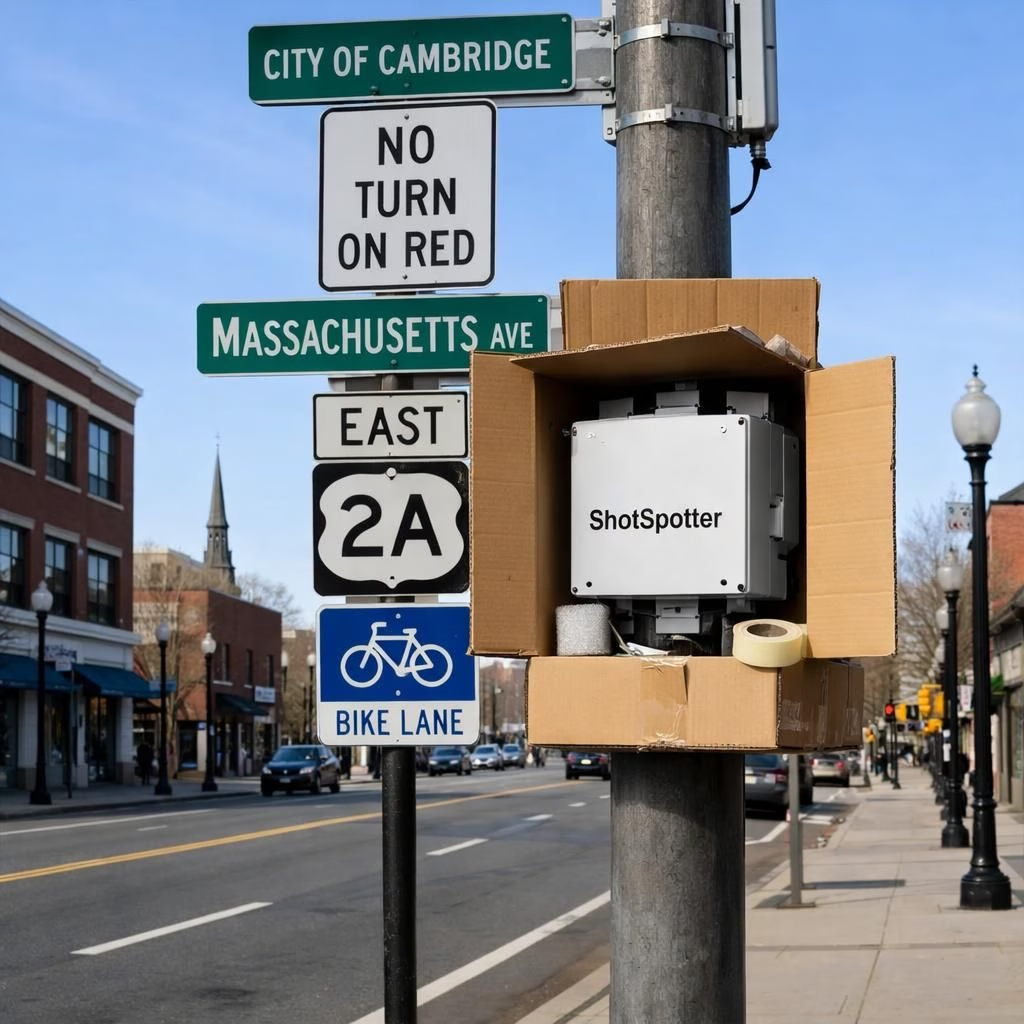
In Cambridge, a long-running debate over privacy and gunshot-detection has found a practical ending: the City Council voted to end ShotSpotter within 90 days. Supporters argued the technology helps responders and saves lives, while critics pointed to accuracy gaps, civil rights concerns, and potential federal data use that could complicate local safety goals. The decision marks a pivot from a high-tech glare toward more human-centered public safety measures, with an eye on what data is collected, who gets to see it, and how fast action happens when a sound is detected.
gunshot-detection and privacy in Cambridge: the vote and its ripple effects
The council’s vote split five to remove ShotSpotter, with two opposing and two choosing to be present rather than take a side. The outcome means the city manager and police officials are instructed to cease using ShotSpotter within 90 days. Contracts will be terminated, devices physically removed from locations around Cambridge, and the city will likely reallocate resources toward alternatives that emphasize community-based situational awareness rather than automatic dispatch from a sensor network. It’s a transition that invites residents to ask: if not ShotSpotter, then what?
ShotSpotter, a product from SoundThinking, has long argued that its network of acoustic sensors can save lives by speeding up response times, enabling faster evidence collection, and aiding medical aid at the scene. Their public statements frame ShotSpotter as accurate, unbiased technology that respects privacy while keeping communities safer. Cambridge’s vote challenges that framing, urging a closer look at whether the system truly prevents crime, how false positives affect neighborhoods, and whether the benefits outweigh ongoing concerns about privacy and data sharing with federal entities.
gunshot-detection and privacy in Cambridge: what becomes of the data and the trust
Critics of ShotSpotter highlighted that a high rate of false positives could lead to misdirected police response, unnecessary alarms, or over-policing in certain neighborhoods. The discussion in Cambridge echoed a national dialogue: does the data harvested by gunshot-detection systems remain a local asset or does it become a federal resource for surveillance and enforcement agendas that communities may not fully endorse? The resolution notes that ShotSpotter data has historically been accessible to federal agencies, which raised concerns about immigration enforcement and broader civil liberties in a city that prizes privacy. The council’s decision to end the program foregrounds a question worth answering aloud in every city: are the privacy protections attached to such systems robust enough to earn public trust?
City officials and residents alike spoke to the tension between the desire for rapid response capabilities and the real-world consequences of sensor networks. Supporters of keeping ShotSpotter argued that there were moments when the technology detected gunfire that never generated a 911 call, suggesting potential life-saving opportunities. They cited at least 11 incidents where ShotSpotter reportedly alerted authorities when no immediate call flowed through the phone lines, implying a safety net that could still matter in certain urban environments. Yet opponents pressed for a verdict grounded in independent validation, transparency about data access, and stronger privacy safeguards to prevent mission creep. The Cambridge vote embodies a broader movement that wants to balance public safety with civil rights and local control over policing tools—a balance that gunshot-detection and privacy advocates insist is not only prudent but essential to maintaining public legitimacy.
the practical path forward: what Cambridge plans to replace and how
The post-ShotSpotter period will likely involve a mix of community outreach, enhanced street-level policing initiatives, and targeted crime-prevention programs that emphasize prevention and rapid, local information-sharing without a sweeping sensor network. The question remains how to replace the perceived speed of gunshot-detection with methods that preserve trust, reduce false alarms, and keep the emergency response pipeline efficient. In this light, gunshot-detection and privacy considerations become not just a debate about technology, but a blueprint for how Cambridge chooses to allocate limited public resources, how it engages with residents, and how it measures safety beyond the quiet metrics of sensor accuracy.
- Boosted community outreach and neighborhood-informed safety plans that emphasize trust and transparency.
- Localized policing strategies focused on problem-solving rather than automatic dispatch from sensors.
- Clear governance on data access, retention, and independent reviews to protect privacy.
- Regular public updates and performance reviews to measure impact beyond sensor detections.
Public statements from both sides underscored a shared goal: reducing gun violence with responsible tools. The exit from ShotSpotter does not erase the problem of gun violence; instead, Cambridge hopes to harness the energy of local governance toward solutions rooted in collaboration, accountability, and transparent data practices. The conversation about gunshot-detection and privacy continues, but the city’s path forward is now shaped by a decision to place human judgment, community input, and local oversight at the forefront of public safety policy.
lessons learned about gunshot-detection and privacy in municipal governance
Cambridge’s experience offers a compact case study for other municipalities weighing similar technology. The central lesson is that gunshot-detection and privacy are not competing absolutes but rather two sides of a policy coin. When a city questions efficacy, privacy risks, and the potential for federal data use, it is signaling a preference for local control, greater transparency, and a more cautious approach to sensitive data. The discussion reminds us that while technology can augment safety, it cannot replace the social contract that binds a city’s residents to a shared standard of privacy and civil liberties. A well-informed debate on gunshot-detection and privacy tends to produce smarter governance, even if it means saying goodbye to a tool that some believed was indispensable.
For Cambridge, the path forward blends public safety with privacy protections, a prudent mix that keeps the focus on lives saved, trust earned, and a transparent, accountable process for any future technology adoption. The city’s decision to end ShotSpotter within 90 days stands as a reminder that the best technology serves people first and data second, and that local voices deserve a central role in shaping how we stay safe in our streets.
Original article: Original reporting on Cambridge ShotSpotter.
If you want to weigh in, I’d love to hear your thoughts. Please share your perspective in the comments below.
FAQ: Common questions on gunshot-detection and privacy
- What is ShotSpotter?
- ShotSpotter is a gunshot-detection system that uses acoustic sensors to identify sounds resembling gunfire and alert authorities. Critics question its accuracy and impact on privacy and civil rights.
- Why did Cambridge end ShotSpotter?
- Officials cited effectiveness debates, false positives, and concerns about data sharing with federal authorities, alongside a push for more local, trust-based safety measures and privacy safeguards.
- What comes next for Cambridge’s safety strategy?
- The city plans to expand community outreach, emphasize problem-solving policing at the street level, and implement stronger privacy rules and oversight for data use.
- How will residents stay informed?
- City officials commit to ongoing public updates and opportunities for community input as new approaches roll out.
References
- Original reporting: Cambridge ShotSpotter vote
- ShotSpotter overview — SoundThinking
- Department of Homeland Security