

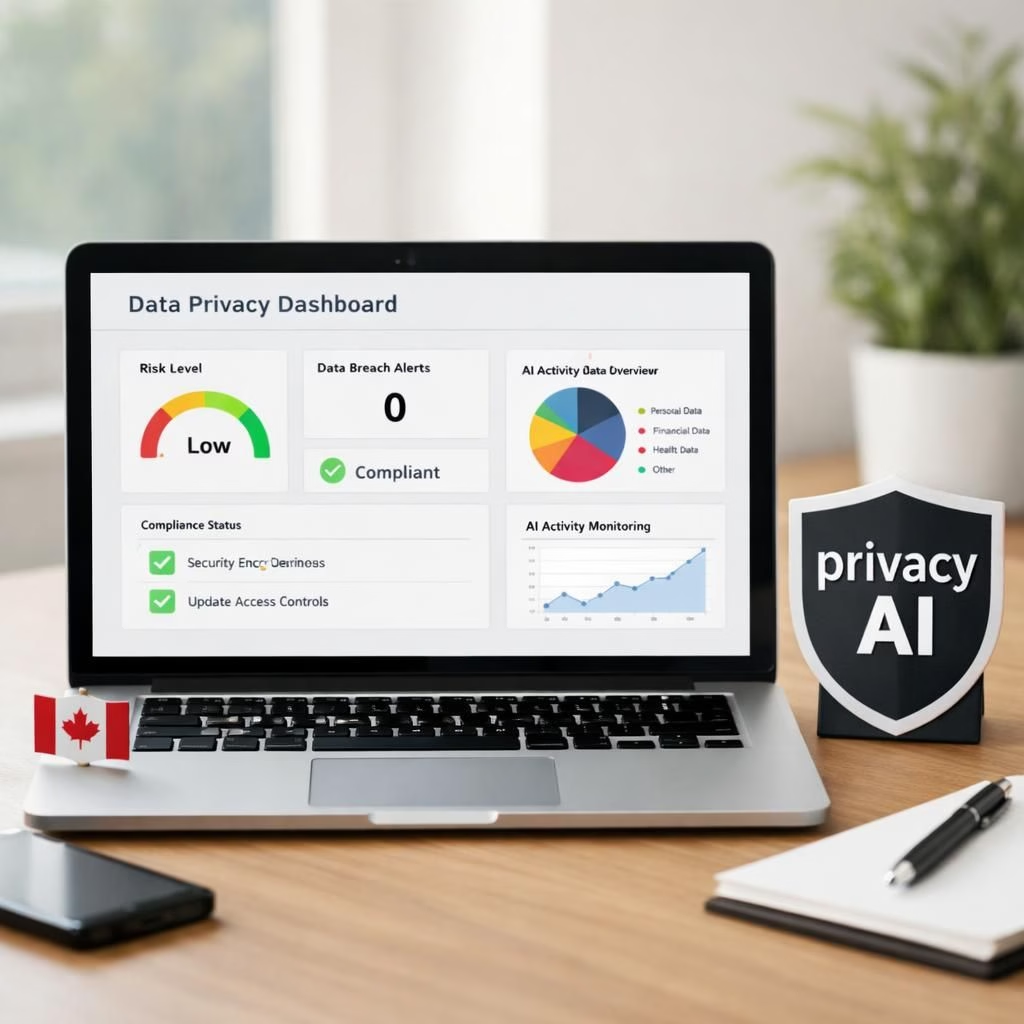
In 2026, Canada’s plan to tighten privacy rules arrives with a clear goal: protect people from pricing that tracks their behavior, and bring more transparency to AI-driven decisions. The proposed legislation aims to curb surveillance pricing—the practice of nudging costs by watching your behavior, location, and profile—while giving Canadians more control over their data. It’s not a blanket ban on data use, but a pragmatic step to rein in the greediest pricing tricks without killing the data economy.
privacy safeguards in 2026 Canada: pricing fairness and AI transparency
The bill would require organizations to disclose more about automated decisions, such as the data inputs used to set prices. This reduces the mystery around price gouging and helps Canadians decide when to switch brands or when to compress loyalty programs into a more favorable ratio. The emphasis on algorithmic decisions means we will get more plain-language explanations about how a price is computed. The law also pushes AI transparency by clarifying the data inputs and the logic behind pricing decisions.
They would also grant Canadians the right to delete personal information under certain conditions, balancing privacy with the needs of businesses to keep records for compliance or fraud prevention. The policy treats children’s data as sensitive, not simply as a line item in a terms-of-service page. The approach signals a broader shift toward responsible data handling rather than punitive fines alone. privacy remains a practical concern for families and small businesses alike, and AI transparency adds clarity to how pricing decisions are made.
enforcement and oversight: privacy nudges for AI compliance
The government plans to establish a new regulator to oversee private sector compliance, working alongside the Office of the Privacy Commissioner for federal institutions. This dual oversight should reduce the chance of enforcement drift. Companies that ignore the rules face penalties up to C$10 million or 3% of global revenue, whichever is higher; more serious violations could trigger fines of C$25 million or 5% of global revenue.
In practice, this means more audits, not more doom-saying. Tech teams will learn to document data flows, explain how their models price products, and demonstrate how they guard against bias. The emphasis remains on balancing risk with opportunity; Canadians will still be able to use digital services, but they will know what data feeds those services and can push back when pricing feels personal rather than practical. AI is part of the journey, not simply a compliance box to tick.
On the international front, Carney commented on Washington’s move to restrict Anthropic’s newest AI models, arguing that over-reliance on a single provider invites risk. He told Fortune that diversification matters and that resilience matters more than a single vendor’s convenience. On June 12, Anthropic took Fable 5 and Mythos 5 offline to comply with a directive from the Trump administration. The order blocks foreign nationals from accessing the company’s most advanced AI systems, marking one of the most significant steps yet in frontier AI export controls. Anthropic described Mythos as strikingly capable and warned it could surpass human experts at identifying and exploiting computer vulnerabilities.
Industry voices argue this is a calibration, not a collapse. Retailers who rely on data for dynamic pricing will pivot to clearer disclosures and consent-based pricing experiments. Small shops can breathe easier when consent and simple opt-outs replace opaque price nudges. Bigger firms will adjust dashboards to meet the standard, while still competing on value and service. The result could be a calmer, more predictable market that respects privacy while recognizing AI‘s power to optimize experiences.
Additionally, this privacy framework nudges AI developers toward responsible deployment. The combination of transparency and accountability means algorithms must explain themselves in understandable terms. That doesn’t make AI less capable; it makes AI more trustworthy. Privacy considerations become part of the design process, not an afterthought tucked into a long terms-of-service page. In plain terms: we keep the benefits of AI-enabled services while guarding against pricing that feels personal but isn’t fair.
Back home, the Canada plan shows a practical, cautious approach: protect people, safeguard innovation, and keep the data economy humming. It does not pretend to be a utopia, but it does promise clearer explanations for automated decisions and more control over personal information. It also signals a broader trend: states increasingly view privacy and AI as twin levers of consumer fairness, rather than as fringe concerns of nerds in hoodies. The result could be a more informed marketplace where loyalty programs are fairer, pricing is more transparent, and people feel less like the data well has been tapped without consent.
We welcome your thoughts and experiences with privacy and AI in everyday shopping and online life—please share your thoughts in the comments below.
Linkback attribution: Thanks to Bloomberg for the original reporting on June 15, 2026. See the original article here: Bloomberg. We appreciate the opportunity to discuss these ideas and pass along the core facts from the original piece.
Practical steps for consumers
- Review data rights in your accounts and know when you can delete or request data removal.
- Look for clear disclosures about automated pricing and price inputs before agreeing to renew loyalty programs.
- Enable opt-outs for targeted pricing where offered and prefer services with transparent pricing rules.
- Regularly check privacy settings and keep software up to date to reduce data exposure.
FAQ
- What is surveillance pricing and why does Canada want to limit it?
Surveillance pricing uses personal data to adjust prices. The goal is to curb unfair charges while preserving useful data-driven services. - What new rights would Canadians gain under the bill?
People could get more explanations for automated decisions, delete personal data in specific cases, and see children’s data treated as especially sensitive. - What does this mean for businesses?
Firms must disclose data inputs and pricing logic, conduct audits, and comply with stricter penalties for violations.
References
External sources for further reading:
Bloomberg coverage is cited in the article above as well.