

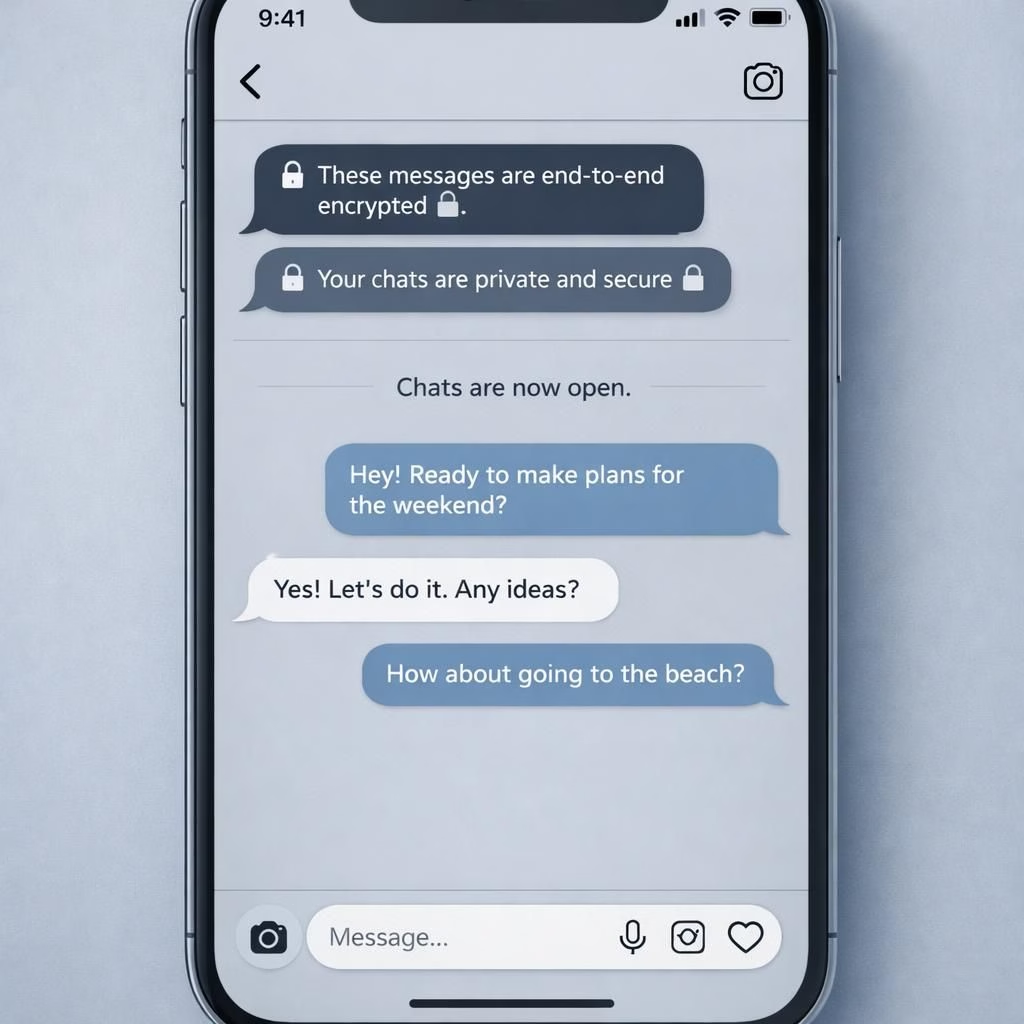
Today we’re unpacking a privacy and encryption update from Meta: end-to-end encrypted direct messages on Instagram will be retired in 2026, with support ending on May 8. The change highlights how privacy and encryption shape everyday messaging on a global platform. If you’ve ever stored a secret meme or a sensitive chat in a hidden corner of Instagram, you’re invited to stay curious about what comes next for privacy and encryption in social apps in 2026.
In short, this is a recalibration rather than a dramatic reversal. Meta’s move invites a smarter approach to how conversations stay private while offering safety tooling that fits a vast, worldwide audience.
privacy in practice: what E2EE did for Instagram users
Privacy and encryption work hand in hand in end-to-end systems. End-to-end encryption means only the people in a conversation can read the messages. That’s privacy in the most literal sense: Meta can’t read your chat, third parties can’t peek, and even the platform itself has a limited view. In practice, this made sensitive chats feel safer, like a digital whisper between friends or colleagues who want a little distance from the loud world outside. The technology works by giving each device in a chat its own cryptographic key. A message is locked on the sender’s device and can only be unlocked by the recipient’s device, so a single key or server-side snooping doesn’t reveal content to others. It’s not magic; it’s math—and that math has shaped debates about safety and encryption for years. The truth, as Meta has framed it, is that privacy is valuable, but it isn’t always the easiest thing to scale across a global platform with billions of messages per day. Across the years, encryption and privacy have become a balancing act between protecting vulnerable people and providing lawful access where needed.
From a user experience angle, some folks loved the quiet confidence of encrypted chats; others found the lack of backups or cross-device continuity frustrating. Law enforcement and child-safety advocates argued that strong encryption can hinder investigations when bad actors hide behind the shield of secrecy. Those concerns aren’t dismissed in a single sentence, but the core idea remains: privacy and encryption protect honest conversations while raising questions about accountability and safety. The compromise has always lived in policy and tooling—and that’s where Meta’s decision sits today: a pragmatic pivot rather than a dramatic reversal in a vacuum.
encryption and policy: why Meta changed course
Meta’s statement is blunt: almost no one was using end-to-end encryption DMs on Instagram, so the cost of keeping the feature online outweighed the perceived benefits. The company’s approach to updating users is practical and a touch clinical: those with encrypted chats will receive prompts to download anything they want to keep before the deadline. If you’re on an older version of Instagram, you’ll be nudged to update to ensure you can access and download your affected chats. That’s the micro-eco-system reality of a global product: features that seem essential in one corner of the world or in one moment may not scale to the entire user base over time. Yet the conversation around privacy and encryption persists, because everyone from users to policymakers wants to know what data remains yours and what can be accessed for safety and compliance.
From a policy angle, the change is less about a single feature and more about how a platform responsibly manages risk, user options, and safety tooling. End-to-end encryption raises the bar for privacy by design, but it also complicates reporting, abuse-solving, and child-safety workflows. Meta has to walk a line: preserve user privacy while offering channels for reporting and safeguarding. The decision to sunset encryption on Instagram reopens that balancing act, inviting users to think about how they want their messages protected and what trade-offs they’re willing to accept for privacy, security, and safety. The reality is that any major platform will be adjusting encryption strategies as laws, technology, and user expectations evolve—especially in a year like 2026 where digital privacy is a hot topic across the globe.
what this means for you: practical steps and optimistic pacing
First, if you had encrypted chats on Instagram, you’ll want to back up what you care about before the clock runs out. Meta’s guidance to download media and messages is straightforward: pick the threads you want to preserve and save them locally if needed. This is a good reminder that privacy and encryption aren’t just about what happens automatically in the cloud; they’re also about what you decide to store, keep, and retrieve. Keep your app updated to ensure you have the latest download options and the smoothest possible transition. It’s a small, practical ritual that aligns with the broader privacy and encryption theme: take charge of your own data, even as big platforms adjust their default protections.
For new messages after the May 2026 cutoff, you may see changes in how conversations are secured and how much tooling exists for reporting or sharing messages for safety purposes. The conversation around privacy and encryption evolves with policy, technology, and user needs. If you enjoy the idea of chat security, you can experiment with alternative privacy-oriented tools or platforms that emphasize end-to-end safeguards, while staying mindful of each service’s own terms and capabilities. The key takeaway: privacy and encryption are not relics; they are living parts of how we communicate online and deserve ongoing, informed attention.
Practical steps for users
- Review any encrypted chats you care about and note items to save before the May 8, 2026 deadline.
- Update Instagram to the latest version to access the built-in data export tools.
- Follow the on-screen prompts to export messages and media to local storage if needed.
- Consider trying other privacy-focused chat apps if you want ongoing encryption as a default, while checking each service’s safety options.
FAQ: privacy and encryption questions
- When exactly does support end for end-to-end encryption on Instagram?
- Support ends on May 8, 2026. After that date, encrypted chats will no longer be supported unless you’ve saved a copy of your data beforehand.
- What happens to chats I already have?
- Meta says you’ll see prompts to download any messages or media you want to keep before the deadline, so plan to back up important conversations.
- Is privacy still possible after this change?
- Yes. The platform continues to offer privacy controls and reporting tools, but the balance between privacy and safety tooling will shift as encryption changes.
In short, this shift isn’t a demolition of encryption or privacy—it’s a recalibration. Meta explains that the feature wasn’t widely used, but the broader themes remain: we want conversations that stay private and secure while still offering ways to report abuse, seek help, and keep kids safe online. The path forward likely includes smarter defaults, clearer user controls, and more flexible options for those who need robust privacy without sacrificing safety.
Original source and gratitude: Meta Blog: End-to-End Encryption on Instagram (2026). Thank you for the original source material.
Have thoughts or experiences to share about privacy and encryption on social apps? Please share them in the comments and join the discussion!
References
- Times of India – Meta ends a major Instagram feature
- Meta Blog: End-to-End Encryption on Instagram (2026)
- EFF – Encryption