

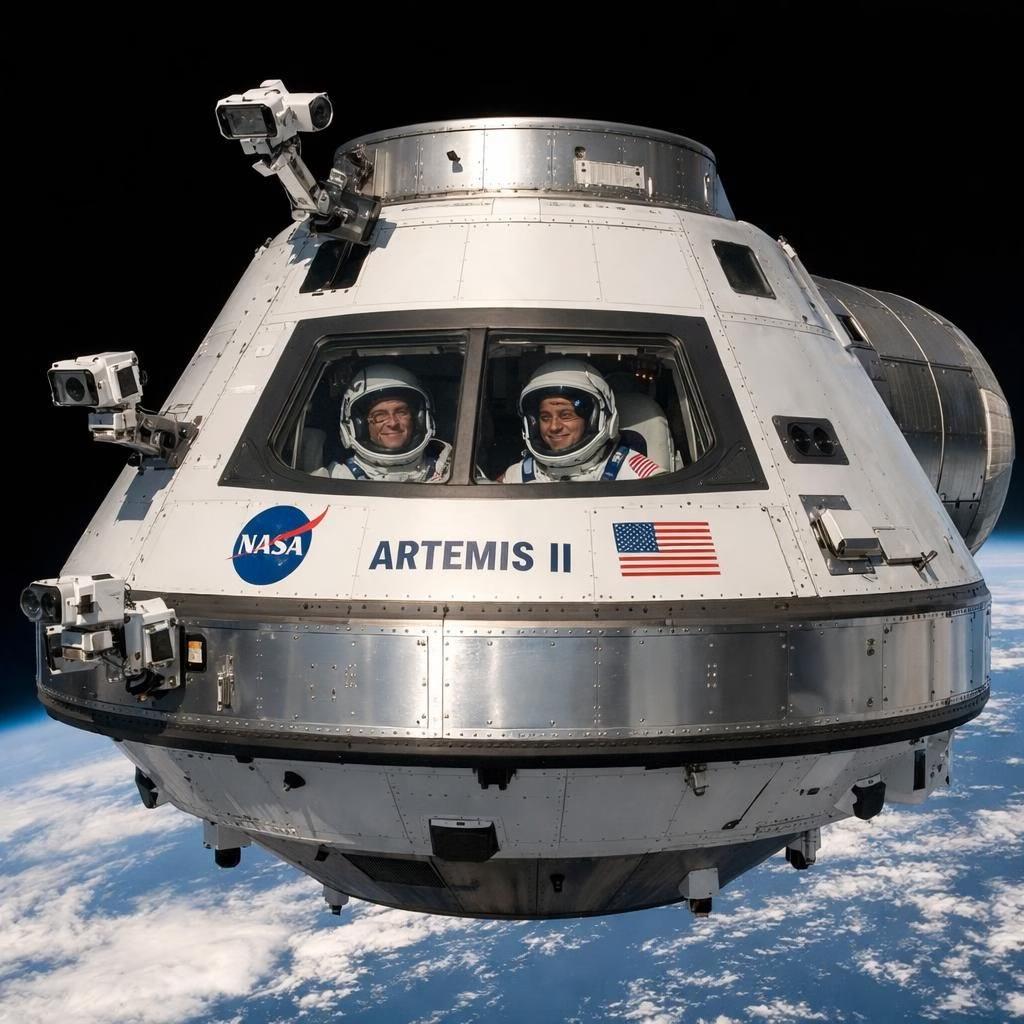
Cameras on Artemis II sit alongside a SpaceTech kit, blending decades of engineering maturity with a mission to document humanity’s return to lunar orbit in full detail.
Cameras on Artemis II: The on-board gear that keeps us watching
Artemis II carries at least 28 cameras—exterior mountings, cabin installations, and handhelds carried by the crew. These cameras capture every moment—from liftoff to the vast quiet of deep space—giving engineers and the public a front-row seat to a mission that blends spectacle with science.
The Nikon chapter is especially compelling. The Nikon D5 is a veteran in space, proven to withstand radiation and microgravity. It’s not flashy, but it’s proven—crucial in harsh conditions. The crew also brings the newer Nikon Z9, Nikon’s flagship mirrorless full-frame camera, which makes its space debut on Artemis II. For Artemis III, engineers plan extensive modifications under a formal Space Act Agreement between Nikon and NASA: radiation-hardened circuits, custom firmware for moonwalk conditions, and a space-grade grip to operate the camera with bulky gloves. A thermal blanket will shield the camera on the lunar surface, and NIKKOR Z lenses will be adapted to survive Moon temperature swings and radiation exposure. This is SpaceTech in action: familiar tools with moon-ready upgrades, combining reliability with innovation to keep Cameras moving forward.
SpaceTech on display: GoPro, iPhones, and laser links
GoPro is along for the ride in four specially-modified units mounted on the solar array wings of Orion. These rugged cameras capture high-resolution exterior views of the spacecraft, Earth, and the Moon, while also serving as practical inspection tools for mission control. The GoPro brand’s durability and compact form factor fit well with NASA’s SpaceTech ethos—reliable gear built to endure extreme environments.
In a move that delights tech fans and space historians alike, NASA approved personal smartphones aboard Artemis II. Both iPhones and Android devices join the mission, representing a bold step for SpaceTech inclusivity. Clips circulating on social media show iPhones circulating in zero gravity—proof that curiosity thrives even in zero-g selfies.
From a communications perspective, the Orion Artemis II Optical Communications system, or O2O, is the real showstopper. Unlike traditional radio links, O2O uses laser-based communications to shuttle data between the spacecraft and Earth at speeds up to 260 Mbps, enabling live 4K streaming from the Moon and rapid transmission of flight plans, procedures, and mission-critical data back to ground control. This is a clear example of SpaceTech delivering high-fidelity, low-latency data when it matters most.
Beyond the glamour of live streams, O2O provides a sturdy backbone for mission health checks and digital handoffs. The laser link helps ensure that images from Cameras, procedure updates, and procedural notes arrive on Earth with minimal delay. This is SpaceTech designed for reliability, not just for show—an essential mix when every decision can ripple through time and distance.
SpaceTech readiness: durability, future-proofing, and mission planning
The gear choices express a clear philosophy: couple proven Cameras with newer, mission-ready tech where it matters most. The D5’s known resilience, the Z9’s adaptability, and GoPro’s rugged design together form a versatile kit that can handle the Moon’s extremes. In Artemis III, engineers expect to extend this approach by refining circuits, adding a thermal blanket, and equipping a suit-friendly grip that lets astronauts operate the cameras without removing gloves. This SpaceTech mindset shows practical, ambitious progress toward a human return to the lunar surface.
Engineers and mission planners regard these tools as more than flashy gear. Cameras deliver real-time data for decisions, while SpaceTech connections ensure those decisions reach ground control with precision. The Artemis II gear lineup demonstrates a sustainable model for long-duration exploration: reliable, adaptable hardware that can evolve with each outward step.
As enthusiasts follow along, the Cameras and SpaceTech toolkit on Artemis II shows how curiosity travels with us—from the cabin to the cosmos.
For readers who savor the human story, this gear list hints at a broader cultural shift. SpaceTech is no longer the sole preserve of top labs and mission control; it’s a living ecosystem that blends off-the-shelf components with careful engineering to broaden participation in discovery.
Original article: Thank you to NASA for the Artemis II gear overview and the detailed lens-by-lens breakdown. You can explore more here: NASA Artemis II overview
Want to weigh in? Share your thoughts in the comments below.
Frequently asked questions about Artemis II gear
- How many cameras are on Artemis II?
- Artemis II carries at least 28 cameras, mounted on the exterior, inside the cabin, and handheld by crew members.
- What is O2O and why does it matter?
- O2O, the Orion Artemis II Optical Communications system, uses laser links to transfer data up to 260 Mbps between Moon and Earth, enabling live 4K streaming and rapid data delivery. This is a key SpaceTech capability for real-time operations.
- Are astronauts allowed to bring personal devices?
- Yes. NASA approved personal smartphones aboard Artemis II, including iPhones and Android devices, for non-critical tasks and for documenting experiences.
- What improvements are planned for Artemis III?
- Artemis III will leverage a refined Z9 with radiation-hardened circuitry, a suit-friendly grip, and enhanced thermal protection, continuing the Cameras and SpaceTech upgrades.
Conclusion: A practical template for future lunar missions
Artemis II demonstrates how a careful blend of proven SpaceTech and reliable Cameras can advance human presence beyond Earth. The mission offers a practical template for future exploration: durable gear, thoughtful upgrades, and a culture that invites broader participation in discovery. As the crew sprints toward the Moon and returns, the partnership between Cameras and SpaceTech will help tell the story with clarity and depth.