

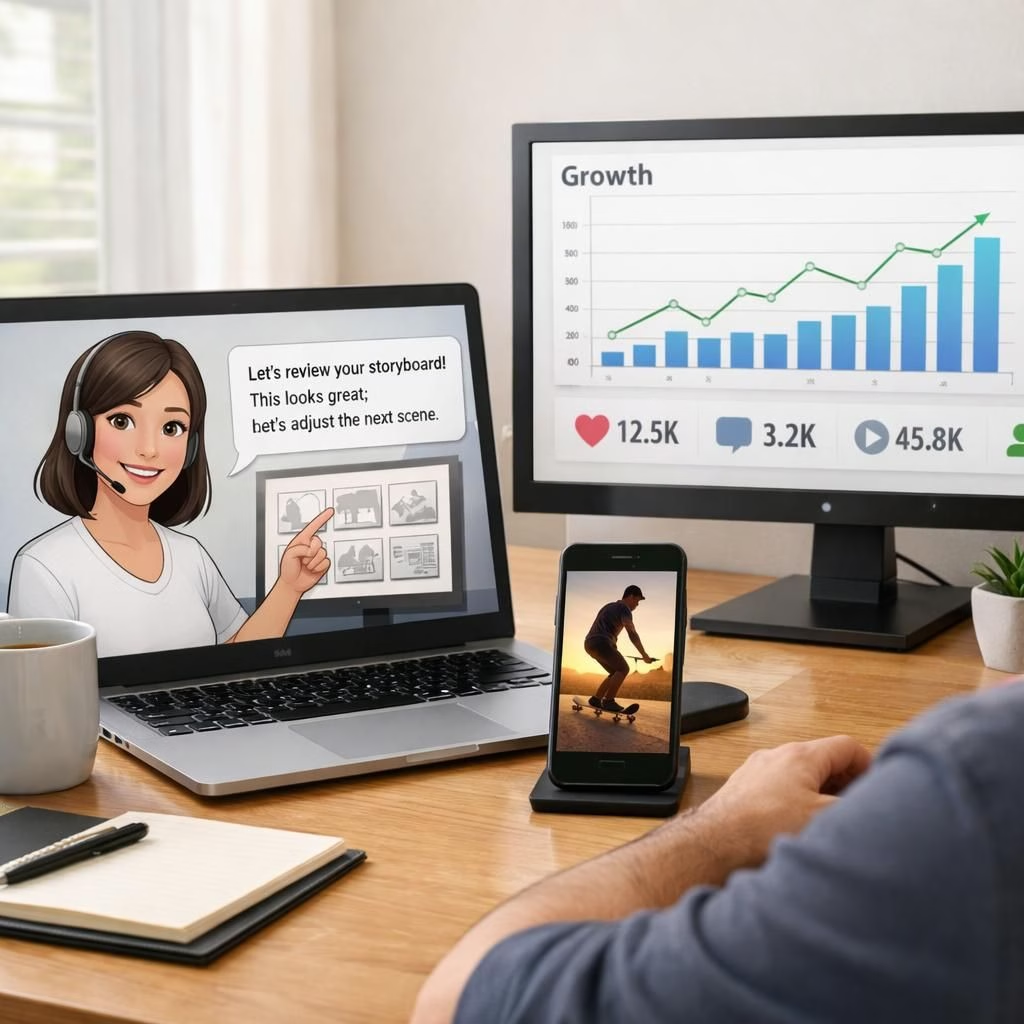
AI and Creativity collide in 2026 as O’Leary highlights that AI unlocks new jobs and monetizes Creativity at scale for young makers worldwide. His sunny take on The Iced Coffee Hour reframes AI not as a threat but as a turbo for imagination. He says, ‘everybody said you had to be an engineer, an engineer, an engineer. Now you want to be an artist again,’ and the line lands with a wink. The point is simple: AI is a tool that multiplies our creative levers, helping ideas turn into tangible results faster than before. This is not about replacing people; it’s about enabling people who can tell stories, edit video, and move goods with precision. When you pair AI with human judgment, the outcome isn’t a crossword puzzle; it’s a landscape of new roles where Creativity pays in ways we only glimpsed a decade ago.
AI Meets Creativity: A 2026 Perspective on Jobs
Following O’Leary’s remarks, the big takeaway is clear: AI can raise the value of Creativity across many sectors. The early caution that AI would hollow out the workforce now sits beside a more optimistic forecast. Creators who understand how to blend storytelling with data can convert attention into customers and revenue. On the Iced Coffee Hour, O’Leary pointed to the evolving economics of content—where a creator’s pay is increasingly tied to measurable customer acquisition. Once those content creators earned around 48 thousand dollars a year for basic output; now Creativity can climb toward six figures when the impact is trackable week by week. The insight is not that the numbers always go up, but that the right combination of AI-assisted production and brand strategy makes those numbers more plausible and repeatable.
AI in Practice: Creativity as a Revenue Engine
In practical terms, AI helps people craft compelling short-form content for platforms like TikTok, Instagram, and LinkedIn. It supports scripting, editing, and even the testing of ad variants that drive growth. O’Leary isn’t naive about disruption; he’s pointing to a shift where young professionals who can narrate a story, edit it for pace, and convert it into ads can command significant earnings. The message is not hype; it’s a blueprint. The ability to measure outcomes weekly and optimize accordingly makes Creativity more scalable, not less human. This is where AI acts as a productivity amplifier, multiplying margins across multiple business lines, not just one or two corners of the economy.
AI Productivity Across Sectors: Creativity as a Core Skill
O’Leary emphasizes that AI’s productivity boost is not a one-trick pony. He argues that AI strengthens margins and cash flow across 11 sectors by enabling faster experimentation and better decision-making. Creativity becomes a practical asset: it helps teams tell better stories, reach audiences more efficiently, and adapt quickly to changing markets. The premise is straightforward: AI is a tool that makes work speedier, more precise, and easier to scale. When used thoughtfully, it helps teams stay ahead of the curve without sacrificing human nuance or empathy in storytelling. The positive shift is that more people can join the value chain by producing meaningful, measurable content that resonates with real customers.
From Engineers to Artists: A Modern Career Arc for Creativity
The broader implication is a cultural one. The old dichotomy between technical roles and Creativity roles is blurring. The modern job arc taxonomy now ranks storytelling, video editing, and ad optimization as core competencies. AI provides the scaffolding—templates, analytics, and automation—that lets individuals invest more of their time in genuine Creativity. The result is a more dynamic job market where a young creator can become a founder of a small brand, a consultant who guides teams on growth, or a freelance producer who consistently delivers high-impact campaigns. The upshot is a healthier supply of opportunities for people who love to craft narratives and shape audiences with purpose and precision.
To make this practical, seasoned professionals suggest a few steps. First, embrace AI as a collaborator rather than a threat. Second, treat Creativity as a measurable discipline—define what success looks like with clear metrics for engagement, conversion, and retention. Third, invest in learning that bridges storytelling with data literacy. Fourth, build a routine where AI handles repetitive tasks so humans can focus on ideation and emotional resonance. These moves aren’t about chasing the latest gadget; they’re about building sustainable, scalable value from Creativity.
For those watching markets and startups, the O’Leary take is a reminder to reframe AI not as a job killer but as a catalyst for new, better jobs. The focus shifts from fear to feasibility: can you tell a better story, can you edit more efficiently, can you optimize a funnel to bring in more customers with less waste? If the answer is yes, you’re tapping into a durable trend: AI-powered productivity with human Creativity at the helm.
As a culture that once worried about the radio being replaced by television, we are now watching AI broaden the canvas again. The future, in this view, is not a zero-sum game but a collaborative ecosystem where human imagination and machine logic cooperate to create value that is both meaningful and measurable. The excitement isn’t just about what AI can do today; it’s about what Creativity can become when amplified by intelligent tools that respect craft and context.
Original article attribution: Thanks to Benzinga for the original reporting on The Iced Coffee Hour featuring Kevin O’Leary. You can read the original coverage here: Benzinga Article on AI and Jobs.
In the end, the practical takeaway is simple: lean into AI as a productivity partner, nurture Creativity as a competitive advantage, and teach the next generation to pair stories with data. If you’re reading this, you’re already part of that future. Share your thoughts on how you’d blend AI tools with your own creative process in the comments below. And if you found this helpful, consider sharing the post to spark a broader conversation about AI, Creativity, and the jobs of 2026.
Thank you for reading and for contributing to a thoughtful, constructive dialogue around this topic. The more we discuss, the more we learn about how to navigate this new era with optimism and practical know-how.
References
- Times of India: Kevin O’Leary on AI and jobs
- AI and the productivity jump — McKinsey
- How artificial intelligence could affect jobs — Brookings