

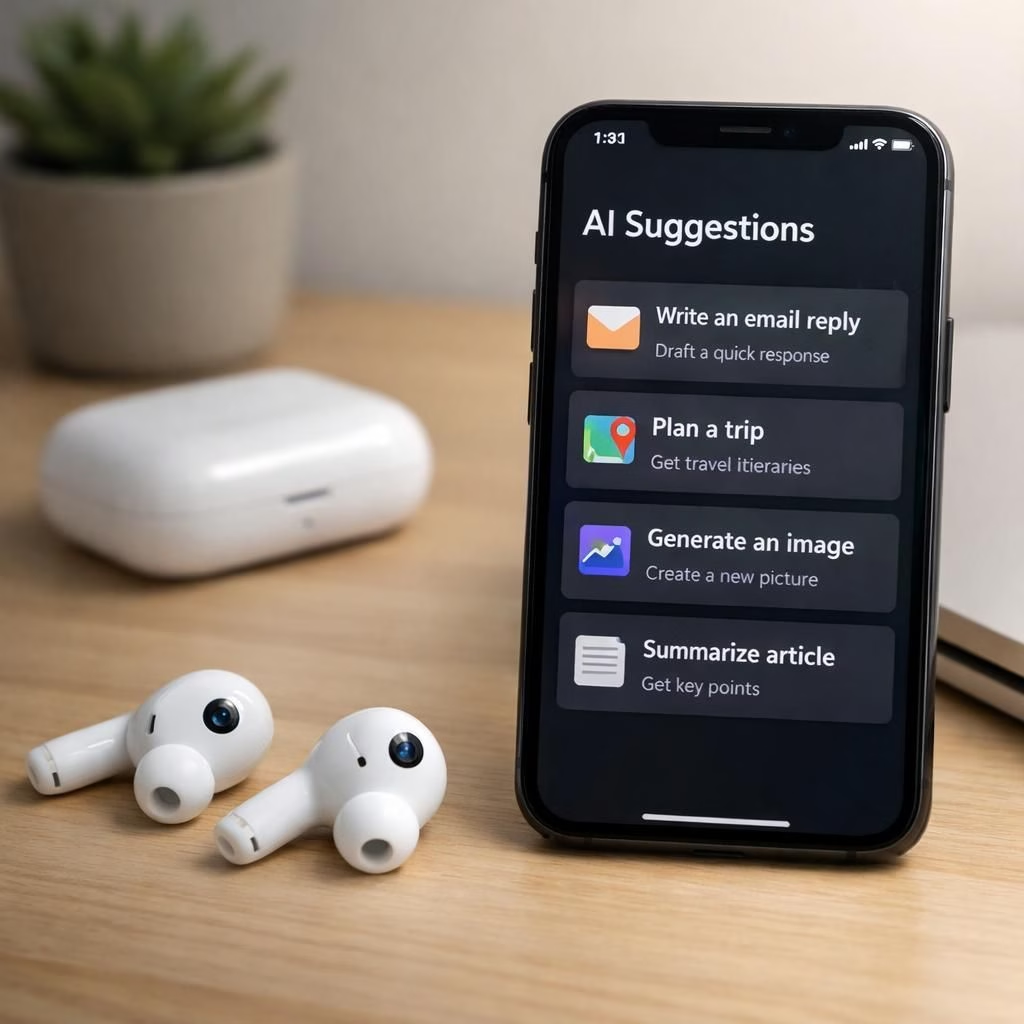
AI and Earbuds suddenly make sense in 2026. The idea of tiny cameras tucked into ordinary Earbuds is no longer a tech rumor. It is a practical path to hands-free AI that fits into daily life.
AI and Earbuds: A Tiny Camera, Big Implications
In practice, cameras in Earbuds can identify who you’re talking to. They can infer what you are about to do and whether your environment needs a pause. This is not stealth surveillance. It is ambient AI that acts like a smart teammate.
Your assistant can suggest transcripts, reminders, or directions based on your voice cues and surroundings. The cameras are small. They hide behind the design. They respect privacy when you opt in.
The real magic is not recording everything. It is understanding enough to help you focus on the moment.
AI-Powered Earbuds: Ambient Vision in Everyday Life
Let’s walk through a day. You wake up and Earbuds are ready. A camera in the right bud looks for gestures and keeps the context for your assistant. A quick nod might capture a to-do list without touching a screen.
In a meeting, the assistant can summarize key points and flag decisions. On a walk, ambient vision can identify storefronts or landmarks and offer language translations when needed. The Earbuds stay out of view while their AI helps you stay organized. This is not a spy gadget; it is a productivity partner with a tiny footprint.
Critics worry about privacy. That concern is healthy and fair. Manufacturers counter with opt-in controls, local processing, and clear indicators when the camera is active. The aim is to give you a choice about what AI sees and stores. For most people, the extra layer of awareness adds value without making daily life feel scrutinized. The vibe here is practical, not paranoid. Earbuds become a tool for focus, not a camera in disguise.
From a design perspective, the challenge is balance. Battery life, camera quality, and seamless comfort matter. The best Earbuds hide the hardware, while the software sings. Cameras should be low-power and hardware-accelerated for offline AI when possible. Ambient vision needs strong privacy settings and easy toggles for sharing. In a world of always-on devices, good design matters more than sheer capability.
AI-Powered Earbuds: Ambient Vision in Everyday Life
Consider everyday tasks: hands-free note taking. Context-aware reminders. On-the-go translations. The Earbuds can listen for your cue. They deliver a concise summary or a quick message. You won’t miss the moment while you keep your hands on the wheel or your keyboard quiet. The assistant helps you balance focus and social life. It is not about showing off; it is about giving you back a few productive minutes each day.
There will be hiccups, of course. Lighting, wind, or a noisy street can degrade camera performance. The best Earbuds handle that with smart filtering and user-tuned sensitivity. The goal is to improve life, not complicate it. When the tech works well, you feel the difference in everyday moments. AI and Earbuds become a collaborative tool you barely notice until you need it.
Developers are excited and marketers are grateful for the broader vision. The idea that AI can be a helpful partner at the edge of attention is compelling. Earbuds with cameras are more acceptable when they respect consent. They display clear indicators and minimize data sharing by default. The trend is not about turning every passerby into a data point. It is about turning ambient intelligence into a gentle assistant in daily life.
For tech journalists, the takeaway is simple: incremental improvement that adds value without turning into a circus. The original reports offered a spark, and ongoing coverage shows how far we have come. AI in Earbuds is not a gimmick. It is a design problem solved with good software, thoughtful hardware, and privacy.
Adoption will vary. Some users will relish every new cue. Others will prefer quiet. The exciting part is knowing on-device privacy can exist with optional cloud help. Earbuds amplify human capability, not replace it. They are a small, friendly channel between your world and your ambitions.
By year-end 2026, we might see better gesture controls. Stronger on-device AI. Smarter context notes that respect privacy thresholds. AI and Earbuds could become a daily assistant that is almost invisible until you need it. That balance will define the next wave of wearable tech: useful, approachable, and witty.
If you have tried AI Earbuds or wearables with ambient vision, share your experiences. How do you use the camera responsibly? What features do you value most? Your feedback helps refine this evolving field and ensures it serves people well. Tell us your perspective in the comments so we all learn together.
Original reporting and inspiration: a big thanks to 9to5Mac for the initial reveal, with ongoing coverage from Gizmodo, GeekWire, Trend Hunter, and Gadget Hacks. For readers who want the full context, here is the link back to the original article: 9to5Mac Original. We are grateful for the thoughtful groundwork and the diverse perspectives that shaped this article.
Thanks for reading. If you enjoyed this take, please share your thoughts in the comments below.
FAQ
- Are camera-enabled Earbuds always listening? No. Most designs feature opt-in controls and on-device processing to minimize data sharing.
- How can I control privacy? Use clear indicators, toggle the camera off in public, and prefer on-device AI when possible.
- Will this require cloud processing? It can, but many tasks can be done locally; cloud may add context if you opt in for heavier tasks.
Conclusion: Ambient vision in Earbuds offers a path to hands-free AI that respects user control. If implemented thoughtfully, it can boost focus and productivity without turning daily life into a surveillance scenario.
References
- 9to5Mac Original Article
- Gizmodo coverage
- GeekWire coverage
- Gadget Hacks
- Original source linkback: https://9to5mac.com/2026/05/22/airpods-with-cameras-suddenly-make-a-lot-more-sense-after-this-new-reveal/