

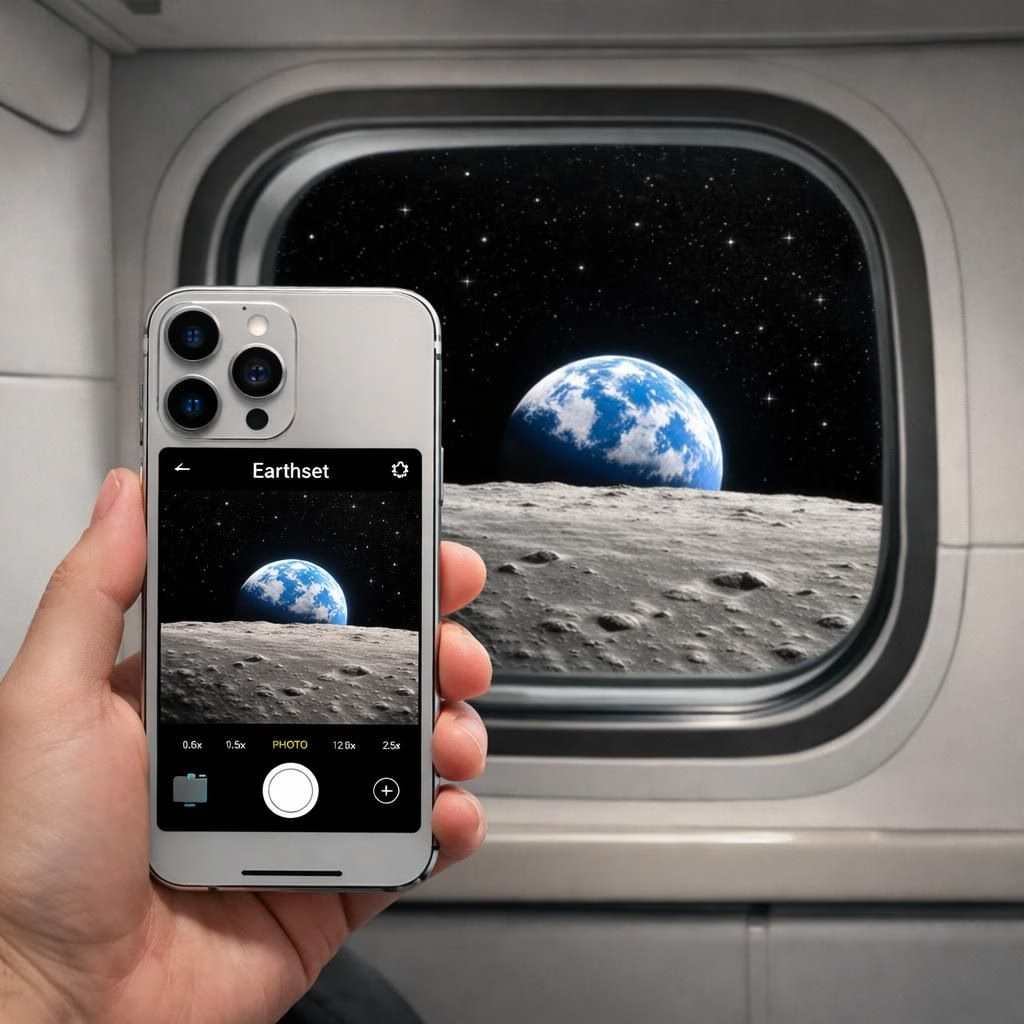
Earthset and ArtemisII collide in a playful, insightful way as NASA’s storytelling embraces consumer tech. The 53-second clip from the Artemis II mission shows Earth slipping behind the Moon—a cosmic curtain call. Reid Wiseman posted the video on X, noting he shot it with an iPhone at 8x zoom. If you wonder what happens when a pocket-sized camera meets space, Earthset answers with scale, wonder, and humor. ArtemisII fans will appreciate the contrast here: humans on a mission, phones in hand. It reminds us that curiosity travels lighter than a satellite. The piece leans into the tech details with a bright tone: Earthset becomes a relatable moment you can grin at and ponder.
Earthset in 8x zoom reality
The 53-second Earthset video offers a compact tour of perspective. Wiseman notes the capture used an iPhone 17 Pro Max, and NASA approved personal smartphones aboard ArtemisII. That policy change opened the door to four iPhone units on the mission, turning science communication into something you can share from the cabin window. The moment Earth first appears comes quickly: eight seconds before the disk becomes a bright blue-and-white circle. The Moon’s cratered surface sits in the foreground, a gray stage for Earth’s blue marble tease. The Earthset arc highlights a simple truth: Earth looks tiny from interplanetary distances, yet glows vividly when viewed through a palm-sized camera. ArtemisII imagery can merge practical gear with poetic moments, a balance the team clearly enjoys keeping.
ArtemisII moments: phone-brave storytelling from orbit
ArtemisII imagery isn’t just a novelty; it’s a practical demonstration of how consumer tech can coexist with mission-grade science. NASA released a series of images captured on the iPhone 17 Pro Max on April 2, 2026, marking a milestone where the tools of everyday life help document a crewed lunar mission. The photos show Wiseman and Christina Koch looking back at Earth through Orion’s cabin windows, and NASA’s caption emphasizes the view that makes you see home in a new light. The crew’s workflow includes Christina Koch using a Nikon with a 400mm lens for brackets, but the iPhone adds a casual, immediate counterpoint—this ArtemisII storytelling thrives on both precision and spontaneity. The Nikon shutter clicks; the iPhone hums softly; and the Earthset moment crystallizes as a shared human moment that turns a high-stakes mission into a relatable story. ArtemISII is a reminder that the frontier benefits from both robust gear and approachable gear, when used with care.
On orbit, the interplay between high-end optics and a pocket device becomes a running joke with genuine insight. The Nikon with its 400mm lens delivers the dramatic, long-range frames; the iPhone captures the intimate, everyday perspective that makes the cosmos feel personal. This dual setup underlines a central truth about Earthset and ArtemisII: exploration does not require worship of one instrument; it rewards thoughtful combinations of tools. The 8x zoom, the 400mm lens, and a cabin window together create a spectrum of visuals that keep the story dynamic and accessible. The Earthset moment, framed by a human crew and a human device, invites us to see space not as distant engineering alone but as a stage for human curiosity and humor.
As the sequence unfolds, the Earthset arc grows into a gentle metaphor for scale. The blue-and-white sphere of Earth gradually becomes a bright white dot before it recedes, a reminder that while our planet is a lively hub of life, it looks small from the Moon’s expanse. This simple truth lands with a wink in the Earthset narrative, and ArtemisII earns extra credit for showing how a consumer smartphone can join the ranks of mission-critical tools without stealing the spotlight from the science. The collaboration between the iPhone’s immediacy and Nikon’s precision proves that curiosity travels well with both devices in tow. Earthset, once again, proves to be more than a caption; it becomes a small, vivid lesson in perspective that anyone can appreciate from Earth to ArtemisII orbit.
In the broader arc of 2026 space storytelling, Earthset and ArtemisII demonstrate something jaunty and important: wonder travels best when it’s shareable. People watching from Earth can instantly grasp the scale of a lunar mission when a palm-sized device captures the moment. The public-facing approach to ArtemisII, including the iPhone era, signals a culture where space news can arrive with the warmth of a social media post and the rigor of careful planning. Earthset underscores the idea that accessibility and accuracy can walk hand in hand, while ArtemisII reinforces that bold exploration still requires discipline, teamwork, and a sense of humor about the little things—like a phone video that somehow feels monumentally human. This blend of gravity and giggles is exactly the energy the era of Earthset fans, ArtemisII enthusiasts, and space lovers everywhere crave in 2026.
Source material and attribution: Thanks to the original article that sparked this celebratory reflection on Earthset and ArtemisII. The source material provided the backbone for a gentle, upbeat retelling that respects the facts while giving them a human voice. For readers who want to see the primary material, the original article link is provided below with thanks for the rich context and detailed reporting that made this rewrite possible. Thank you for the thoughtful source material that sparked this piece and helped us celebrate how technology, exploration, and storytelling can travel together toward a brighter, more accessible cosmos.
To close with a note of gratitude, this write-up keeps the spirit of the original alive and invites readers to explore how ArtemisII can be told in fresh, human-friendly ways. You can read the primary coverage here: NASA Artemis II Earthset coverage.
Earthset in practice: quick takeaways
- Compare Earthset with official Earth views to gauge scale and context.
- Notice how a palm-sized device changes perception of the scene.
- Think about when each gear shines: Nikon 400mm vs. a smartphone.
- Appreciate the human angle and humor that space storytelling often shares.
FAQ
- What is Earthset?
Earthset is a 53-second video showing Earth disappearing behind the Moon from Artemis II, captured with a palm-sized device.
- Why is it significant that a phone was used in space?
It demonstrates how consumer tech can support science communication while meeting mission needs.
- What role does ArtemisII play in these images?
It provides the mission context and blends professional optics with everyday devices to tell the story.
- Where can I see the original Earthset video?
You can explore coverage through NASA releases and the Times of India article linked in the references.
If you enjoyed this post, please share your thoughts in the comments. Let’s discuss how Earthset and ArtemisII shape our view of exploration, tech, and storytelling in the current era.
References
- NASA Artemis II
- Orion spacecraft – NASA
- Artemis II – NASA
- Times of India — NASA Artemis II Earthset coverage