

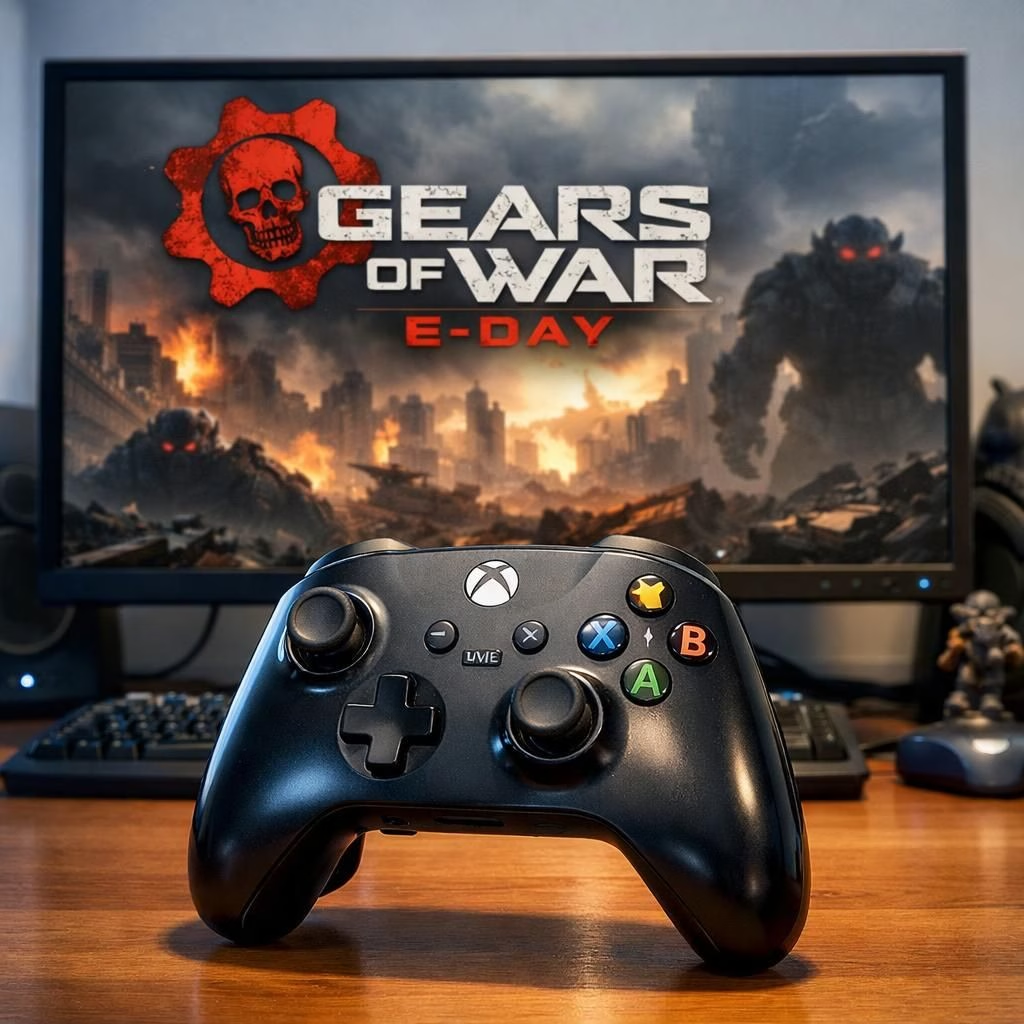
In 2026 the gaming chatter is loud: Gears of War: E-Day remains found only on Xbox and PC, and console exclusivity continues to shape the industry like a stubborn boss fight. No matter how you slice it, the Xbox ecosystem plus PC is where the action is, for now.
Gears of War: E-Day and console exclusivity in practice
The week kicked off with the familiar dance of rumors and official confirmations. A Walmart listing, a rumor mill humming about a PS5 port, and a confident stance from the publisher’s press team all collided in a spellbinding but mostly predictable way. The core message was clear: Gears of War: E-Day is not pivoting onto PS5 anytime soon. Xbox continues to frame E-Day as a flagship moment for Series X|S and PC players, with the launch anchored to the current generation’s hardware and services. This is not a random marketing line; it’s a strategic posture. The reporting across Push Square, IGN, Wccftech, Kotaku, and Game Informer threads the needle: the wall around exclusivity is being rebuilt, not knocked down by a whim. The wall is not a dungeon, but a long-term plan that coordinates licensing, timing, and platform-specific perks. If you hoped for a surprise PS5 release, you’re not alone; if you hoped for a sudden blurring of lines, you’re also not alone. Yet the historical pattern leans toward measured, door-by-door negotiation rather than sudden portal shifts.
From a reader’s perspective, the takeaway is this: console exclusivity remains a business decision wrapped in a glossy trailer. It isn’t simply a technical constraint or a matter of studio preference. It’s a contract, a scheduling decision, and a set of incentives designed to maximize reach where the studios expect to earn the most. The reports are careful to note that PC is a close ally in this effort, providing a cross‑play and cross‑buy path that softens the blow for gamers who own multiple devices. In practice, this means advantages for Microsoft’s ecosystem, with PC players slipping into the same launch window for content parity and features. The mood among players leans toward pragmatic acceptance, not bitterness, and much of the conversation revolves around what the deal means for future releases and for potential content sharing in the long run.
As media outlets recast the story, the emphasis stays on clarity: E-Day is a milestone in a carefully choreographed strategy, not a one-off experiment. The exclusivity wall is both guardrail and promise. It guards the audience from a rushed, scattered release and promises that the game will feel complete on the platforms it supports. The design choice supports steady optimization, quality updates, and a consistent online environment where players can unite regardless of their hardware preference—provided that hardware preference stays within the supported family. Developers get a stable canvas and a predictable audience, which helps with polishing cutscenes, balancing weapons, and refining the season’s content cadence. The result is a product that is consistent, not rushed, and that respects the long arc of a franchise rather than chasing a short-term headline.
Some readers may wonder about timing. The narrative from Game Informer suggests a targeted October window for the initial rollout on Xbox Series X|S and PC, with PS5 remaining outside the first wave. The broader takeaway is simple: the exclusivity decision is not a fleeting trend. It’s a deliberate plan tied to a broader platform strategy that prizes performance, ecosystem cohesion, and a sustainable development cycle. In short, E-Day isn’t just a moment in a trailer; it’s a calculated move in a bigger chess game where hardware sales, service ecosystems, and content pipelines all matter.
Why console exclusivity matters for fans
For players, the arrangement can deliver targeted optimization and a smoother launch cadence. It also means a deliberate path for feature parity and updates across the supported family. Still, console exclusivity remains a point of debate among fans who crave universal day-one access. The key is to see the trade-offs: stability and quality on one hand, potential wait times on the other.
Practical implications for players
Here are concrete takeaways you can use today if you’re planning to follow E-Day closely. First, expect cross‑play and cross‑buy to enable a shared experience between Xbox and PC. Second, anticipate a consistent update cadence that improves balance, visuals, and performance over time. Third, treat platform investments as a long-term decision: you’ll benefit from a stable ecosystem rather than a one‑off rush. And finally, PS5 owners can monitor future announcements, but for now the initial window focuses on the Xbox family and PC.
- Cross‑play and cross‑buy enable a unified community across Xbox Series X|S and PC; the experience is designed to stay synchronized across platforms.
- Regular updates should keep balance, visuals, and performance on an even keel over the season.
- The exclusivity approach supports a sustainable development cadence with continued polish and content cadence.
- console exclusivity discussions continue among fans, shaping expectations for future releases.
Original source material: Thanks to Push Square for the original reporting on Gears of War: E-Day and console exclusivity. You can explore related coverage on Push Square at Push Square, as well as companion articles from IGN, Kotaku, and Game Informer via their home pages linked below.
FAQ
- Q: Will Gears of War: E-Day ever come to PS5?
A: The official line for now is that the initial release targets Xbox Series X|S and PC, with PS5 not in the first wave. Future ports are possible but not confirmed. - Q: How does cross‑play affect the experience?
A: Cross‑play and cross‑buy are designed to unify communities across Xbox and PC, reducing fragmentation and easing progression across devices. - Q: When is E-Day launching?
A: The October window pointed to by Game Informer is the best current estimate for a launch on Xbox Series X|S and PC. - Q: Will exclusivity impact future Gears games?
A: The strategy appears to be a balanced, repeatable release cadence that weighs platform investment against ongoing content.
Thank you for reading. If you enjoyed this analysis, consider sharing it with friends who love a good industry tidbit and a dash of humor.
References
- Push Square — Gears of War: E-Day is not coming to PS5, Xbox confirms console exclusivity
- IGN
- Kotaku
- Game Informer