

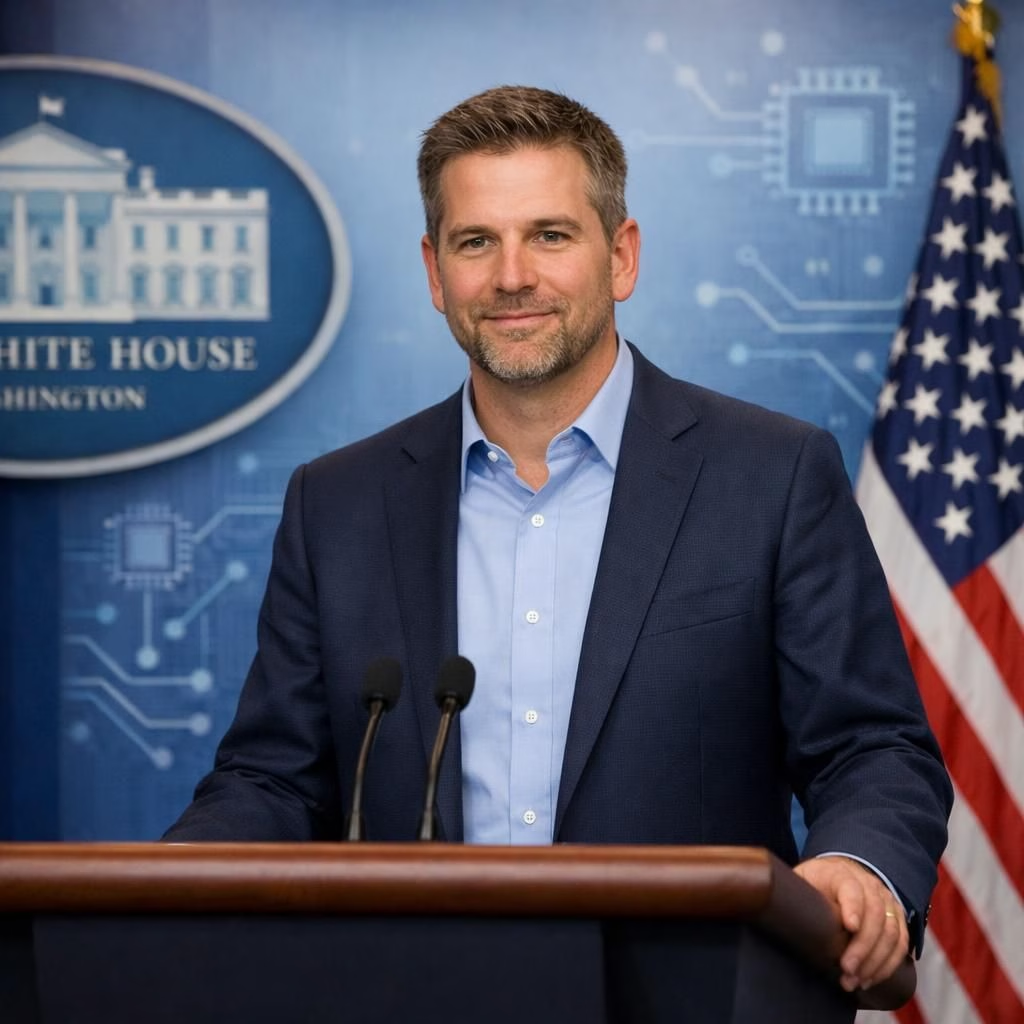
In a year that often felt like a sprint through a data center, AI and Policy collided in Sriram Krishnan’s role as a special envoy to shape US AI policy. After 18 months in the arena, he steps down at the end of the month with a track record that’s more interesting than a spreadsheet and more hopeful than a startup pitch. This is the tale of a technologist who turned complex issues into a roadmap people could follow, and who did it with a smile and a scoreboard.
Appointed in late 2024 by President Trump to push forward the American AI Policy agenda, Krishnan helped design a pragmatic path forward. He backed the American AI Action Plan, helped negotiate international AI partnerships, and represented the US at major tech summits in India, France, and Britain. It wasn’t just talk; it was a blueprint with milestones, deadlines, and concrete action steps that paired technical rigor with real-world diplomacy.
During his tenure, Krishnan worked alongside notable figures and a network of enthusiastic supporters. Before joining the White House, he logged time at Microsoft, Facebook, Twitter, and Snap. He later became a venture capitalist at Andreessen Horowitz and served as a trusted advisor to Elon Musk during the high-profile acquisition of Twitter (now X). His background gave him a rare blend of software know-how and Policy instincts, which helped him translate complex AI topics into actionable Policy positions that policymakers could rally behind.
AI in the White House: Policy as a lever
This assignment immediately put the spotlight on how AI can be a force for national competitiveness while also elevating public safety and consumer trust. The work wasn’t glamorous every day, but it carried weight: aligning the AI stack with national interests, securing international AI partnerships, and ensuring that the United States acted with both speed and responsibility. The AI action plan became a reference point for lawmakers and industry alike, a rare document that managed to be both ambitious and implementable. The leadership team framed Policy as a lever—pull the right levers, and innovation accelerates while safeguards stay in place. The result was a practical, measurable approach to AI governance that could actually be green-lit by the Hill and by global partners.
Throughout this period, Krishnan repeatedly emphasized that Policy should not be a roadblock to innovation, but a set of guardrails that keep innovation aligned with public values. The dialogue with allies and rivals alike was robust, but the mood remained constructive. The Policy emphasis wasn’t about curbing progress; it was about guiding progress so that America stays ahead in the AI race while maintaining a competitive, ethical baseline. This is where the policy discipline met a pragmatic, market-facing approach, and the synergy yielded tangible results in both domestic and international forums.
Policy architecture and the AI action plan: a pragmatic toolkit
The architecture behind the achievement was straightforward, even when the topic isn’t. The National AI Policy Framework laid the groundwork for executive orders and legislative conversations that followed. This framework helped the White House coordinate with allies across continents, enabling AI summits in places like France and India and state visits to the UK and the Middle East. It also created a platform that allowed industry and academia to contribute in a structured way, ensuring that private-sector innovation could be scaled for public benefit without compromising security or privacy. The Policy framework didn’t just set goals; it defined milestones and accountability, turning abstract principles into measurable outcomes that the public could monitor and trust.
Two pillars guided the work: first, a focus on the AI stack—data, models, hardware, and the talent pipeline—so the United States could win in the global AI stack. Second, a global approach—partners, norms, and governance agreements—that would keep the US at the center of responsible AI development. The result was a balanced program that recognized both the urgency of innovation and the need for thoughtful governance. Krishnan’s farewell notes hint at continuations of these efforts, with a plan to build durable institutions that sustain progress beyond any single administration.
Beyond strategy, the public record reflects practical wins: a clear path for US leadership in AI, accelerated collaboration with allies, and a framework that could adapt as technology and geopolitics evolve. The dialogues he led often featured technical clarity, human-centered concerns, and a tone of humility—an unusual mix that helped dampen partisan flames and keep the focus on results. While critics on the far right pressed their case against immigration and foreign talent, Silicon Valley’s chorus of supporters—including David Sacks and Elon Musk—stood firm in backing Krishnan’s approach. Musk’s succinct endorsement—“Makes sense”—became a shorthand for the broader industry assent that Policy and innovation could coexist and propel the United States forward.
As Krishnan wrote in his farewell notes, the journey was a privilege and a responsibility. He highlighted the collaboration that made progress possible, pointing to the people who stood with him—from White House colleagues to venture backers—while acknowledging the personal road he walked. The tone remained collaborative and forward-looking, with a clear message: America will lead in AI because it pairs ingenuity with governance that serves the public interest. The emphasis on an American AI stack that works globally signals the intent to translate domestic Policy into international norms that shape how AI is designed, deployed, and governed around the world.
Two clear takeaways stand out. First, a well-crafted Policy posture can accelerate practical outcomes without stifling ingenuity. Second, strong cross-sector partnerships make Policy more resilient and more credible. Krishnan’s tenure demonstrated that Policy and technology can move at a compatible pace, with the public interest at the center of every decision. If you’re looking for a concise takeaway, it’s this: thoughtful governance plus audacious innovation equals durable leadership in AI.
So what’s next for Krishnan and the teams he touched? The public notes a shift toward building institutions that can tackle the long arc of AI challenges—data centers, energy efficiency, and a safer, more transparent AI ecosystem. The aim is to create a durable governance framework that can weather political cycles while keeping the AI momentum intact. And in true tech-fueled fashion, there is also a sense of continuing advocacy for American competitiveness on the global stage, with a healthy respect for the people who do the hard work behind the scenes.
Acknowledgment and gratitude are recurring themes in the farewell. Krishnan publicly thanked a broad circle of colleagues, mentors, and partners, including Kevin Hassett, @mkratsios47, Susie Wiles, J.D. Vance, Steven Cheung, and many others who contributed to the journey. He also singled out Policy ally for being a steady hand since last January, noting that their collaboration made the ascent possible. The message radiates optimism about the future of AI policy in 2026, and it invites others to pick up where this administration left off with renewed energy and practical clarity.
For readers who want to see the source material and give credit where it’s due, consult the Times of India piece here: Times of India – Sriram Krishnan article.
In closing, this dispatch isn’t a victory lap so much as a bookmark in a longer conversation about how the United States can lead in AI responsibly. If you’re curious about the interplay of AI and Policy, this is a case study in turning ideas into action, not just rhetoric. Please share your thoughts in the comments below — how do you see Policy balancing innovation with public trust in 2026?
FAQ
- What was Krishnan’s main contribution to US AI policy? He helped design and publish the American AI Action Plan, fostered international partnerships, and framed governance as a lever for responsible innovation.
- How did supporters respond to his appointment? Silicon Valley leaders like David Sacks and Elon Musk publicly backed his approach, emphasizing that policy and innovation can align.
- What happens next for US AI governance? The aim is to build durable institutions that sustain momentum through changing administrations while maintaining safeguards and public trust.
References
External reading:
MIT Technology Review — AI policy and governance,
Brookings: AI governance in public policy