

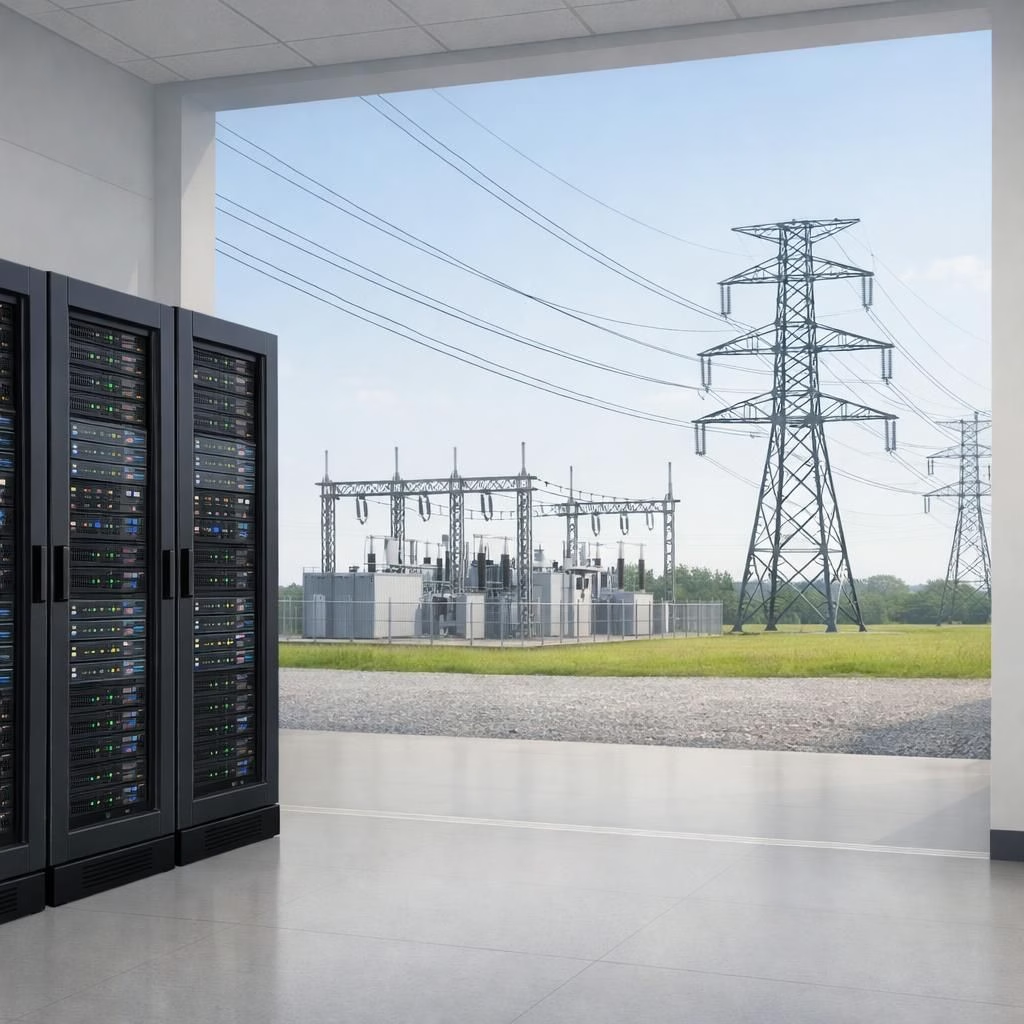
Across the US, AI data centers are powering up, and electricity costs aren’t billed to servers alone. A coalition of big players pledges to cover direct consumption, but households could still see higher bills as utilities blend in grid upgrade charges to keep the system humming. The core irony sits in plain sight: the devices powering our videos and our work both demand juice—and someone has to pay for the extra wires, substations, and generation capacity.
AI data centers and electricity costs: the math behind your meter
Electricity costs are usually set by state regulators who decide how utilities recover infrastructure and daily operations. When a data center comes online, the facility itself typically covers the cost to connect to the grid. But many upgrades that benefit the wider grid get bundled into tariff items shared by all customers. Think larger substations, more transmission lines, and new or expanded power plants. Regulators then allocate portions of those cost items to residential, commercial, and industrial customers using established pricing methods. The paperwork is long, the math is meticulous, and the spreadsheets have more tabs than a spreadsheet deserves. All of this means a rise in electricity costs sometimes shows up even when a single company already chips in for its own usage. And yes, this is exactly the sort of policy nuance that makes energy economics feel like a marathon with a calculator.
In practice, the announcement that AI data centers will cover direct electricity use targets one clear outcome: the data centers pay the watts they burn. The tricky part is who pays for the watts that power the grid in aggregate. If utilities must upgrade substations or secure additional generation to support a new data center, those investments can become part of the broader system. Regulators then decide who shoulders which share. Residential customers often end up paying a portion of those broader grid enhancements.
Critically, the process isn’t simply about who writes the check for a shiny new rack. Regulators review thousands of cost items before they decide how to allocate expenses among customer groups. They consider transmission upgrades, generation capacity, and the ongoing maintenance of the grid. The result is a financial relay race where today’s infrastructure investments are recovered over many years, sometimes long after a specific data center project is completed or canceled. The moral of the tale is less about villains and more about governance, timing, and the imperfect alignment between a single data center’s life cycle and the life cycle of the grid it uses.
AI data centers and electricity costs collide at the regulatory table
As data centers expand, coincident peak demand pricing can become a lever. If a site can shift its consumption away from peak moments, it could reduce its share of peak charges. In some markets, scheduled or automated load management could tilt costs in ways that look clever on a calculator but feel frustrating when your bill arrives. Some experts point to energy markets that have seen gaming around peak windows, where automation nudges demand down at crunch times and up at other hours. The result can be a smaller apparent bite from peak charges, even when total annual energy use remains high. The nuance matters because it affects how much of the grid’s cost burden lands on households versus heavy users like data centers. The bottom line: timing and flexibility can shift a portion of the bill, even as total consumption trends rise in the 2026 horizon.
This is not simply a technical puzzle. It plays into how consumer groups are represented in rate-setting discussions. Residential customers often have fewer voices with the same weight as large industrial entities or well-funded data-center operators. Consumer advocates exist, yet they juggle limited resources while industry players hire specialized consultants who speak fluent rate allocation. The governance gap matters because it shapes how costs are recovered across the grid, not just for today but for years into the future.
Policy, pricing, and the practical math behind the numbers
More than a theoretical debate, the way we allocate infrastructure costs affects every bill. Regulators examine cost items like transmission enhancements, substation upgrades, and generation additions before assigning them to customer groups. The same item might show up under a series of accounts, each with a different percentage share for residential, commercial, and industrial customers. The arithmetic matters because it translates into kilowatt-hours and fixed charges on monthly statements. The larger infrastructure picture includes data centers that can spike electricity costs demand during crunch periods yet pare back during other moments. This potential for strategic load management illustrates why two parties can walk away with different impressions of fairness: the data center sees a favorable input, and households feel a pinch at the meter when the grid runs low on spare capacity.
Coincident peak demand pricing is the axis on which some of this tension turns. If a data center calibrates its load to avoid peak demand windows, it may claim a smaller share of the peak cost pie. The flip side is that other customers still pay for continuity and reliability; a portion of peak-related costs can be distributed to all, including households and smaller businesses. In markets where this method is prominent, the line between clever business strategy and consumer burden blurs. Regulators still rely on rigorous, itemized analyses, but the real world effect is visible in monthly bills. This is especially true for households who rely on steady electricity costs for budgeting and for small businesses that operate on tight margins.
There is a social dimension to the cost allocation debate. Limited consumer representation can skew outcomes toward more complex rate structures that favor the well-funded players. Consumers don’t always have the time or resources to parse thousands of docket pages. Utility commissions do their best to listen to advocates for all ratepayers, but the asymmetry remains. The risk is that infrastructure investments are recovered even if projects later change course or are canceled due to market shifts or technological progress. That possibility underscores the need for ongoing public participation in hearings and a broader sense of accountability in regulatory processes.
To bring this home: the question is not simply whether AI data centers will pay for their direct electricity costs use. The question is who pays for the upgrade to the grid that makes that use possible, and how quickly. The interplay of direct payments, rate design, and peak pricing creates a layered, sometimes paradoxical, outcome for consumers. The big picture suggests we need thoughtful policies that balance the innovation benefits of AI data centers with predictable, fair electricity costs for households. It’s not a zero-sum game, but the scoreboard depends on transparent cost allocation and empowered public engagement.
In short, the data center promise to cover direct usage is only part of the story. The broader grid infrastructure, the timing of demand, and the representation of consumer interests all shape the final bill. If you want a system that rewards efficiency without punishing households, the recipe needs clarity, accountability, and a willingness to adapt as technology and markets evolve. In 2026, that means keeping a careful eye on how grid upgrades get priced and who gets heard when those prices are decided.
If you want to learn more or weigh in on how your community should approach these decisions, join public hearings, share your thoughts, and stay curious about the economics behind the lights you flip on every day. Your input can influence future household electricity costs in ways that are both practical and humane.
Original article: Thanks to The Conversation for the original analysis and to Times of India for reporting the data center energy story. For more context, visit The Conversation and Times of India.
Share your thoughts in the comments below. I’m genuinely curious to hear how these dynamics play out in your region, and what ideas you have for fair cost allocation in the era of AI data centers and evolving electricity costs.
Practical takeaways for households and policymakers
- Understand what drives your bill: look for line items tied to grid upgrades and peak pricing. These items can appear even if your electricity costs reflect a single device class.
- Get engaged: attend public hearings, read docket summaries, and submit comments during rate proceedings. Your input can shape future settlements that affect electricity costs.
- Ask for plain-language bill explanations: request clear breakdowns of charges and the expected life of grid investments.
FAQ
- What are electricity costs? This is the amount paid for the electricity used plus the share of grid upgrades allocated to households. In rate cases, regulators decide how much of those upgrade costs are assigned to residential customers, and how much to businesses. electricity costs.
- Why do data centers promise to pay direct usage? They cover the electricity consumed by the servers themselves. The larger question is how the grid upgrades are charged across all customers.
- Can households influence rate decisions? Yes. Public hearings, comments, and advocacy help ensure consumer voices are heard. This can affect how infrastructure costs are shared and, ultimately, electricity costs.
- Do regulators consider load management by data centers? Regulators assess whether automated demand controls improve reliability while shifting who bears peak charges.
Conclusion
The broader point: AI data centers bring innovation, but the grid must be carefully priced so households aren’t left footing the bill. Clarity, accountability, and ongoing public input are essential as technology and markets evolve in 2026 and beyond.
References
- Times of India article: Times of India
- The Conversation: The Conversation
- U.S. Energy Information Administration: Electricity prices explained
- PJM Interconnection: PJM