

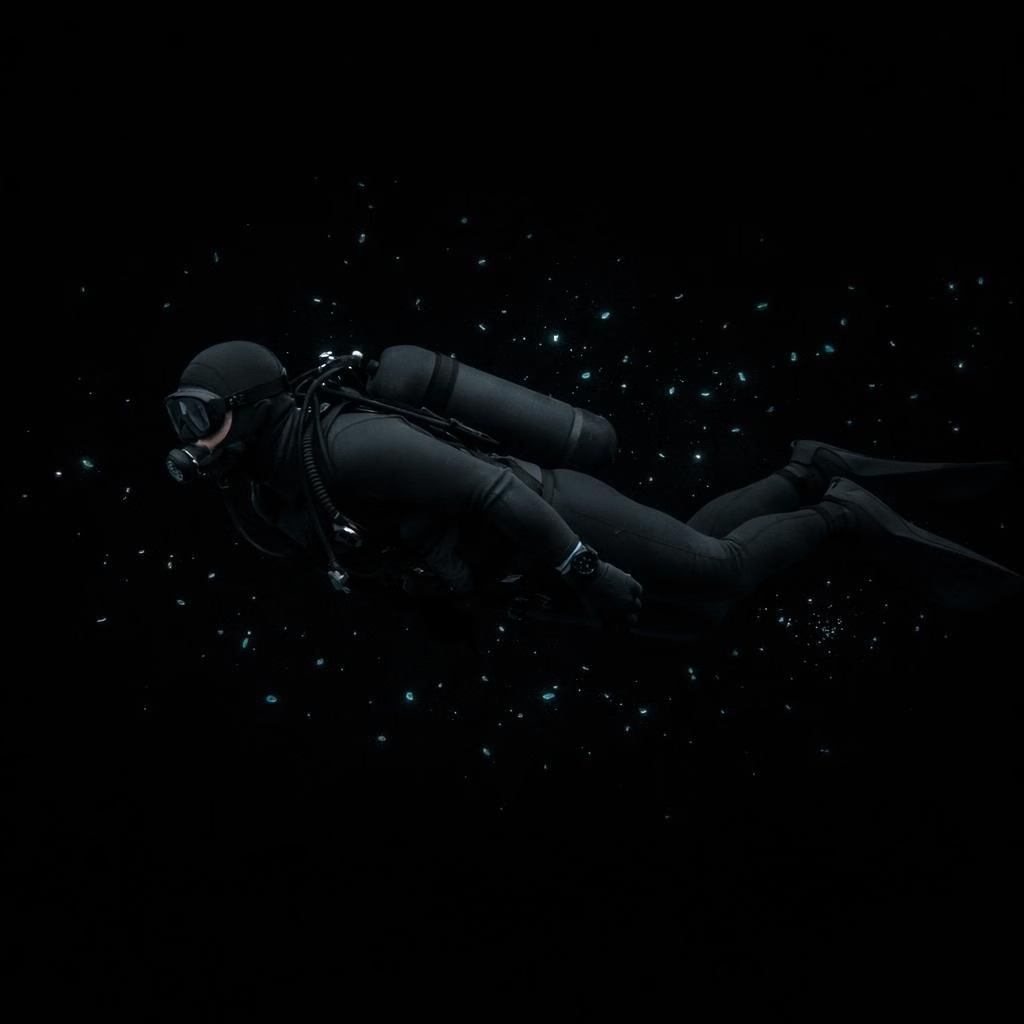
In the world of deep-sea photography, curiosity meets courage, and a blackwater diver quietly rewrites how we see the abyss. The practice blends science and art, with a healthy dose of patience and humor.
deep-sea photography: The Science Behind the Glow
Bioluminescence shines as the star of the deep ocean. Creatures emit blue and green light to attract prey, warn predators, or simply say hi. In photography terms, the diver’s job is to capture these light shows without scaring the life out of them. To do this, researchers rely on long exposures, stable housing, and minimal turbulence. The math behind the glow is simple: light in the dark is precious, so every photon counts.
Gear matters as much as grit. A compact, water-sealed camera body with good low-light performance; macro lenses for tiny critters; a housing that remains snug in salt and spray; a strobe or continuous light strategy that respects the inhabitants. The diver often negotiates currents with a careful fin kick, keeping the frame steady while creatures drift into the frame. Ethics matter: do not bait creatures; minimize disturbance; document rather than dominate the scene. The result is a quiet, respectful portrait of life that thrives in the dark, a study in restraint as much as depth.
deep-sea photography: Equipment, Ethics, and Everyday Wonders
Beyond gear, the practice demands patience and precision. Divers scan the water column, watching for silhouettes that promise a story. They measure exposure with test frames and adjust white balance to maintain color accuracy in a world where light fades in seconds. Movement is deliberate; bursts of speed ruin the glow and blur the delicate edges of the subject. The best captures come from gentleness in motion and respect for the reef’s choreography, not from a splashy display of flash. In other words, success means quiet presence, careful framing, and a gentle rhythm that respects the life nearby.
The layered narrative extends beyond technique. Each frame adds data about species presence, behavior, and habitat health. Journalists, educators, and scientists pore over the images to track changes in populations, distribution, and interactions. The visuals help non-specialists grasp complex topics, turning a night scene into a story of adaptation and resilience. Conservation groups use such imagery to advocate for protections and sustainable deep-water practices, reminding us that curiosity should pursue care as well as wonder.
But the dark waters remain a tricky stage. Divers practice risk management, emergency procedures, and buddy protocols to stay safe. They monitor currents, wind shifts, and thermoclines, all while keeping the focal point on life that rarely gets the limelight. The result is a mosaic of micro-ecosystems, each with its own language of glow and motion. The discipline trains the eye to notice subtle shifts in behavior and habitat condition, long after the dive ends.
Final reflections are simple: the deep is not a void but a world that hums with life when given time and care. Every image acts as a small invitation to wonder about organisms that navigate by starlight and chemical cues. The journal’s lens becomes a patient translator between a distant world and our everyday lives, often inspiring new questions and experiments.
Original article: The deep sea will come to me: The blackwater diver who photographs the creatures of the deep — BBC. Thank you to BBC for the original source material: BBC.
Please share your thoughts in the comments.
Further reading:
Bioluminescence, Britannica •
Bioluminescence in deep-sea animals, National Geographic •
NOAA Ocean Explorer: Bioluminescence.
Practical steps for honing deep-sea photography
- Start with a solid, low-noise setup for photography in the deep sea, focusing on a reliable housing and good low-light performance.
- Practice with test frames to dial in exposure, white balance, and color accuracy for photography in ultralow light.
- Respect the habitat: minimize disturbance and avoid baiting to keep the deep-sea ecosystem intact for photography.
- Keep fins steady and movements slow to reduce blur and preserve edge detail in photography.
FAQ
- What is blackwater diving? A technique that uses extremely low light and specialized buoyancy to photograph organisms that glow or float near the surface of the water column at night.
- How do you capture glow in deep-sea photography? By balancing long exposures, careful strobe use, and patient framing to avoid disturbing shy creatures.
- Is this safe for deep-sea life? Yes, when divers follow strict risk controls, avoid baiting, and minimize environmental impact.
Conclusion: The deep sea remains a dynamic stage for life that rewards time, restraint, and careful observation. With patience, the photography of glow reveals resilient creatures navigating by starlight and chemistry, inviting new questions and ongoing exploration.
References
- Original source: BBC Future article: https://www.bbc.com/future/article/20260604-the-blackwater-photographer-who-captured-the-creatures-of-the-deep