

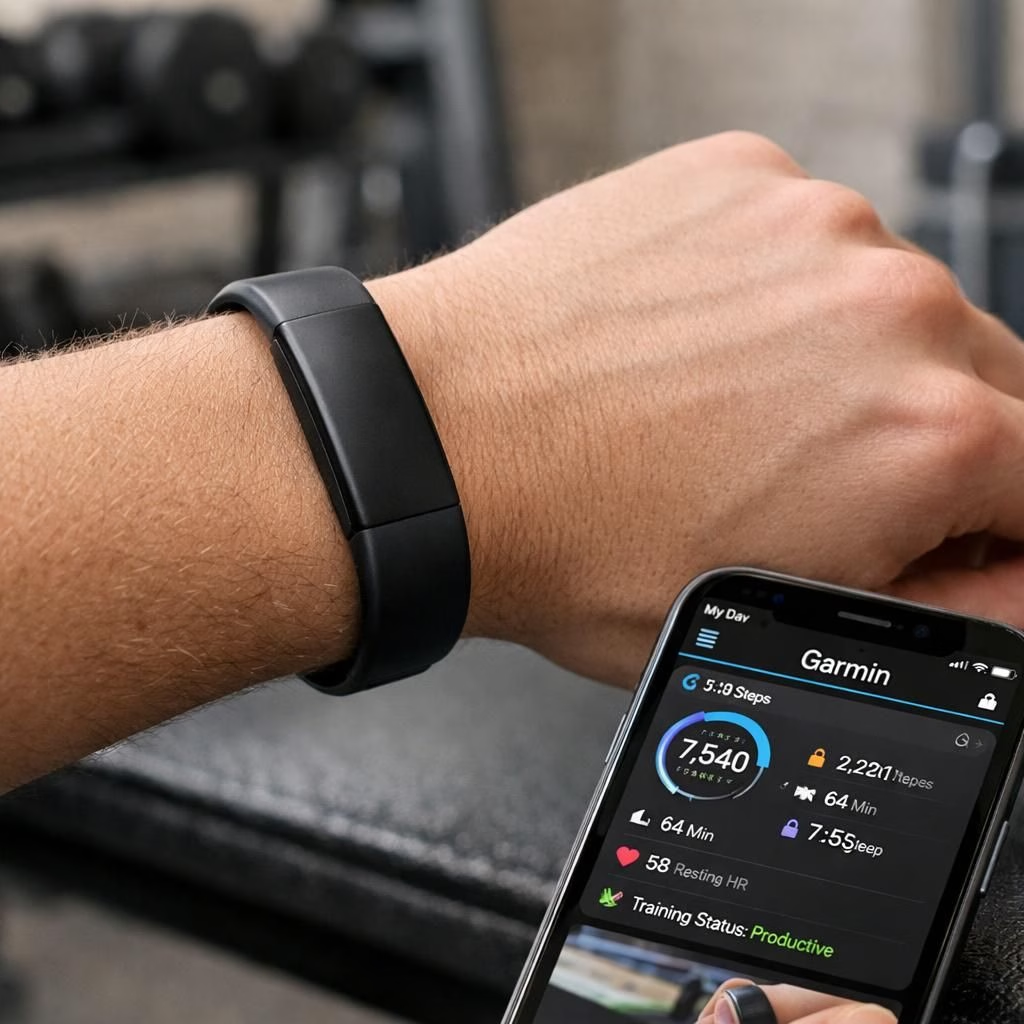
Cirqa and Garmin are not chasing glittery hype with this launch. They are offering a practical twist on the wearable game, one that leans into the idea that data can be useful without a constant glow. The Cirqa Smart Band from Garmin enters the market with a screen-off design that invites you to trust your routine rather than your display. It looks a lot like a Whoop-inspired silhouette, yet it refuses to demand a monthly subscription for basic tracking. If you want to know how your body recovers, sleeps, and works out without staring at a bright panel, Cirqa provides the essentials in a clean, unflashy package. In 2026, this kind of minimalism feels refreshing: you get the core experience and the software evolves without a recurring bill. The Garmin team has a reputation for reliability, and Cirqa seems to carry that ethos forward by focusing on usefulness over spectacle. The result is a wearable that respects your attention, your budget, and your time, which is a rare trifecta in modern fitness tech.
Cirqa in 2026: Simplicity over spectacle
The physical band keeps things straightforward: a snug strap, durable build, and sensors tucked into a form that looks comfortable on your wrist in any scenario. The screen is intentionally absent, pushing all the interaction to the companion app. That means your data becomes actionable through the Garmin Connect ecosystem rather than through on-device prompts. Expect metrics like heart rate, sleep stages, and recovery scores to pass from Cirqa to the app without the distraction of constant notifications. Battery life is pitched as a week or two on typical use, depending on your activity level and how often you check in with the app. The design choice aims to reduce anxiety around dashboards and dashboards about dashboards, which is exactly the kind of Zen approach many users crave after a long day of notifications. As a consumer, you gain clarity: you track what matters and let the technology quietly support your goals rather than hijack your attention. This is the practical, almost grown-up path that Garmin often pursues, and Cirqa aligns with that tradition while offering a fresh, no-nonsense experience.
Garmin’s Cirqa approach reshapes wearables
From a strategic standpoint, Garmin positions Cirqa as a subscription-free alternative to subscription-heavy trackers. The core data—heart rate, sleep quality, HRV indicators, and recovery metrics—flows to the Garmin app, where you can inspect trends, set goals, and plan workouts. There is no screen-based sales pitch to lure you into a monthly plan; instead, you gain insight by looking at charts and summaries after your training, as if you were back in a gym with a coach who speaks in plain language. Cirqa does not pretend to replace professional medical advice, but it does offer a reliable stream of biometric signals that can guide training decisions, rest days, and overall wellness. In short, Garmin is betting that athletes and everyday users will value consistency and clarity over constant nudges from a glowing screen. The price whispers of something accessible, a mask-to-mains approach that invites broader adoption among people who want serious data without serious debt.
Why Cirqa attracts Garmin fans and skeptics alike
People who appreciate Cirqa’s long-standing track record for durable wearables may find Cirqa’s approach appealing. For skeptics, the lack of a screen can feel like a limitation at first glance, but the emphasis on app-based insights invites a more deliberate inspection of data. With Garmin backing Cirqa, the ecosystem promises integration, reliability, and privacy-minded data handling—values that resonate with users who have grown wary of dashboards that outpace their attention spans.
What this means for the wider fitness tech landscape
The market has seen a wave of wearables that aim to replace your smartphone in your pocket with a constant stream of metrics. Cirqa flips that script by saying: you don’t need to sacrifice your mental space for meaningful information. The screen-free concept is not about gimmicks; it is about reducing friction. For teams building competing products, Cirqa raises a question: can you deliver better outcomes with better design rather than with more glow and more subscriptions? The answer, at least for now, seems to be yes, if you can maintain accuracy, reliability, and a user experience that respects user time. Garmin‘s approach here leverages its established hardware and software pipeline to deliver a cohesive story: a band you wear, data you own, and insights that help you decide when to push and when to pause. As more brands experiment with minimal displays and app-driven interfaces, Cirqa may become a reference point for a balanced blend of hardware simplicity and software sophistication.
Beyond the hardware, the social aspect of wearable tech remains essential. Cirqa’s screen-free proposition invites conversations about how much data is enough and how often it should be reinterpreted by algorithms. It also nudges developers to consider what users truly want: actionable guidance, not endless streams of numbers. Garmin’s commitment to continuity and updates should help Cirqa stay relevant as new sensors, software features, and integration opportunities emerge. If you are curious about where wearable tech goes next, Cirqa offers a clear pathway: fewer screens, more meaningful context, and a steady stream of practical insights that fit into real life.
The end of the day comes down to whether Cirqa helps you train smarter, recover better, and feel more in control of your wellness. The absence of a display does not mean a lack of personality; it signals a confidence in the data pipeline and in the app experience. For those who want a straightforward, subscription-free companion that respects your time, Cirqa by Garmin is a compelling option to consider. And if you love the idea of a product that combines reliability with restraint, this is a moment to pay attention to.
If you have thoughts to share about Cirqa and Garmin, I’d love to hear them. Leave your reflections in the comments and tell me how you see a screen-free future shaping your training and daily routine.
Original article: Mashable coverage on Garmin Cirqa. A heartfelt thank you to the original source material for sparking this discussion.
Practical steps to get started with Cirqa
- Charge Cirqa fully and wear it for a few days to let sensors calibrate and the app capture baseline data.
- Install the Garmin Connect app and pair Cirqa with your account to see trends and workouts in one place.
- Review weekly summaries in the app to identify recovery windows and optimal training days.
- Set simple, realistic goals (sleep consistency, resting HR balance, or monthly workout streaks) and track progress without chasing every metric.
FAQ
- Does Cirqa require a subscription?
No. Cirqa is designed to provide core data and insights without a recurring fee; most value comes from the app-based view of your trends. - What metrics does Cirqa track?
Key metrics include heart rate, sleep stages, and recovery indicators. Data flows to the Garmin app for long-term trend analysis. - How long does the battery last?
Garmin estimates a week to two weeks on typical use, depending on activity level and how often you check the app. - Is Cirqa suitable for serious athletes?
Yes. It emphasizes consistent data and actionable insights over flashy displays, which can help regular training cycles and rest planning.