

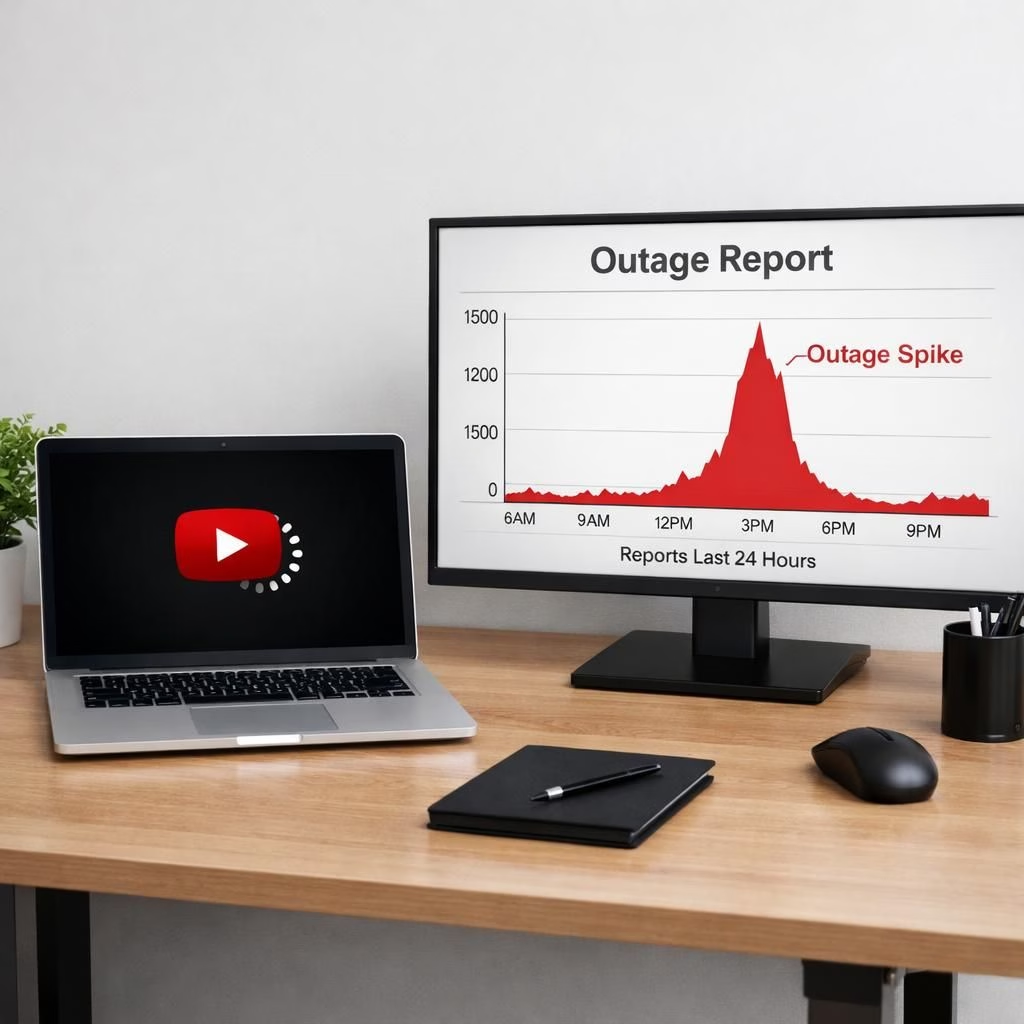
In 2026, a global YouTube outage disrupted video playback and login across the app and web. The incident exposed traps in backend configuration and reminded us that even giants stumble when the pipes get clogged. DownDetector logged roughly 240,000 US reports at the peak and 17,000 in India, with about 56% of users reporting app issues, 17% unable to access the site, and 15% unable to log in. This outage offers a teachable moment for platform reliability and for clear, timely user communication.
While the outage may have started as a backend configuration hiccup, the response has become a master class in crisis management for tech teams and a reminder to readers that the internet is a group project with many moving parts.
YouTube outage: What happened, and how users reacted
The outage hit streaming on both the YouTube app and the website, with reports of video buffering, failed loads, and interrupted sign-in flows.
YouTube TV experienced the same disruption, suggesting the root cause touched the core streaming stack and its ancillary services.
In the absence of a formal explanation from YouTube, the online conversation filled the gap with hypotheses, status-page checks, and memes that helped fans cope.
This outage underscores how dependent many daily workflows are on a single platform, turning an awkward moment into a community scavenger hunt for clues.
Public chatter ranged from calm troubleshooting to witty speculation, and the discussions spread across X and other networks as users tried to interpret logs and error messages. This YouTube outage underscores how quickly a problem can become a community-wide investigation.
The data from DownDetector illustrate geography mattered: the US contributed a large chunk of the reports, India logged a meaningful share, and the UK joined in with a smoother trickle. For readers, the core lesson remains: when a massive service goes offline, your best tool is transparent, timely updates that help people navigate the moment rather than guess the cause.
As the discussion unfolded, this outage demonstrated how a single misstep can cascade across services, stressing login gates, caches, and ad-delivery pipelines.
The incident also revealed that a backend configuration issue has real-world consequences beyond a simple error screen.
Engineers should treat such events as prompts to strengthen configuration management, investigate dependency trees, and rehearse postmortems that translate technical findings into practical improvements.
In the meantime, users and creators who rely on the platform will demand both rapid status communication and credible timelines for remediation. The takeaway is straightforward: invest in observability, automate incident response, and reduce the cognitive load on users during a disruption by sharing what you know and what you don’t know, when you know it.
Backend configuration lessons: resilience, redundancy, and recovery strategies
From this outage, we can draw actionable backend configuration lessons.
First, a robust approach requires multi-region failover, sane health checks, and the ability to roll back problematic deployments without triggering a cascade of failures.
Second, teams should publish clear incident status pages and maintain runbooks that translate technical steps into user-facing updates.
Third, the system should degrade gracefully: if high-definition video can’t load, perhaps audio or lower-resolution streams remain accessible, reducing the friction of a total blackout.
The data indicate that tens to hundreds of thousands of users were affected; that scale demands automated alerts that connect monitoring to incident management, with defined recovery objectives (RTO) and data protection (RPO) for core components.
Additionally, this backend configuration scenario highlights security considerations: tight API limits, resilient authentication flows, and safe integration points help prevent a minor misconfiguration from spiraling into a full outage.
The YouTube outage offers a blueprint for better resilience across apps, web, and related services, ensuring that even if something breaks, the platform can still serve essential content with minimal friction.
Documented postmortems, red-team simulations, and quarterly chaos testing can turn a chaotic incident into incremental gains. A backend configuration mindset helps teams translate technical findings into practical improvements.
As we process the event in hindsight, the emphasis shifts to practical steps creators and operators can take.
- For users: refresh status pages, follow official channels, and avoid repeated login attempts that could lock accounts.
- For creators: pause nonessential uploads during an outage, monitor YouTube Studio for status updates, and consider alternate distribution options if outages persist.
- For developers and operators: verify monitoring, strengthen runbooks, and plan graceful degradation that keeps essential content accessible.
YouTube outage: Practical steps for users and operators
- Check the official status page and YouTube’s social channels before retrying actions, to avoid unnecessary load and confusion.
- If you’re a creator, back up content and keep alternative distribution paths ready in case streams are interrupted.
- Keep devices and apps updated; sometimes updates resolve compatibility issues that mimic outages.
FAQ
- What caused the outage?
Publicly, YouTube did not publish a final root cause. Industry trackers pointed to a backend configuration issue without official confirmation. - How long did it last?
Restoration timelines varied by region and service tier; official updates were issued as the incident progressed, while users debated logs and status pages. - What should users do to stay informed?
Rely on official status pages, the YouTube Help Center, and the platform’s social channels for confirmed information rather than unverified reports. - What about creators?
Creators should monitor YouTube Studio, communicate clearly with their audience, and consider alternate distribution options if outages persist.
Original article: Times of India article on YouTube outage.
For broader context on how YouTube is expanding its features, see this related piece: YouTube’s AI playlist generator for Premium users.
External sources
References
Original source: Times of India article: https://timesofindia.indiatimes.com/technology/tech-news/youtube-down-thousands-globally-facing-issues-with-streaming-videos/articleshow/128488410.cms