

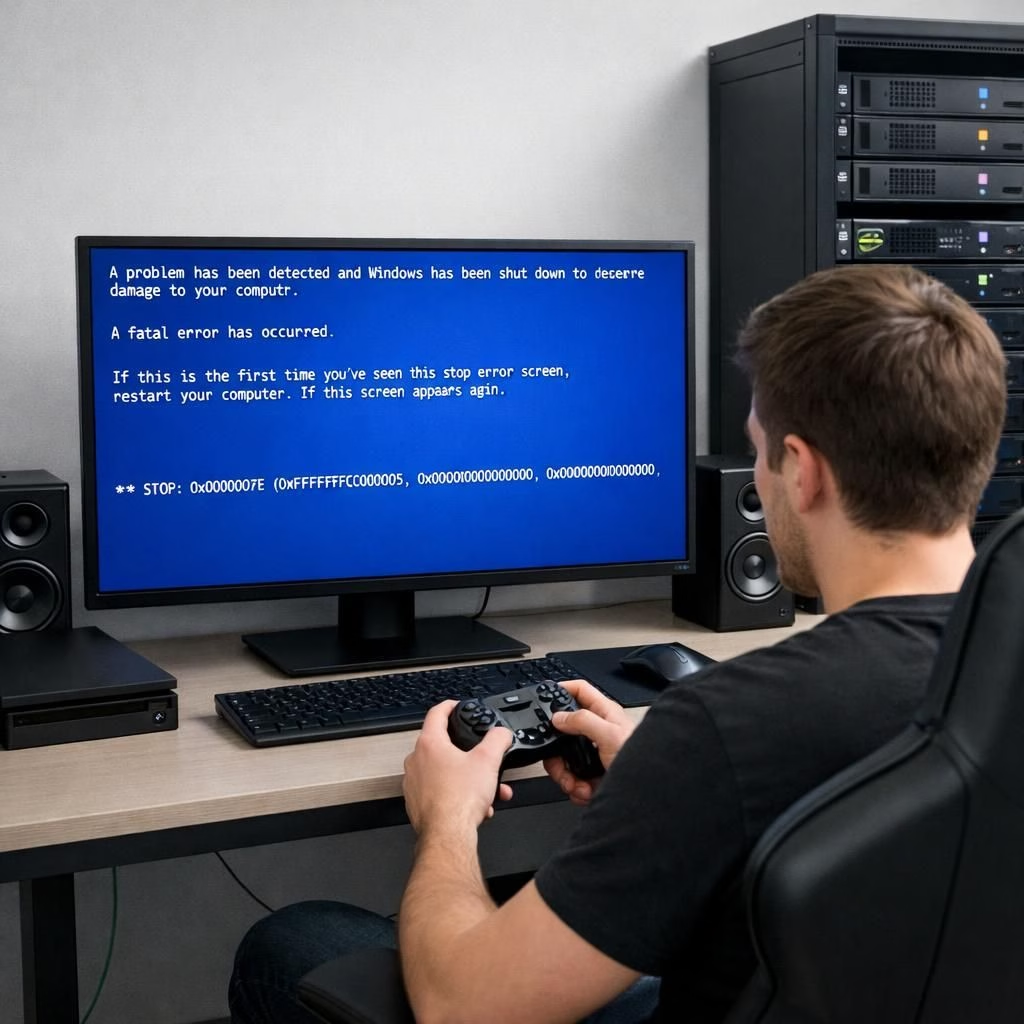
Despite the hype around new releases, the EA outage and gaming outage hit major titles like EA FC Ultimate Team, Battlefield, Madden, and The Sims. Fans swapped memes for minutes and prayers for reliable login. Status pages flickered, and players realized how dependent they are on online services. The episode reminded us that in 2026, servers still run the show—and sometimes they stumble in the most inconvenient ways.
EA outage: What happened and who felt it
Downdetector shows the split: 54% server connection problems, 18% gameplay hiccups, 16% login issues. The outage leaned toward EA FC Ultimate Team, but Battlefield, Madden, and The Sims weren’t spared entirely. The hot zone appeared to be the United States, though players abroad echoed frustrations on social media. In plain language, people could not join matches, build squads, or access online features.
The EA outage left players feeling stalled, and EA’s public channels stayed quiet, which fed the mystery. The gaming outage quickly became a meme, a cautionary tale about relying on a few data centers, and a reminder to keep backup plans handy.
The reports on X added color to the scene with quick, sharp reactions and a touch of humor. Some players treated the outage as a dramatic plot twist, others joked it was a clever way to test patience. Across threads and clips, the mood blended frustration with a sense of shared resilience. The community stayed informed through the gaming outage updates.
Gaming outage insights: how players cope in 2026
Many players pivoted to offline modes or single-player campaigns to preserve momentum during the gaming outage. Friends compared notes in forums, subreddits, and the kind of supportive sarcasm only a gaming community can deliver. Status pages and official updates became the newsroom of the moment, while quick workarounds circulated in chats and videos. The experience shifted from outrage to resilience with humor as the secret sauce.
From a learning perspective, this outage highlighted gaps in cross-region resilience and real-time monitoring. It’s a reminder that when a single point of failure hits multiple titles, transparency, redundancy, and a clear incident timeline matter. Studios that respond with concrete next steps win back trust faster than those who vanish for hours.
Practical tips for players in 2026 and beyond include bookmarking the official status page, enabling two-factor fallback authentication if available, and backing up progress where possible. Gamers should consider completing daily objectives in smaller sessions, saving progress regularly, and revisiting single-player modes to keep the enthusiasm alive. And yes, it’s okay to laugh at a meme that captures the moment when the login screen becomes a test of patience; humor is a coping mechanism that keeps communities intact during outages.
Despite the hiccup, the bigger picture remains: digital ecosystems grow stronger when they weather outages with better communication, faster remediation, and a little collective humor. Dev teams learn from each incident, players adapt, and the cycle of patches and updates continues with a shared sense of anticipation and patience.
Before we wrap up, a friendly reminder to keep perspective. The 2026 era of gaming is still rich with competition, creativity, and community—outages included.
Special thanks to the original article for the source material: Original article.
What are your thoughts on the EA outage and gaming outage? Share them in the comments below.
FAQ
- What caused the EA outage? Official statements were limited; reports point to server congestion and regional failures affecting multiple games.
- How can I protect progress during outages? Save frequently, enable two-factor fallback if available, and consider offline or single-player modes when online access is unstable.
- Where can I check status updates? Use the official EA status page and trusted outlets for real-time information.
- Will services recover quickly? Recovery times vary; transparent incident timelines help players adjust expectations and plan.
External sources
References
Times of India article: Times of India.