

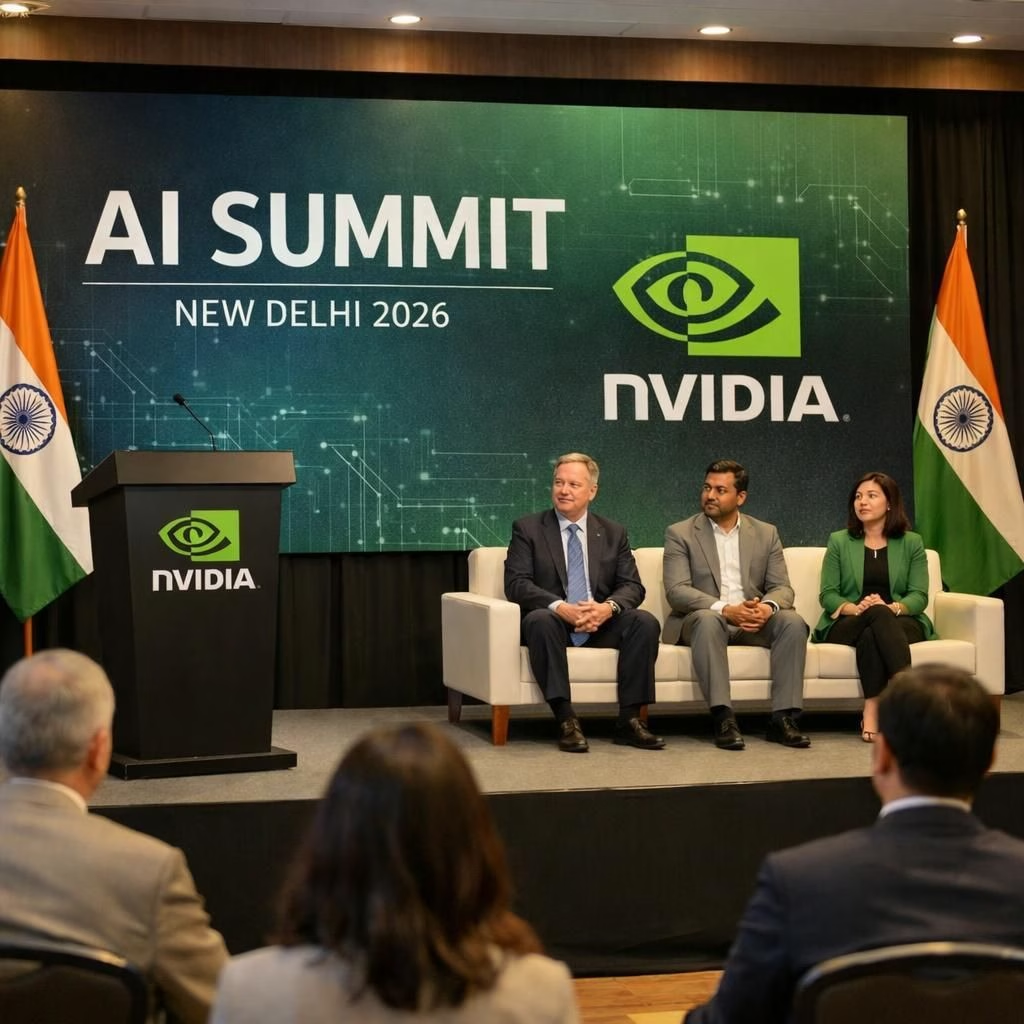
AI and NVIDIA set the tone at the India AI Impact Summit, even with Jensen Huang’s chair left unmistakably empty. The news cycle moved slower than a dial-up modem, but the room hummed with energy as Vishal Dhupar explained Huang fell ill after weeks of relentless travel. NVIDIA’s delegation was led by Jay Puri, who charted a calm, practical path in New Delhi.
To tamp down rumors, India’s IT Minister Ashwini Vaishnaw clarified that Huang’s decision to skip was not a snub but a personal choice shaped by health considerations. He stressed that NVIDIA‘s leadership remains deeply engaged, appointing a senior executive in New Delhi to carry the flag and make the company’s presence felt in every panel, hallway chat, and coffee break.
The summit—one of the globe’s biggest AI gatherings—brings together policymakers, industry leaders, and practitioners. Even without Huang, discussions focus on AI innovation, governance, and practical applications, with NVIDIA pledging significant investments in India’s AI infrastructure. Delegates trade notes on scalable data centers, training pipelines, and the delicate art of turning ambitious pilots into real-world deployments.
Observers note that a single absence rarely derails a well-oiled machine, and this one behaves like a veteran stand-in. The sessions proceed with renewed focus on data privacy, security protocols, and the ethics of AI tooling. Jay Puri’s leadership—steady, understated, and sometimes prank-friendly—keeps the energy high without tipping into hype. The crowd leaves with a sense that the alliance between the company, the Indian tech ecosystem, and the government has grown into practical momentum rather than star power.
On the investment front, NVIDIA outlines a multi-year plan to bolster India’s AI infrastructure. The agenda includes chip fabrication chatter, cloud partnerships, and robust local talent programs designed to thread AI literacy through universities and startups. They emphasize governance measures to balance safety and innovation, with clear roadmaps for accountability and transparent audits. This roadmap aims not only at technology but at trust in a country-sized experiment with AI at its core.
Industry watchers highlight that health scares should remind leaders to diversify risk and keep long-term plans resilient. The underlying message endures: AI represents a vital market and a strategic partner in the global tech landscape. The government signals readiness to accelerate policy work on data sovereignty, cross-border data flows, and open collaboration, while the company stays confident in the Indian talent pool and the regulatory path. The mood remains optimistic, with a practical sense that good governance and great hardware can coexist, even if the marquee figure sits out a flight or two.
AI momentum sustains momentum despite Huang’s absence
Practical steps for stakeholders now:
- Bridge academia and industry: Pair universities with local research centers to nurture AI literacy and create internship pipelines.
- Pilot responsibly: Launch co-development pilots that use local data with global compute, with governance baked in from the start.
- Build trust through governance: Establish transparent data policies and independent audits to reassure users, partners, and regulators.
The next phase will emphasize governance, data protection, and scalable execution that turns ideas into impact for researchers, startups, and public services alike.
NVIDIA-led investments and AI governance chart a pragmatic path forward
The conversation moves from stagecraft to outcomes. The emphasis is on practical pilots, improved collaboration with universities, and clearer accountability. The partnership aims to deliver more compute, better tools, and a shared roadmap that keeps safety and innovation in balance.
We’ll watch how policy work and business execution align, with a focus on data sovereignty, cross-border collaboration, and transparent audits. The onus is on building trust and delivering tangible benefits across education, health care, and public services.
FAQ and practical takeaways will help readers gauge how to engage with AI developments responsibly and productively.
FAQ
- Why was the absence noted? It was attributed to health concerns after extensive travel; organizers ensured continuity with senior leadership on the ground.
- What does the investment mean for India? It signals a sustained push to expand compute, data centers, and local talent, while emphasizing governance and safety.
- How will governance keep pace with deployment? The emphasis is on clear accountability, data sovereignty, and open collaboration with industry and government.
The takeaway is pragmatic: AI progress in India hinges on practical partnerships, accountable governance, and robust hardware. Leaders from the government and industry aim to turn pilots into scalable solutions that benefit researchers, startups, and public services alike. The momentum suggests a long runway for collaboration, not a single marquee moment.
References
- Original source: DevDiscourse article on the AI Summit buzz
- AI governance principles | World Economic Forum
- AI governance and policy | Brookings