

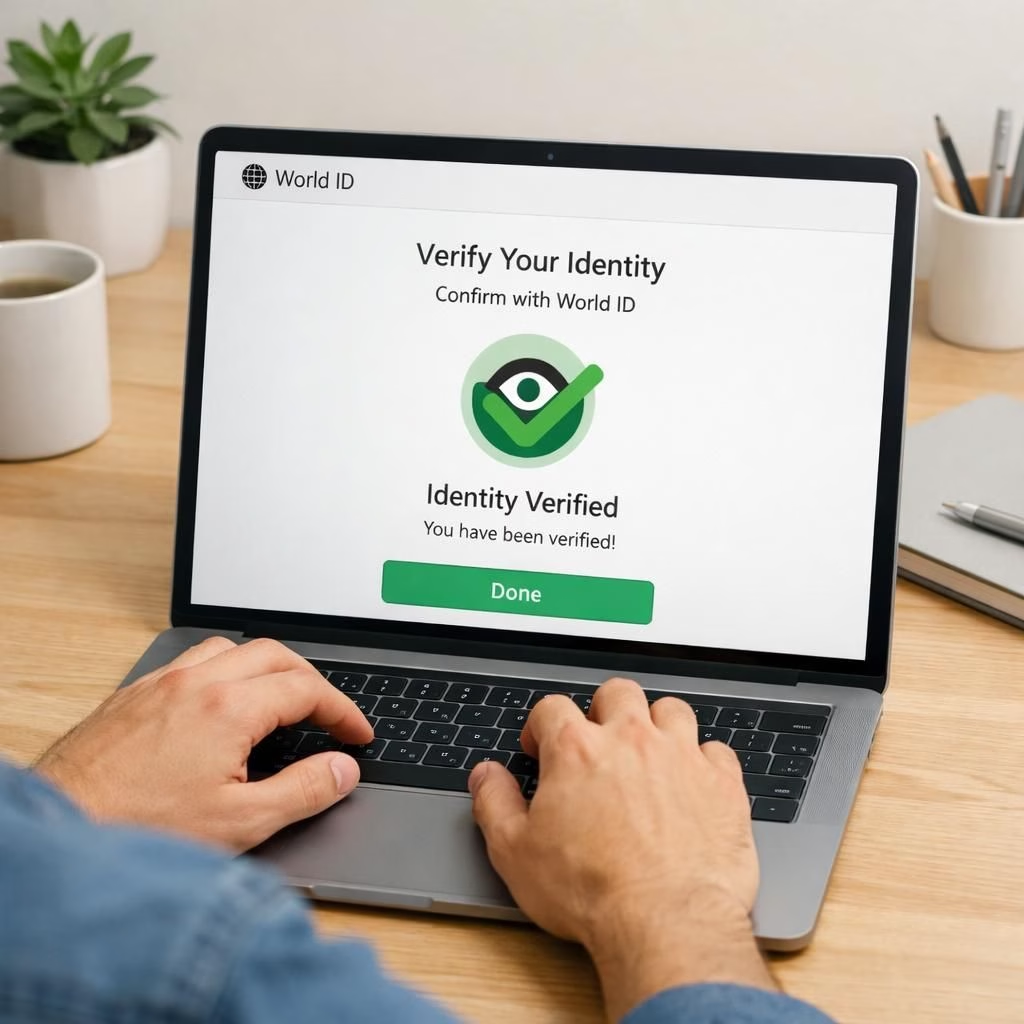
Imagine a world where logging into a service feels less like cracking a safe and more like greeting a friend. That world is edging into reality thanks to World ID and Identity Verification, two ideas built to prove you are human in the AI era. The World ID program has expanded with partners across video meetings, contract signing, and more. In 2026, the mission is less about surveillance and more about trust—a friendly guardrail for online conversations.
World ID in Everyday Use and Identity Verification
World ID works much like a friendly CAPTCHA for humans, not a full identity check. Verification offers three lanes: snap a selfie, show a government-issued ID, or opt into an in-person iris scan using an orb. Platforms that adopt World ID can set the required verification level, balancing security with ease of use. The result is a gate that feels trustworthy without wrecking the vibe of online life. As evidence of scale, about 17.9 million people have signed up globally, including roughly 1.1 million in North America. Yet privacy and governance concerns persist, including questions about data storage, usage, and accountability. The best response so far rests on openness: open-source code, transparent governance, and robust security practices that let users and regulators breathe easier, aligning with Identity Verification across platforms.
Identity Verification at Scale with World ID
Scale brings opportunity and debate. World ID is a modular trust layer, not a single monolith, letting teams build verification into workflows. The upgrade to the World ID system is open source, inviting developers to inspect, improve, and adapt. The firm plans to expand orb locations in San Francisco, New York, and Los Angeles, and to launch an orb-on-demand service after a pilot in Argentina. Alongside this, the Concert Kit tool aims to curb bot-driven ticket purchases by requiring human-verified attendance, a practical step for events and venues. Brands are eager to adopt these checks to cut fraud while preserving usability. Still, critics remind us that policy and governance must catch up with technology to maintain user trust and privacy, including Identity Verification standards across platforms.
Looking ahead, the broader tech landscape suggests that verifying human presence will become a baseline for AI-enabled platforms. The old model of silent trust is fading, making room for collaboration among users, engineers, and regulators. If you welcome a friendlier gatekeeper, share your thoughts below on Identity Verification and World ID.
Original article reference: Axios report on World ID partnerships. Thank you for the source material.
Practical steps for evaluating World ID and Identity Verification
Here are practical considerations to keep in mind when evaluating World ID in real-world apps, with a focus on Identity Verification integration.
- Know the required verification level. Check what a platform demands, and how Identity Verification is implemented at that level.
- Review data handling and consent. Understand what data is captured, how it is stored, and what controls you have, including Identity Verification data practices.
- Assess device access and availability. Consider orb locations, mobile app requirements, and options like orb-on-demand in your city.
- Test user experience and privacy controls. Try a platform with World ID enabled to gauge how verification feels in practice and what privacy levers exist.
FAQ about World ID and Identity Verification
- What is World ID? A lightweight, open framework designed to prove human presence online without revealing exhaustive personal data. It emphasizes user consent, portability, and governance transparency.
- How does Identity Verification protect privacy? By enabling selective verification levels and open governance, it aims to balance security with user control rather than storing a centralized biometric vault.
- Are there risks to privacy or data security? Any system that validates humanness involves data handling. The emphasis here is on open-source code, independent auditing, and regulatory oversight to reduce risk.
- Where can I learn more? Start with the World ID project’s official materials and reputable technology coverage, including the Axios report cited above.
In short, World ID and Identity Verification are shaping a future where online trust is a shared responsibility among users, platforms, and regulators. If you want a friendlier gatekeeper, this approach offers signals without sacrificing privacy.