

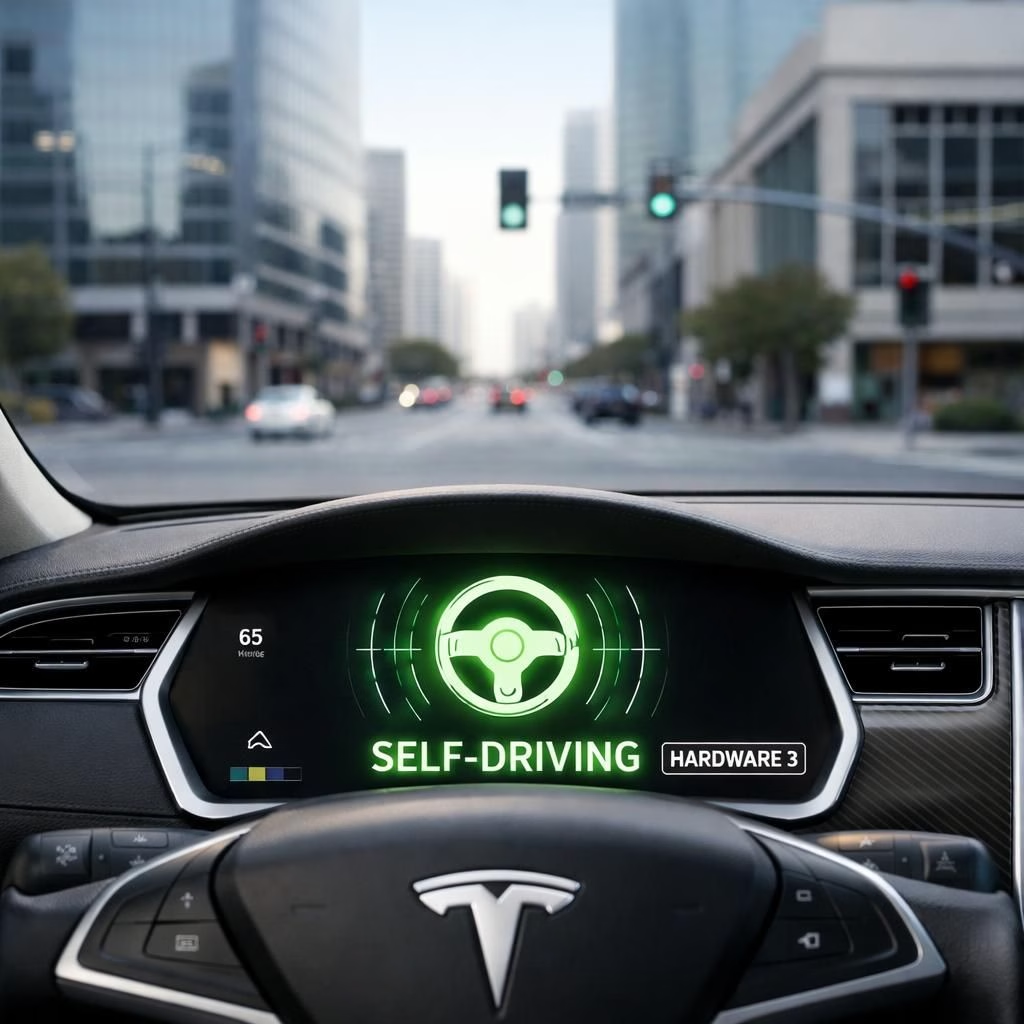
In 2026, Tesla sits at the center of a growing wave of international lawsuits from owners who say the Self-Driving promise outpaced reality, while Hardware 3 sits quietly in the trunk. The flashpoints go back to promises made as far as 2017, and drivers across Europe, Australia, and the United States now want refunds. Benzinga highlighted the latest legal push shortly before Tesla’s spring earnings report.
The Dutch case opened last week when a Tesla owner organized a wide coalition of European drivers who paid thousands for automated features they still cannot use in their cars. This is a familiar beat for a company that loves dramatic demonstrations of progress but sometimes underdelivers on the small print.
Meanwhile, in California an 80-year-old retired attorney recently won class-action status for a group of roughly 3,000 owners seeking full refunds under the banner of Full Self-Driving. The case shows that the court cares as much about consumer expectations as about the code under the hood. Across the Atlantic, an Australian law firm is pursuing a separate class action, arguing that Tesla sold cars that are physically incapable of ever becoming fully autonomous.
At the heart of these lawsuits is a technical bottleneck, often referred to as Hardware 3. This is the computer brain installed in millions of Tesla vehicles produced over the last several years. Wall Street analysts now suggest the hardware may be too old to run Elon Musk’s newest AI software. Musk himself acknowledged in 2025 that upgrading older systems for lifetime buyers would be painful and difficult. Early buyers in 2020-2021 did receive free upgrades, but in 2023 Tesla shifted to Generation 4 hardware, leaving some who paid for lifetime access stuck with obsolete gear again.
So what does all this mean for the average driver and for the Self-Driving brand? It means a sustained conversation about expectations, real-world capability, and the economics of perpetual upgrades. It also means a reminder that software is not a magic wand, even when the marketing team declares it one. In practice, customers want reliability first, even when the dream is sprinkled with shiny dashboard graphics and ambitious chatter about artificial intelligence.
Self-Driving promises vs reality in 2026
Here we see the tension between lofty promises and everyday use. Self-Driving features that once felt like a get-out-of-jail-card have to pass the same traffic laws, the same road tests, and the same consumer protection scrutiny as any other major technology product. The lawsuits do not just target a fanciful dream; they spotlight the gap between what is marketed and what is delivered. The legal teams ask for refunds or refunds plus interest, while Tesla defends itself with caveats about beta software, optional features, and a willingness to upgrade hardware where feasible.
From a tech perspective, Hardware 3 is central to the debate. It remains a robust design in many contexts, but the new AI software demands more horsepower than the older hardware can comfortably supply. The result is a paradox: the car that may be capable of advanced tasks in theory may not meet practical expectations in real-world driving, especially in markets with strict safety standards.
Hardware 3 reality check
Hardware 3 can still perform a lot of tasks, and many owners report positive experiences with basic autopilot functions. The complaint, however, centers on the lack of seamless upgrades and the perception that promises outpaced reality. A key takeaway for drivers is to keep expectations aligned with the hardware realities and to approach any software update as a step in a longer journey, not a magic bullet. The technology community often illustrates this with a simple rule: you ship what you can, then improve what you ship. In the end, the hardware and software must work together, and that coordination takes time and clear communication.
For investors and enthusiasts, the saga provides a lesson in product lifecycles and upgrade economics. The Hardware 3 stack, while powerful, is not a forever upgrade pass. The company has to balance customer goodwill with the costs of upgrade cycles and the legal risk of overpromising. It is a tricky balance, and one that many large tech hardware platforms encounter as they scale globally.
Looking ahead, the stakes are high: a continued rise in consumer lawsuits could pressure Tesla to accelerate hardware upgrades or adjust marketing language. The company could also lean into better onboarding, stricter disclaimers, and transparent roadmaps that clearly separate beta features from fully licensed capabilities. In a world where software-defined cars become ubiquitous, communication will matter as much as silicon.
Bottom line: the Self-Driving dream remains aspirational, even when the Hardware 3 platform proves resilient in the right contexts. The controversy pushes all parties toward clearer specifications, more reliable software updates, and more accountable marketing. It is a long road, but one that invites improvement, not just headlines.
Original article: Times of India
Practical steps for drivers in 2026
For drivers navigating the current landscape, a few practical steps can help manage expectations around Self-Driving and Hardware 3 today.
- Verify which features are actually enabled in your vehicle and compare them with what you were promised at purchase. If you own a car with Hardware 3 hardware, check official upgrade options and timelines from Tesla and document any misrepresentations.
- Keep copies of marketing materials, purchase agreements, and communication about feature availability to support any refund discussions.
- Follow official software rollout notes and treat beta features as experiments rather than fully licensed capabilities.
- Consider consulting consumer protection resources if you feel misled, especially when a feature remains unusable after purchase.
Frequently asked questions
- What is Hardware 3?
- The central autopilot computer in many Teslas that runs Self-Driving software. In discussions here, Hardware 3 is the focus of upgrade debates and legal scrutiny.
- Will older Teslas be upgraded to newer hardware?
- Tesla has offered upgrades at times, but eligibility depends on model, production date, and regulatory considerations. Always check official channels for the latest upgrade options.
- Are these lawsuits credible?
- The lawsuits reflect consumer expectations and the marketing disclosures around Self-Driving. Outcomes will hinge on jurisdiction, evidence, and the specifics of what was promised vs what was delivered.
- How should owners respond?
- Owners should stay informed about feature availability, document communications, and seek professional guidance if they believe they were misled about capabilities they paid for.
Conclusion
The Self-Driving dream remains aspirational, even as the Hardware 3 platform proves capable in certain contexts. The ongoing legal discussions push the industry toward clearer specifications, more reliable updates, and marketing that aligns with real-world performance. For Tesla and regulators alike, the takeaway is simple: transparency, not hype, builds trust as software-defined cars become the norm.
External context
For broader context, see the official Tesla Autopilot safety and limitations page: Tesla Autopilot Safety, and the U.S. NHTSA overview of Advanced Driver Assistance Systems: NHTSA ADAS. Industry coverage provides additional perspective from major outlets like Reuters and CNBC, which regularly assess hardware and software trajectories in automotive tech.
References
Original source linkback: Times of India