

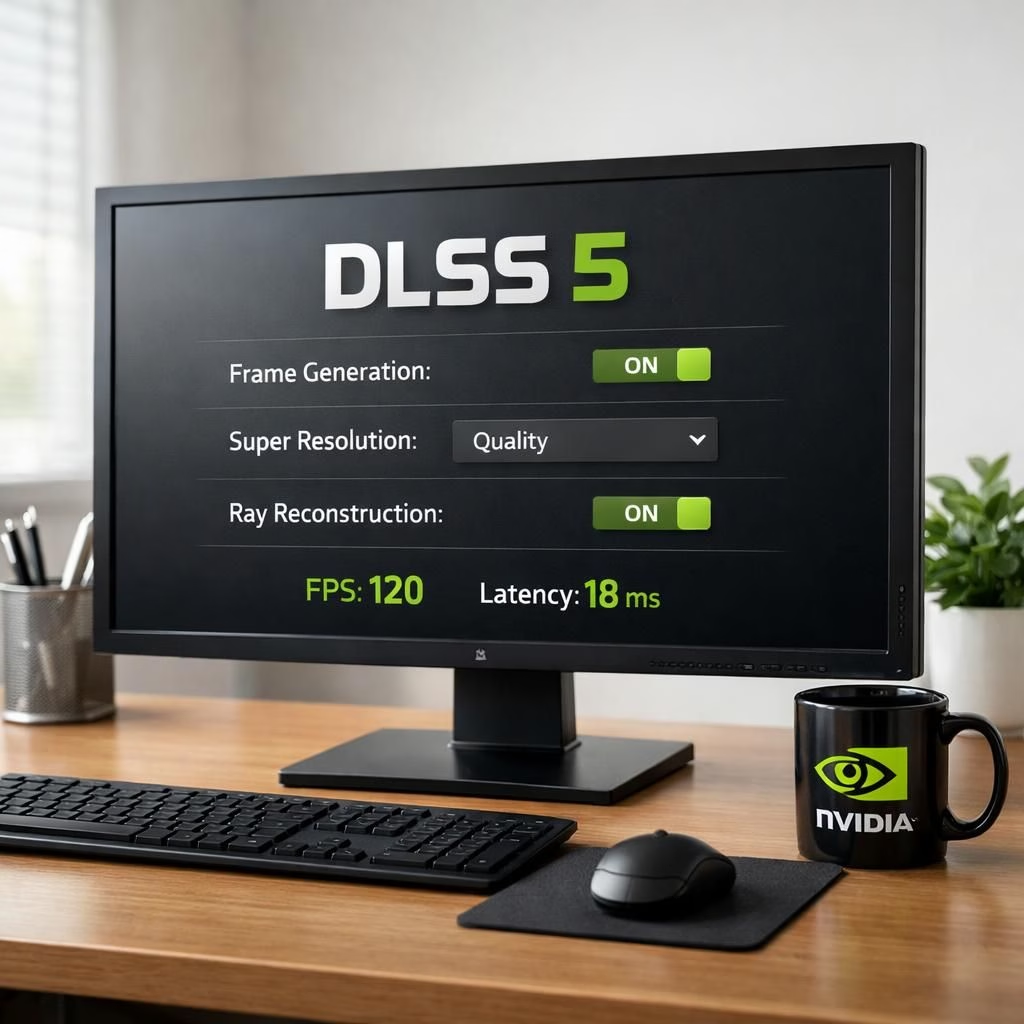
DLSS 5 is here, and NVIDIA is quietly staging a confident, almost sportscaster-esque defense of its latest AI upscaling tech. Critics may whisper about hype, but the CEO-level message remains clear: DLSS 5 delivers more than pretty pixels, and NVIDIA is happy to explain why. In 2026, the conversation around upscaling is less about magic tricks and more about how AI helps games feel both smoother and smarter. The claim from leadership is simple: critics are completely wrong about the potential of DLSS 5, and the evidence—varied game engines, real-world benchmarks, and developer feedback—backs that stance. This article takes a sunny, slightly cheeky tour through the improvements, the skepticism, and the practical reality of bringing AI upscaling into living rooms and esports arenas alike. Strap in, because the signal-to-noise ratio is finally trending toward clarity.
Before we dive into the nuts and bolts, a quick primer. DLSS 5 is not just another upscaling pass; it’s a layered approach that uses neural networks, temporal data, and careful quality controls to generate frames that look convincing even at high motion. The goal is to preserve detail when the action spikes, keep colors consistent across scenes, and minimize artifacts that used to give away the trick. In plain terms, it’s less about fabricating frames and more about making every frame count. NVIDIA frames this as a collaborative win: developers get sane tooling, gamers get a steadier image, and the whole ecosystem gains from a clearer, more consistent baseline. And yes, the messaging around DLSS 5 is always tied to the broader NVIDIA ecosystem, because the real story is how well the tech plugs into engines, platforms, and performance targets.
DLSS 5 and Visual Fidelity in 2026
For readers who want the short version, DLSS 5 improves temporal stability, lighting coherence, and texture continuity without stomping on performance. The result is a more believable world: shadows that don’t pop in and out, reflections that stay in sync with the frame rate, and distant geometry that doesn’t fuzzy out when the camera zips past. The approach is iterative rather than miraculous. NVIDIA has refined the training data, added domain-specific adjustments for lighting scenarios, and tuned the pipeline so that scenes with fast motion don’t flatten due to over-aggressive upscaling. In practice, the difference is noticeable but not jarring, which is the balance most players actually want. The DLSS 5 workflow also features improved integration with popular engines, making it easier for studios to adopt the tech without rewriting whole rendering paths. In short, DLSS 5 isn’t a new trick; it’s a more trustworthy tool in the developer’s kit, and that matters when you’re shipping titles with timelines, budgets, and performance targets in 2026.
From a consumer standpoint, the promise of higher frame rates without sacrificing image fidelity translates into snappier feel and more consistent visuals. That translates into a more immersive experience, whether you’re exploring lush forests, piloting a sleek sci‑fi craft, or sprinting through crowded urban streets. The critics may worry about AI upscaling becoming a crutch, but NVIDIA DLSS 5 is positioned as a complementary technology. It works best when developers tune it to the game’s art direction and pacing, rather than letting the AI run amok with aggressive upscaling. The practical takeaway is simple: DLSS 5 is designed to be a partner to traditional rendering, not a replacement for it, and that partnership matters when you’re aiming for both performance headroom and visual polish.
NVIDIA’s Strategy for Adoption and Real-World Impact
NVIDIA has framed DLSS 5 as an ecosystem play. The company emphasizes developer tooling, measurable performance gains, and clear guidelines for when to enable upscaling versus native rendering. This is not a gimmick; it’s a platform stance. The rollout plan includes better support for smaller studios, clearer benchmarks, and more predictable results across a range of GPUs and game genres. In practice, that means studios can ship games with confidence that NVIDIA DLSS 5 will perform as advertised on compatible hardware, while players can expect a smoother, more stable experience even in demanding scenarios. NVIDIA‘s messaging also leans on accessibility: easier integration, transparent quality modes, and robust documentation to help teams avoid common pitfalls. The net effect is a more inclusive approach to AI-assisted rendering, where the goal is to improve the experience for a broad audience rather than reward early adopters alone.
Adoption isn’t just about big AAA titles and flashy demos. It’s about the quiet wins—the way a mid-range PC can deliver a close-to-maximum experience in a wide set of games, or how a competitive title maintains frame stability during peak action. The NVIDIA DLSS 5 strategy, in turn, acknowledges that different games have different pain points. Some titles benefit from aggressive upscaling, others from a balanced approach that preserves certain effects. The result is a more nuanced, case-by-case application rather than a one-size-fits-all policy. NVIDIA‘s role here is to provide reliable defaults, clear best practices, and a pathway that makes sense for both indie developers and large studios. In 2026, the lines between marketing hype and technical reality are finally more transparent, and that transparency helps the entire community move forward.
Of course, the conversation is not purely celebratory. Critics point to the complexity of upscaling in diverse game worlds, the risk of artifacts in edge cases, and the question of long‑term hardware support. The CEO’s stance—that critics are completely wrong about DLSS 5—rests on a careful set of responses: improved test coverage, ongoing machine learning updates, and documented case studies from live projects. The practical takeaway is that DLSS 5’s value will be judged by reproducible results across titles and platforms, not by a single dazzling demo. The tone here remains constructive: acknowledge the limitations, celebrate the improvements, and encourage developers to push the technology further without losing sight of the art direction that makes games compelling.
For those who want a more technical taste, consider the data pipelines behind DLSS 5. You’ll find enhancements in how the AI model ingests temporal frames, how it maintains color fidelity across motion, and how it deconvolves detail from noise without introducing new artifacts. This isn’t magic; it’s disciplined engineering with careful safeguards. NVIDIA‘s emphasis on performance, image quality, and reliability is not just marketing jargon—it’s a blueprint for sustainable progress in AI-assisted rendering. The result is a more confident stance that, yes, this is a meaningful step forward for DLSS 5 and for the broader AI-upscaling landscape, with real implications for both players and developers in 2026.
If you’re curious about where this all leads, the answer is: bigger, better, and more practical. DLSS 5 will likely appear in more games and engines, offering a spectrum of quality modes so players can tailor visuals to their hardware and playstyle. NVIDIA‘s strategy suggests a future where upscaling isn’t a fringe feature but a standard tool in the rendering toolbox, deployed thoughtfully to preserve the artistic integrity of a game while delivering measurable performance gains. The ecosystem benefits from more transparent performance metrics, more accessible tooling, and a shared vocabulary that helps players understand what they’re getting when they flip the switch.
Original reporting on this topic can be found at the source: Nvidia CEO says critics are ‘completely wrong’ about DLSS 5 technology — our thanks to GamesIndustry.biz for sharing the original reporting and framing this important conversation.
If this kind of technology excites you, you’re not alone. The next steps feel collaborative: more benchmarks, more case studies, and more opportunities to test ideas that could shape how we play for years to come. I invite you to try it in your own games and share your findings. What works for you, where does it break, and which games benefit most from DLSS 5? Your experience helps push the conversation beyond headlines and into real-world outcomes. Please share your thoughts in the comments.
Frequently Asked Questions
- What is DLSS 5? NVIDIA‘s AI upscaling system uses temporal data and neural networks to boost frames without a full render pass.
- Will DLSS 5 work on my hardware? It depends on your GPU and the game, but many modern GPUs supporting DLSS 5 will benefit.
- Is DLSS 5 a replacement for native rendering? No. It’s a complementary tool. Developers tune it to preserve art direction and pacing.
- Where can I learn more? See the official DLSS page for setup guidance and supported titles.
Conclusion
DLSS 5 represents a more practical path for AI upscaling in 2026. It’s not hype, but a concerted effort to improve stability, lighting, and texture fidelity while preserving performance headroom. For both players and developers, the technology works best when deployed thoughtfully and tested across a range of titles and engines. The conversation around DLSS 5 and NVIDIA will keep evolving as more real-world results emerge.
References
- Nvidia CEO says critics are ‘completely wrong’ about DLSS 5 technology — GamesIndustry.biz
- NVIDIA DLSS — official page
External context: for readers who want to dig deeper, the NVIDIA DLSS page offers the latest official details on features, supported titles, and platform guidance. This article combines those details with hands-on explanations to help you judge the technology on its own terms.