

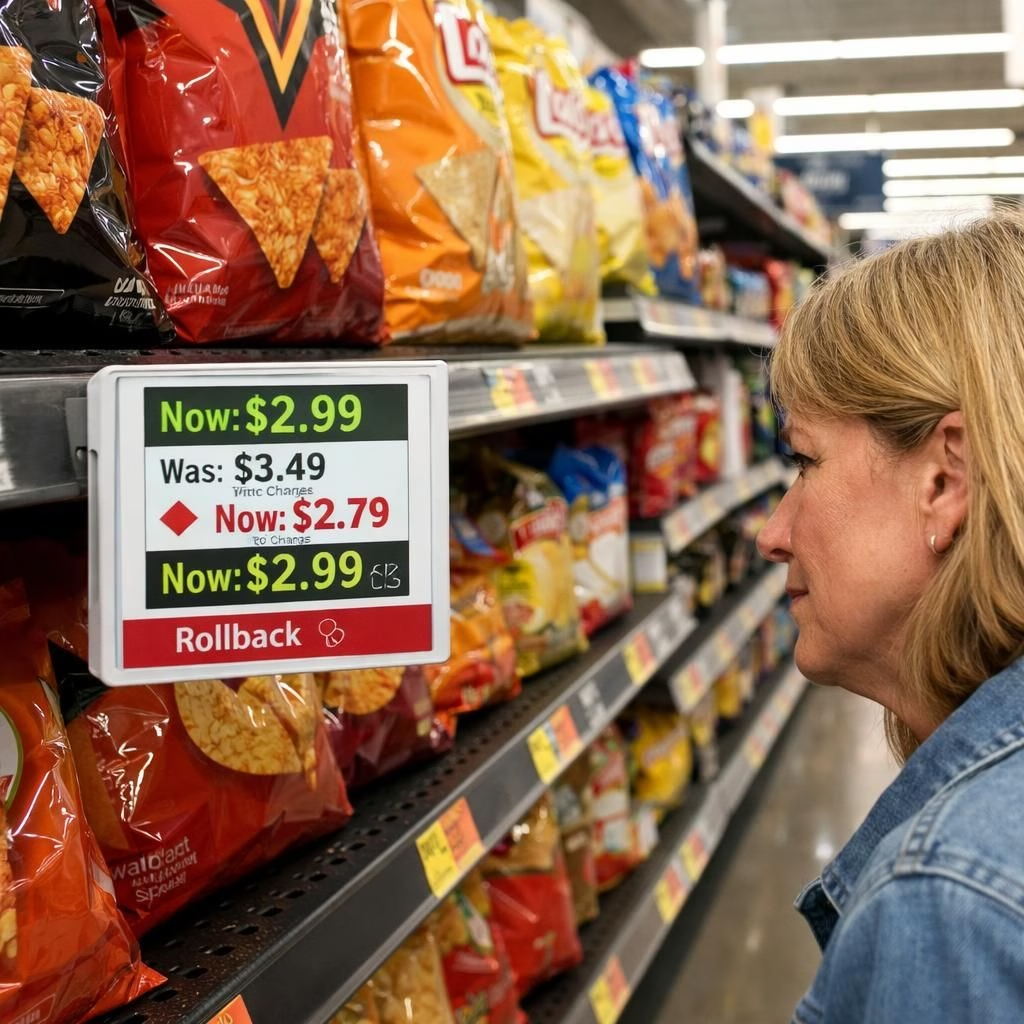
Walmart‘s latest experiment with dynamic pricing uses AI to forecast demand and suggest prices, and it has sparked lively debate across the aisle. The company touts the effort as a way to balance supply with appetite, aiming to keep everyday costs in check while still rewarding smart inventory decisions. In short, dynamic pricing is here, and Walmart is waving the flag with a smile.
Dynamic Pricing at Walmart: The Toolbelt Behind the Glowing Shelf Labels
In plain terms, the new tools aim to read signals from many sources—stock levels, seasonality, online demand, and real-world shopping patterns—and to propose price tweaks that reflect what shoppers need now. The system is described as “demand forecasting and price recommendation.” It ingests data across categories like food, clothing, and housewares and then suggests updates that keep a retailer nimble. The label of “dynamic pricing” is not just the future; it’s already in the mix, turning price tags into tiny dashboards that react to the moment.
Walmart‘s approach emphasizes guidance over unilateral control, presenting a framework that helps merchants stay responsive while preserving a steady Everyday Low Price promise. The company frames this as a decision-support tool for merchants, not a jump to surge pricing. The aim is to match price to demand while maintaining trust with shoppers who expect consistent value. The strategy is presented as subtle, not a price war in the aisle.
Patents cited by outlets like the Financial Times show a system that could link pricing to purchase history, payment methods, and identifiers. The December and January filings describe a mix of demand analysis and automatic updates to online prices, with the January filing focusing on markdown strategies and the later tool aiming to assist sellers. The emphasis is on guidance rather than unilateral control, Walmart notes, while critics worry about the optics of price moves that align with consumer need—and perhaps a little bit of edge in the margins.
Alongside pricing tools, the retailer is expanding digital shelf labels. The new displays update in real time across thousands of stores. In the US, more than 2,300 locations already use electronic price tags, with plans to roll out to all stores within a year. The company says these updates are mostly to replace paper labels and to simplify price changes, not to replace human judgment. The retailer also argues that Walmart remains committed to an Everyday Low Price philosophy even as prices adjust automatically behind the scenes.
Industry voices warn that the system could look like price experimentation on the fly. Matt Hamory of AlixPartners cautions about goodwill risk when customers suspect pricing moves favor the seller over the shopper. The Retail Industry Leaders Association notes that fears about widespread misuse tend to stay hypothetical, but the possibility remains in the public imagination. Walmart counters that its prices stay consistent with its Everyday Low Price promise, regardless of demand or time of day. It emphasizes human-led updates even as automation handles the heavy lifting.
Bob Phibbs points out this mechanism isn’t new; retailers already analyze a spreadsheet and gut feeling. The innovation is automation that handles the data at scale. Prices can fall as quickly as they rise; the difference is speed, not intent. The goal is to balance shopper welfare with business needs, not to unleash chaos in the checkout lane.
For shoppers facing rising living costs in 2026, the development is both a curiosity and a test. When prices adapt, some items may dip, others may hold steady, and the overall effect should be greater pricing clarity and quicker refunds or adjustments when something goes wrong. The success metric remains transparency and trust, not a mysterious algorithmic magic trick. Walmart invites questions and feedback and asserts a structured process behind the scenes.
As digital labels spread to thousands more stores, critics hope the rollout stays shopper-centric. The ability to update prices quickly is appealing, but the risk of confusing shoppers—price changes that come and go—lingers. In the trade press, experts say the risk is manageable if retailers publish clear rules and keep price consistency at the center. Walmart reiterates that the system supports merchants rather than replaces them, and that it remains committed to its Everyday Low Price philosophy.
In a broader sense, the trend is a reminder that data and design can meet the checkout line. The goal is a balance: automate repetition, but keep the human touch where it matters. When done well, dynamic pricing can smooth out volatility, support steady discounts, and help shoppers feel informed rather than surprised.
To learn more about the origins of these ideas, see the original article linked below. Your thoughts and experiences with dynamic pricing and Walmart are welcome in the comments section.
Original article: Thank you to the Financial Times for the original reporting and insights.
FAQ: Dynamic pricing and Walmart
- What is dynamic pricing? A pricing approach that adjusts in real time or near real time to demand, inventory, and other signals to balance supply with shopper needs.
- Will Walmart price items more aggressively at peak times? The company says the system is meant to support governance and maintain Everyday Low Price integrity, not to surge prices dramatically.
- How do digital shelf labels fit into this? They enable faster, more visible price updates across stores while keeping human oversight in the loop.
- Should shoppers trust these changes? Transparency and consistent pricing are emphasized; look for clear rules and explanations around price updates.
Bottom line: what this means for shoppers
The aim of dynamic pricing at Walmart is to reduce volatility and improve clarity while preserving a predictable value proposition. When done well, it can help prevent sudden price spikes and speed up adjustments when something goes wrong. The key for consumers is to monitor price changes and seek transparent, consistently applied rules. The company says the process keeps a human touch at the center and views the digital tools as decision aids for store teams.
Further reading and context
For broader context on pricing technologies and consumer trust, consider official patent resources and industry analyses. See credible reporting from established outlets and technical overviews that discuss how dynamic pricing interfaces with data privacy and fair access.
References
- Times of India: Walmart AI dynamic pricing outrage
- Financial Times coverage cited in the article
- USPTO overview: patents and pricing tech
- AlixPartners: pricing strategy and consumer trust