

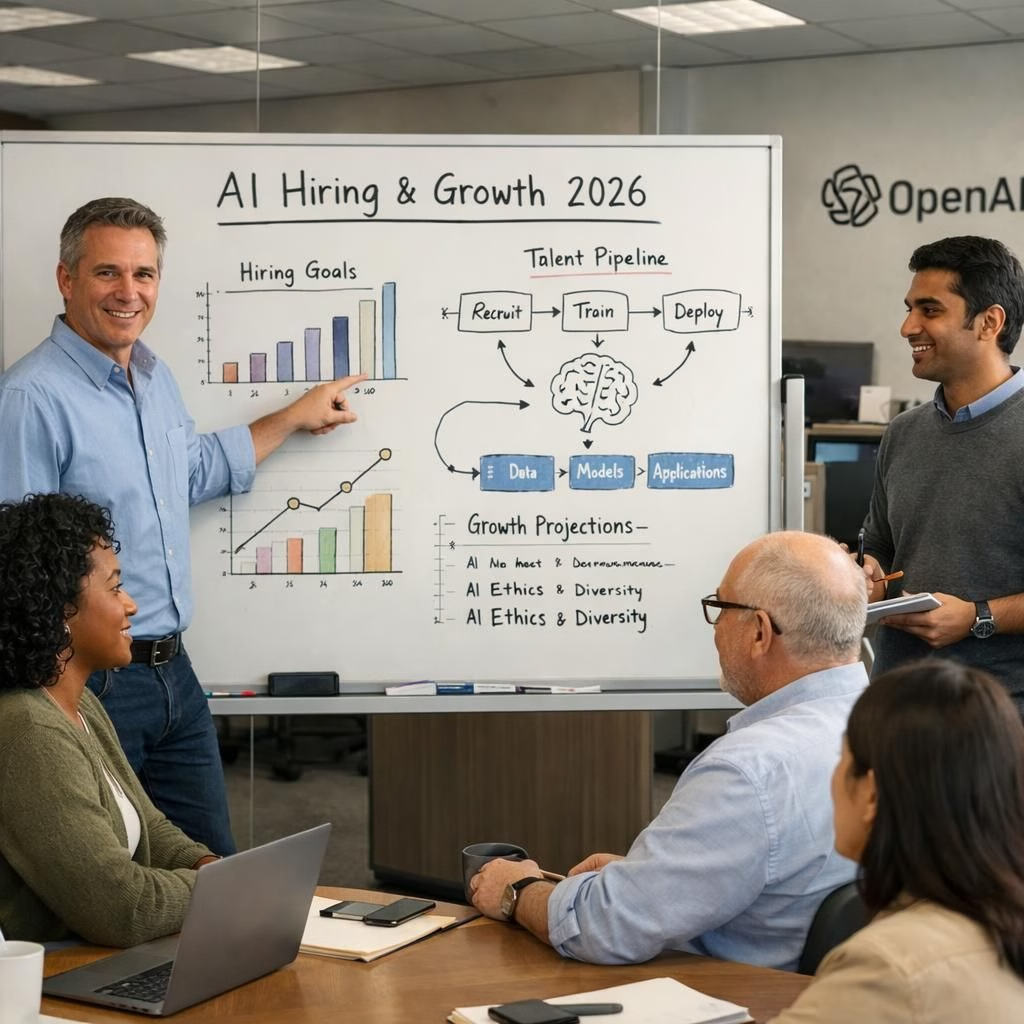
OpenAI has unveiled a growth blueprint for 2026, and AI Hiring is the name of the game. The plan doubles the workforce from 4,500 to 8,000 by year-end, prioritizing product development, engineering, research, and sales. It reads like a shopping list for smarter software and more customer touchpoints, all aimed at turning ambitious ideas into market-ready tools.
OpenAI wants to scale with purpose. The leadership frames this as disciplined expansion rather than a reckless sprint. The numbers are large, but the aim is clear: grow capabilities without losing the craft that made early successes possible. When teams grow, so do the challenges of coordination, culture, and keeping the same velocity on quality. Still, the vibes are optimistic, with a wink to the hard work behind the magic.
According to the Financial Times, OpenAI plans to deploy most of the new hires across product development, engineering, research, and sales. Reuters could not immediately verify the report. The FT narrative hints at a broader strategy: build more capable tools, then help customers actually use them well. The company also plans to expand specialists focused on technical ambassadorship, a role aimed at translating complex AI capabilities into practical business outcomes rather than jargon and buzzwords. This broader push is central to the AI Hiring plan.
If you think this is only about bigger teams, you’re missing the point. OpenAI wants a more nimble staffing model that supports both advanced research and real-world deployments. The idea is to blend deep technical talent with customer-facing expertise, so the tools don’t stay brilliant museum pieces but become everyday workhorses. In practice, that means more product managers, more engineers, more researchers, and more sales engineers who can explain predictive models without needing a cryptography degree to decode them. This approach embodies the AI Hiring mindset—hands-on, outcome-focused, and scalable.
OpenAI’s Bold 2026 Hiring Surge: What AI Hiring Signals for Tech
The numbers tell a story: 8,000 people, a doubling of the workforce, and a plan to keep the trains running on time. The ambition meets the reality that AI products require careful handoffs from development to product-market fit. OpenAI aims to balance speed with diligence, delivering updates that actually solve customer problems rather than just sounding impressive in investor decks. In this sense, AI Hiring is not merely about headcount but about widening the pipeline for practical talent: software engineers, data scientists, user researchers, and people who can translate a business need into a technical spec.
The focus areas are telling: product development drives features that matter; engineering ensures those features are scalable and reliable; research pushes the boundaries of safety, alignment, and capability; and sales helps translate technical novelty into tangible value for customers. It’s a choir, and every voice matters. The ambition is bold, yet the plan reads as a product of experience: hire thoughtfully, align teams, and keep the core product experience central to growth.
The press buzz aside, there’s a practical thread: hiring at this scale demands organizational clarity. The company will need onboarding programs, robust knowledge transfer, and a culture that preserves curiosity while preserving discipline. For employees, this can feel like a supercharged startup experience with the backing of a mature, well-funded team. For users, it could mean faster iterations, better documentation, and more direct paths from prototype to deployment. And for competitors, it’s a reminder that scale, when paired with a clear strategy, remains a formidable differentiator.
OpenAI and AI Hiring: Culture, Risks, and Opportunity
Every surge in AI Hiring brings questions about culture. Can a team scale without losing its sense of mission? OpenAI seems determined to answer yes, balancing ambitious research with a customer-focused cadence. The plan also introduces the concept of technical ambassadorship, where staff help businesses get real value from tools rather than just adopting the latest buzzword. That’s a practical twist: a tech-savvy bridge between complex models and everyday workflows.
There are potential risks, of course. Mass hiring invites onboarding frictions, misalignment between product teams and sales, and the perennial challenge of maintaining quality under pressure. The company’s internal code red in December last year—pausing non-core projects to accelerate development—signals a prioritization discipline that could mitigate some of these risks. If the organization keeps its focus on what users actually need, this could balance speed with reliability, a combination that customers reward with trust and repeat use.
On the financial side, the round that raised OpenAI’s valuation to dizzying heights—reported as around $840 billion in some coverage—sends a message to markets and developers alike: betting on scalable AI platforms remains a high-stakes, high-reward game. The presence of SoftBank and other investors in the orbit adds ballast and gravity to the growth narrative. The reality is that with great scale comes greater responsibility: ensuring safe deployment, clear governance, and transparent communication about capabilities and limits.
From a practical standpoint, the emphasis on technical ambassadorship could help close the gap between the lab and the ledger. If OpenAI can turn complex ideas into digestible business benefits, AI Hiring becomes not just a hiring metric but a customer satisfaction metric. That alignment matters because, in the end, growth without meaningful value is just a flash in the pan. The company’s strategy, if executed with care, could accelerate not just product launches but user adoption and trust across industries.
For observers and participants in the tech ecosystem, the takeaway is nuanced but hopeful. Growth of this scale is not a free pass for hype. It’s a reminder that responsible expansion—paired with a clear product narrative and strong customer outcomes—can coexist with the excitement of cutting-edge research. The 2026 horizon is bright, but it asks for steady hands, cross-functional collaboration, and a commitment to turning capability into usefulness. If OpenAI can keep that balance, the 2026 growth chapter may end up being a case study in scalable innovation that respects both people and product.
In the end, the OpenAI story is a reminder that big tech’s next chapters are rarely about a single invention, but about how a growing team translates ideas into durable, useful products. The blend of product discipline, technical ambition, and market-facing execution could set a template for AI-driven growth that’s ambitious yet grounded, playful yet purposeful. As this unfolds, the tech world will be watching not just the numbers, but the quality of the work behind them.
We’d love to hear your thoughts on this growth trajectory. Do you see OpenAI’s expansion as a catalyst for better tools, or as a signal of overreach? Share your perspective in the comments below and join the discussion about how AI Hiring shapes the future of work and innovation.
Original reporting context and gratitude: Our thanks go to the Financial Times for the original reporting on OpenAI’s plans, as cited by Divya Bhati. The reporting that sparked this reflection is gratefully acknowledged: Financial Times original article. Thank you for the insightful material that helped shape this article.
Practical steps for teams under AI Hiring
- Set up an onboarding program that unites researchers, engineers, and sales engineers around common goals.
- Institute a formal handoff process from development to deployment to strengthen product-market fit.
- Create technical ambassador roles to translate AI capabilities into real business outcomes.
- Establish rapid feedback loops from pilots to drive concrete improvements.
FAQ
- What does doubling the workforce mean for OpenAI’s product roadmap? It signals broader execution across product development and customer-facing roles, with emphasis on turning research into practical tools. AI Hiring efforts aim to align capabilities with customer needs.
- Will this affect user experience? Yes. Expect faster iterations, clearer documentation, and more direct paths from prototype to deployment, driven by a disciplined hiring approach that blends research with commercialization. AI Hiring will be a key driver here.
- What are the main risks? Onboarding friction, misalignment between product and sales, and maintaining quality under rapid scale are potential challenges. The internal code red last year indicates a focus on prioritization to mitigate these risks.
References
- Original India Today reporting: https://www.indiatoday.in/technology/news/story/openai-in-code-red-rush-plans-to-double-workforce-to-8000-as-ai-competition-intensifies-2885245-2026-03-21