

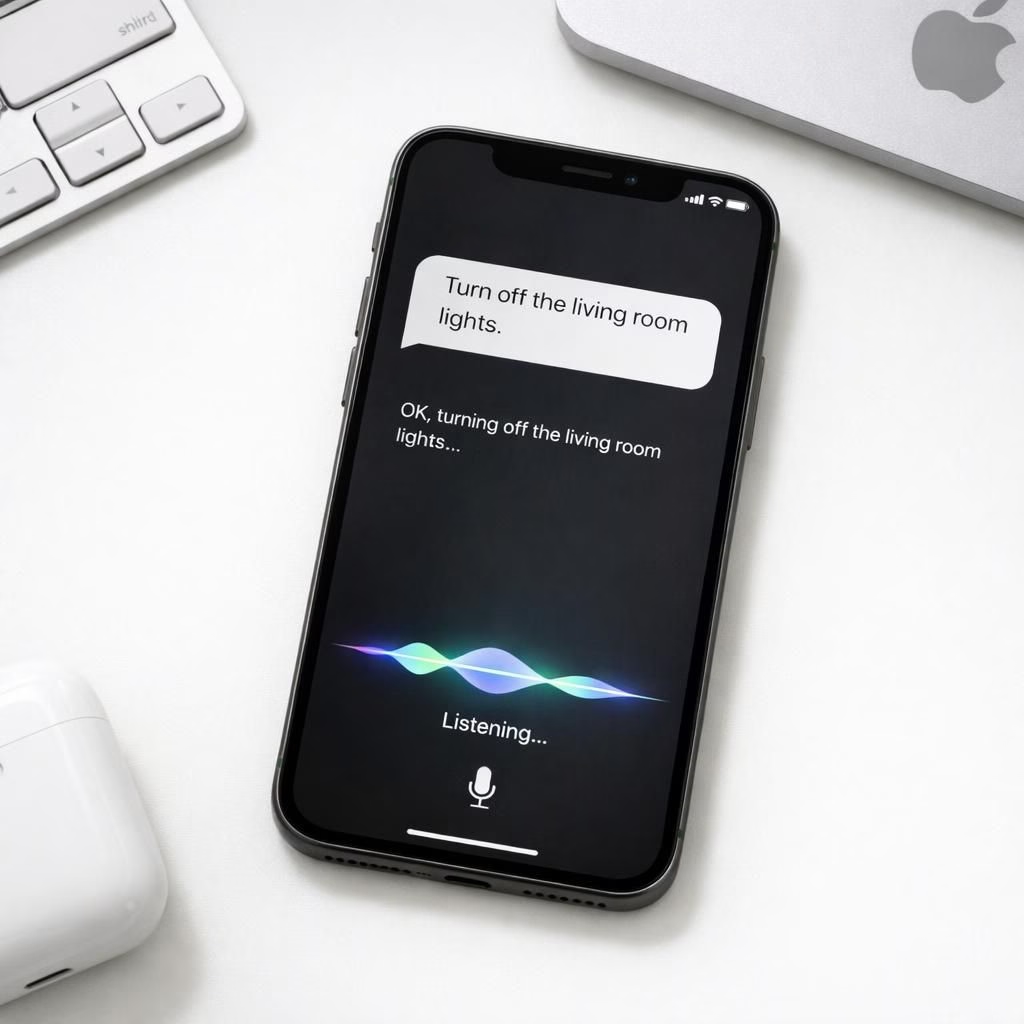
Voice Control and Apple Intelligence headline the May preview from Apple, offering a practical glimpse into on-device AI for iPhone, iPad, and Mac. The update highlights a natural-language approach that could make everyday tasks feel smoother, safer, and more human in how you interact with your devices.
At launch, Voice Control will respond to natural language, reducing the need to memorize UI labels. Availability begins in English in the U.S., Canada, the U.K., and Australia. Apple emphasizes a more intuitive experience where you describe what you want to do rather than recite exact words. For example, you could tell Maps to show something, or direct the Files app to a specific folder, and the system would interpret your intent.
The broader plan stitches together Voice Control and Apple Intelligence to deliver a more conversational interface. The aim is to cut down on prompts and let the device infer your goal, while staying respectful of privacy and user choice. For context, Apple also highlights accessibility work on its official pages to balance helpful features with user control. Apple’s Accessibility page provides broader context on how these tools fit into inclusive design.
Voice Control and Apple Intelligence: iOS 27’s Contextual Siri
Siri evolves from a static helper into a context-aware assistant that can reference information across apps. Apple says on-screen awareness will help it anticipate actions, reducing back-and-forth questions. In 2026, the company expects deeper per-app controls and more agent-like behavior that can act on natural language requests using Apple Intelligence across supported apps.
The rollout is designed to be staged. English language support remains the starting point in four regions, with broader language coverage planned later. These features are tied to iOS 27, iPadOS 27, and macOS 27, with a public debut targeted for mid-year after the June keynote. Apple emphasizes privacy and non-intrusiveness as core principles guiding the rollout.
Hardware requirements matter. A more personalized experience is likely reserved for newer devices, such as iPhone 15 Pro or newer, Macs with M1 chips or newer, and iPads with M1 or A17 Pro or newer. Apple has historically balanced capability with energy use and privacy, and executives indicated some capabilities could slip to later in 2026. The staged approach invites developers and users to adapt gradually.
Together, these moves point to a platform that is more proactive and less rigid. You could describe a task in natural language and let the system figure out steps across Maps, Mail, Messages, and shopping apps. The result is lower friction, stronger accessibility, and respect for user preferences. The plan aims to be useful without feeling pushy—an everyday AI helper that respects boundaries.
Practical steps to explore Voice Control with Apple Intelligence
- Enable Voice Control in Settings and test a few natural-language commands.
- Ask Maps to show recommendations or to navigate to a category like “best restaurants” using a natural prompt.
- Try Files or Mail with natural descriptions like “open the purple folder” or “show recent messages from Mom.”
- Observe how Apple Intelligence handles cross-app tasks and whether results stay private.
Frequently asked questions
- What is Voice Control? A hands-free control system that lets you operate your device with spoken commands, now expanding with natural-language prompts.
- What is Apple Intelligence? A broader AI layer intended to understand context and act on your requests across apps, while prioritizing privacy.
- When will these features roll out? Apple has described a staged rollout starting with English in four regions, with broader language support and devices added over time, aligned with iOS 27, iPadOS 27, and macOS 27 releases.
- What devices support the new features? Initial experiences will favor newer devices such as iPhone 15 Pro or newer, Macs with M1 or newer, and iPads with M1 or A17 Pro or newer.
In short, the May preview hints at a practical, privacy-minded future where Voice Control and Apple Intelligence work together to reduce friction. The experience may feel more like a capable co-pilot than a rigid menu, helping with daily tasks while staying respectful of your choices.
Original article: https://www.macrumors.com/2026/05/20/ios-27-ai-voice-control-hints-at-siri-revamp/ — Thank you for sharing the material that sparked this cheerful exploration. Have thoughts? Please share them in the comments below.