

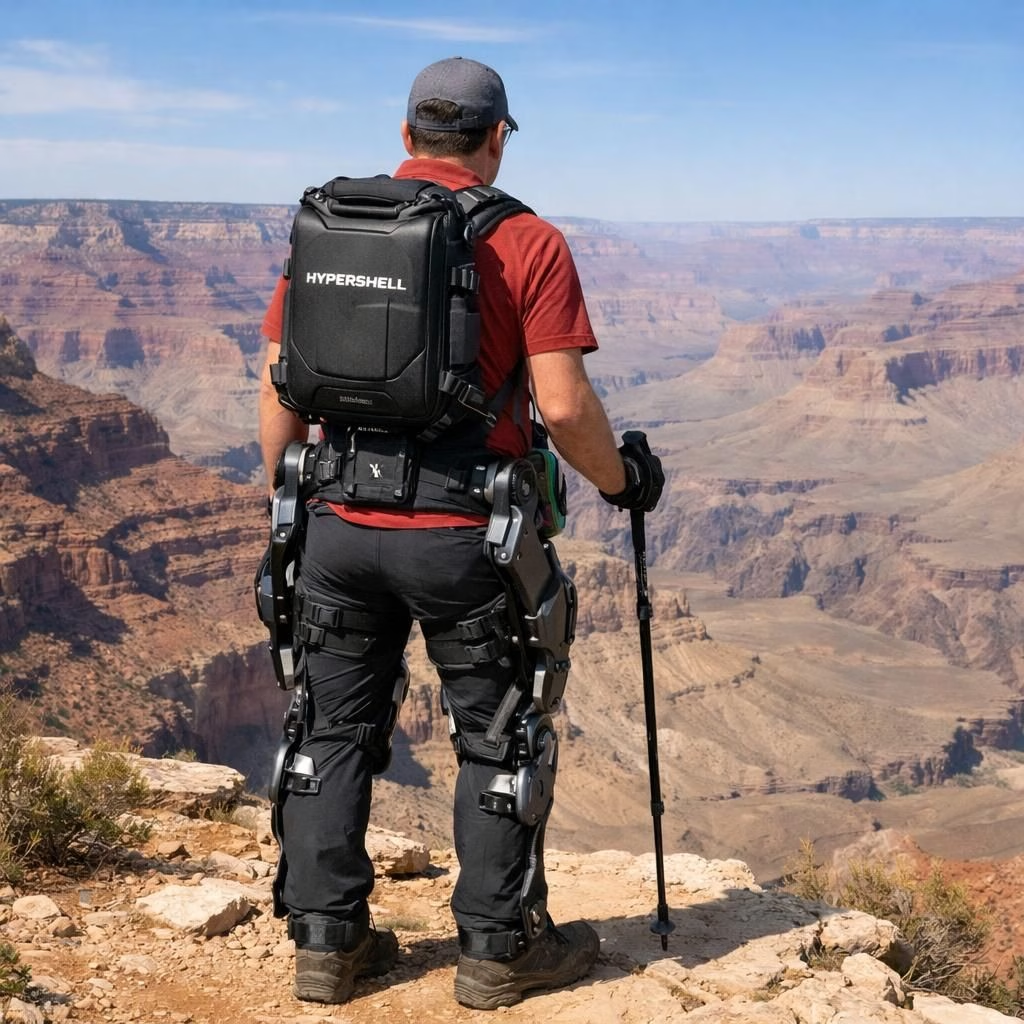
In this hands-on look at the Hypershell X Ultra S exoskeleton, the aim is endurance over cape-level heroics. Hypershell promises light gear that boosts miles, not a superhero jump, and the device behaves like a friendly coach on your hips and legs. The idea is practical, not fantastical, and the optimism is infectious even when the trail tries to remind you who you are.
I’m in Arizona, standing at the Grand Canyon rim with Hypershell’s X Ultra S strapped around my midsection. I want to feel like a hero, but the device keeps my expectations grounded: endurance, not instant gravity-defiance, is the goal for 2026. My daughter, a gymnast-turned-varsity soccer player, climbs with the poise of a pro while I wrestle with gravity, nerves, and a stubborn sense of humor about my own limits.
Climbing is part of hiking, or so we’re told, so we descend with a plan to climb back up. She breezes ahead; I chip away at it with the exoskeleton offering steady aid. The point isn’t to outpace her but to test how far a tired body can go with Hypershell support. Endurance is the win condition here, not hero-status, and that distinction lands with a smile on the roughest switchbacks.
The exoskeleton sits light, just under five pounds. The battery nestles in the small of your back, and arms extend to connect to the thighs. The build uses carbon fiber and titanium, premium materials that matter when you want a device you’ll actually wear on weekend adventures, not just a flashy demo at a trade show.
Front pockets are effectively blocked by the hip-battery frame. You’ll want a vest or external pockets if you actually carry small things while you hike. It’s a practical caveat—annoying sometimes, but not a dealbreaker for regular hikers who value endurance gains over pocket access on a rough trail.
The exoskeleton isn’t a seat-saver or a couch-friendly gadget. The back battery makes leaning back awkward, so sitting becomes a challenge, and not in a fun, sci-fi way. You adapt a posture that favors standing or slight forward leans, which is arguably healthier for long days on the trail anyway, albeit less comfortable for a roadside nap.
A 5,000 mAh battery powers the two hip-mounted motors and the thigh actuators. The system supports roughly 30 kilometers of mixed activity on a full charge, with a spare battery included. The goal is to reduce energy cost and oxygen consumption, letting you go farther than you could alone. You lift a leg and the exoskeleton lends a lighter feel; you push down and it helps you push through fatigue.
The battery backstory is simple: power comes from a compact pack that launches the assist from the hips outward toward the legs. That architecture keeps the weight distribution manageable and the center of gravity stable as you move along a raking, sunlit canyon trail.
The exoskeleton X Ultra S is app-controlled via Bluetooth. A dedicated button powers the machine on and off and toggles between modes—Eco, Hyper, Transparent, and Fitness. Eco and Hyper determine the level of assistance; Transparent sets the device to idle so you can walk with your own momentum when you want to feel independent. Fitness offers resistance to train your legs, adding a purposeful challenge rather than a pure boost. It’s a clever feature set that leans into the playful side of fitness tech without pretending you’ll suddenly sprout wings on the downhill.
A newer feature, Hyperintuition, uses an algorithm to detect the activity you’re doing and automatically switch. It removes the guesswork of manually choosing modes, which is handy when your brain is busy counting steps rather than predicting the trail’s next stair-step.
On the trail, the sensation is like moving with a marionette: the legs feel lighter and the assist is noticeable when you lift, push, or strike the ground. On a bicycle test, the assist was even more obvious, especially when climbing hills. The exoskeleton device clearly helps with endurance rather than making you superhuman, and that distinction matters for setting expectations on long days.
Hypershell Endurance on the Grand Canyon Trail
We tackled a 100-foot climb and then a two-mile rim hike. The day logged about 12,000 steps for me, and I purposely left my cane in my hotel room for part of the trial. My daughter finished the climb with a bounce, while I finished with a relieved sigh and a promise to hydrate. Heart-rate data showed a modest gap between us, but the messages were clear: the exoskeleton helps you pace, not instantly cure every breathless moment. Endurance improvements emerged as the real story, not a dramatic spike in speed.
Altitude adds a wrinkle. The Grand Canyon sits around 7,000 feet above sea level, a factor that compounds fatigue and breath control. Still, the exoskeleton device helped me go farther than I would have on my own that day, which is the core promise: extend the ride, extend the hike, extend your capacity to explore.
The two-mile hike ended with similar energy expenditure for both of us in the moment, but the after-effects diverged. I needed more recovery time, while my daughter bounced back quickly. This is the kind of real-world nuance you want from endurance tech: the device supports you, but your own fitness baseline still shapes the outcome. The takeaway is not that you’ll become a superhero, but that you can finish a challenging route with a little less fatigue in the tank.
What Hypershell says about pairing with fitness. Executives emphasize that the exoskeleton works in tandem with your baseline fitness, not as a magic replacement. The tech is designed to optimize performance and lower oxygen consumption under strain, making longer outings feasible without turning your legs into autopilots. The company positions the X Go model at a friendlier price point for curious hikers who want a taste of the concept before upgrading to the flagship gear. Gran Turismo 7 Power Pack offers a related mindset shift for endurance-minded gaming enthusiasts looking at pacing and energy budgets in a different setting.
Beyond the single test day, the practical message remains: if you already exercise regularly, this device can help you extend your routes and manage fatigue. If your exercise routine is non-existent, the improvement will be more limited. Fitness is a lifestyle choice, and Hypershell aims to support that choice with precision engineering and thoughtful design—worth the premium for someone who wants to explore farther without wrecking tomorrow.
Editors’ note: The author’s travel costs tied to the Hypershell X Ultra S launch were covered by Hypershell and Finn Partners. The judgments and opinions are the author’s own, shaped by a real day on the trail with the equipment.
If you’re curious about how this kind of wearables tech may fit into your outdoor life, this review is for you. The device is a tool that can help you go farther, with incremental gains rather than instant miracles. It’s most compelling for active people who want to extend adventures while maintaining a sane pace and a rational respect for elevation and altitude.
For readers who want more context, please share your thoughts in the comments and tell us how you approach endurance tech in your own outdoor routines.
Internal links for further context:
- Gran Turismo 7 Power Pack — a tech comparison on pacing and endurance in a different medium.
- Renoun Endurance 88 Skis — a look at how engineered cores reduce fatigue on long runs.
Original article: CNET Hypershell X Ultra S Review. Thank you to the original author for providing material and insights that inspired this piece.
exoskeleton as a Training Partner
The goal of this Hypershell setup is endurance, not a magic fix. It’s a nuanced tool that can help you finish longer routes with less fatigue, especially when elevation and altitude come into play. The experience can be different person to person, which is why real-world testing matters before making a bigger commitment. And if you already love outdoor adventures, this tech can help you push a little farther each outing.
Practical Tips for Getting the Most from Hypershell
- Get a proper fit: Work with the adjustable hip arms to set comfortable thigh strap placement about two to three inches above the knees.
- Plan storage: Since front pockets are blocked, wear a light vest with pockets for essentials.
- Choose modes thoughtfully: Eco or Hyper for everyday outings; use Fitness only when you want a leg-burning workout on the go.
- Charge strategy: Carry the spare battery and plan for a mid-activity swap to maximize total outing time.
FAQ
- Who should consider the Hypershell X Ultra S? Active hikers and cyclists who want to travel longer distances with less fatigue, especially where terrain and elevation matter.
- Does it replace training? No. It augments your baseline fitness and endurance, not replace conditioning.
- How long does the battery last? About 30 kilometers of mixed activity on a full charge, with a spare battery included.
- Is it comfortable? Comfort improves with a proper fit, but the back battery design limits long periods of leaning or sitting.
Conclusion: A Valuable Tool for Serious Adventurers
If you already exercise regularly, the Hypershell X Ultra S can help you extend routes and manage fatigue. It won’t turn you into a superhero, but it could smooth out the rough patches on a demanding day. The price is premium, yet many hikers value the potential to explore farther without overdoing it. For a lighter entry, the company’s X Go model offers a friendlier starting point.
References
- Original source: CNET Hypershell X Ultra S Review
- Nature: Exoskeletons in health tech — https://www.nature.com/articles/d41586-021-03019-3
- IEEE Spectrum: Exoskeletons and assistive wearables — https://spectrum.ieee.org/robotics/assistive-technology/exoskeletons
- Wired: The coming wave of robot exoskeletons — https://www.wired.com/story/robot-exoskeletons-are-coming