

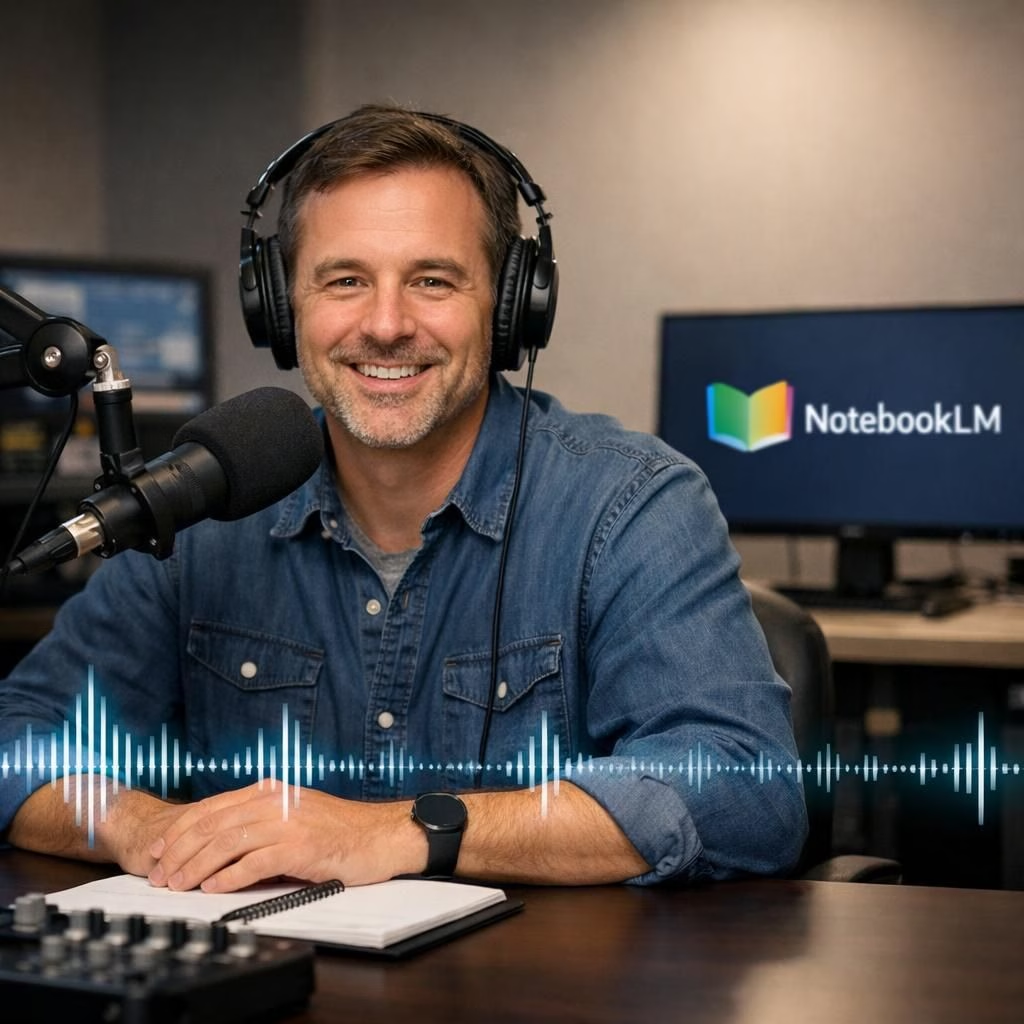
In 2026, Voice Cloning and AI Rights collide as a high-profile radio host sues Google over NotebookLM, claiming the AI tool mirrors his cadence, timing, and distinctive verbal tics with unsettling accuracy. David Greene insists the voice he built for listeners is more than a microphone—it’s a personal brand and a handshake with audiences that feels almost like a memory. He says friends and colleagues believed he licensed his vocal persona to Google, a thought that reads like a plot twist in a newsroom satire—but it is his reality, and one that challenges the boundaries between human artistry and algorithmic recreation. The stakes are not just money. They are about recognition, control, and whether a living, breathing voice can be treated as data that people can remix without consent.
Voice Cloning and AI Rights in the NotebookLM Debate
NotebookLM is pitched as a tool to generate on-demand podcasts by turning text into speech using AI voices. Greene’s team argues that the specific “Audio Overviews” embedded in NotebookLM resemble his performance closely enough to confuse listeners, and perhaps even to persuade them he signed away his rights. In the lawsuit, his attorney notes the resemblance is not a casual echo but a recognizable impersonation in rhythm, tone, and those little verbal tics that define a host’s personality. Google responds that the voice is built from a paid professional actor rather than from Greene himself, a denial that raises immediate questions about origins, consent, and the economics of voice work. The Washington Post frames the dispute as a microcosm of a much larger trend: an AI industry that promises to transform the economy by enabling on-demand generation of lifelike speech, prose, images, and video, often while the humans behind the training data remain unaware of how their words and voices are used to train models. This tension—protecting a creator’s rights while enabling scalable AI solutions—has sparked a lively policy and legal debate that is far from settled. New York Times coverage and a broader discussion by Brookings provide context for this moment in policy and practice.
AI Rights: A Closer Look
What does this mean for other creators? The short answer is: be vigilant, document consent, and consider contracts that specify how your voice and likeness may be used in AI contexts. For platforms, the case becomes a test of how transparent training practices should be, how compensation should work, and where the line lies between inspiration and replication. The courtroom argument, in this narrative, is not just about a single lawsuit. It is about a potential recalibration of the relationship between human artistry and machine capabilities. If the court sides with Greene, expect a ripple across podcasting, radio, and any field where a distinctive voice helps build a brand. If Google wins, the bar for permissible voice synthesis will rise, but so might calls for industry-wide standards on consent, attribution, and fair compensation. The Washington Post piece highlights that the origin of the data, who bears responsibility for misuse, and how to enforce ownership will be at the core of any outcome. Consumers, listeners, and fellow creators deserve a robust framework that protects artistry without stifling innovation.
From a reader’s perspective, the case reads as both a cautionary tale and a reminder that technology can amplify talent, but it can also blur lines that were clear in the past. It invites us to rethink how we value a voice—the way it carries emotion, authority, humor, and nuance—and whether that value should be protected by copyright, contract, or the raw economics of a new market. The AI industry may promise efficiency and scale, but the human element—the story, the cadence, the timing—remains uniquely human. The question is not only whether a voice can be synthesized, but whether a synthetic voice deserves the same rights as a living, breathing speaker who built their brand with effort, risk, and a little bit of personality.
In the spirit of fair comment, we encourage readers to consider what safeguards will matter most in 2026 and beyond: consent rules that follow the creator, clearer licensing for synthetic media, and practical standards for attribution and compensation. Feel free to share your perspective in the comments below.
Linkback attribution and thanks: Special thanks to The Washington Post for the original reporting on this story. Read the original piece here: Washington Post coverage of Greene v. Google NotebookLM.
Practical steps for creators and platforms
- Get clear consent and signed model releases for any voice used in AI projects.
- Draft separate licensing terms that cover reuse, remixing, and commercial use of voice assets.
- Document every instance of voice data used to train models and preserve versions of permissions.
- Set expectations with clients and platforms about attribution and compensation.
- Implement ongoing monitoring to detect unauthorized voice use and enforce rights.
FAQ
What is NotebookLM and why does this matter?
NotebookLM is Google’s tool that uses AI-generated voices to read text. The case matters because it raises questions about consent and ownership of synthetic voices, tying into AI Rights and copyright concerns in the era of synthetic media.
What does this mean for creators?
Creators should consider contracts, model releases, and licensing terms that specify how their voice may be used in AI contexts. The issue is how to ensure consent and fair compensation in a rapidly evolving field like voice synthesis, where technology can replicate a voice with impressive accuracy, underscoring AI Rights.
What should platforms do?
Platforms should be transparent about training data, obtain consent, and implement clear attribution and compensation policies. This helps protect artists and supports sustainable innovation in AI Rights.
References
References and further reading broaden the context for readers who want to explore the ethics and policy landscape around AI voices. For instance, the New York Times discusses industry implications, while Brookings analyzes potential copyright rules for synthetic media.