

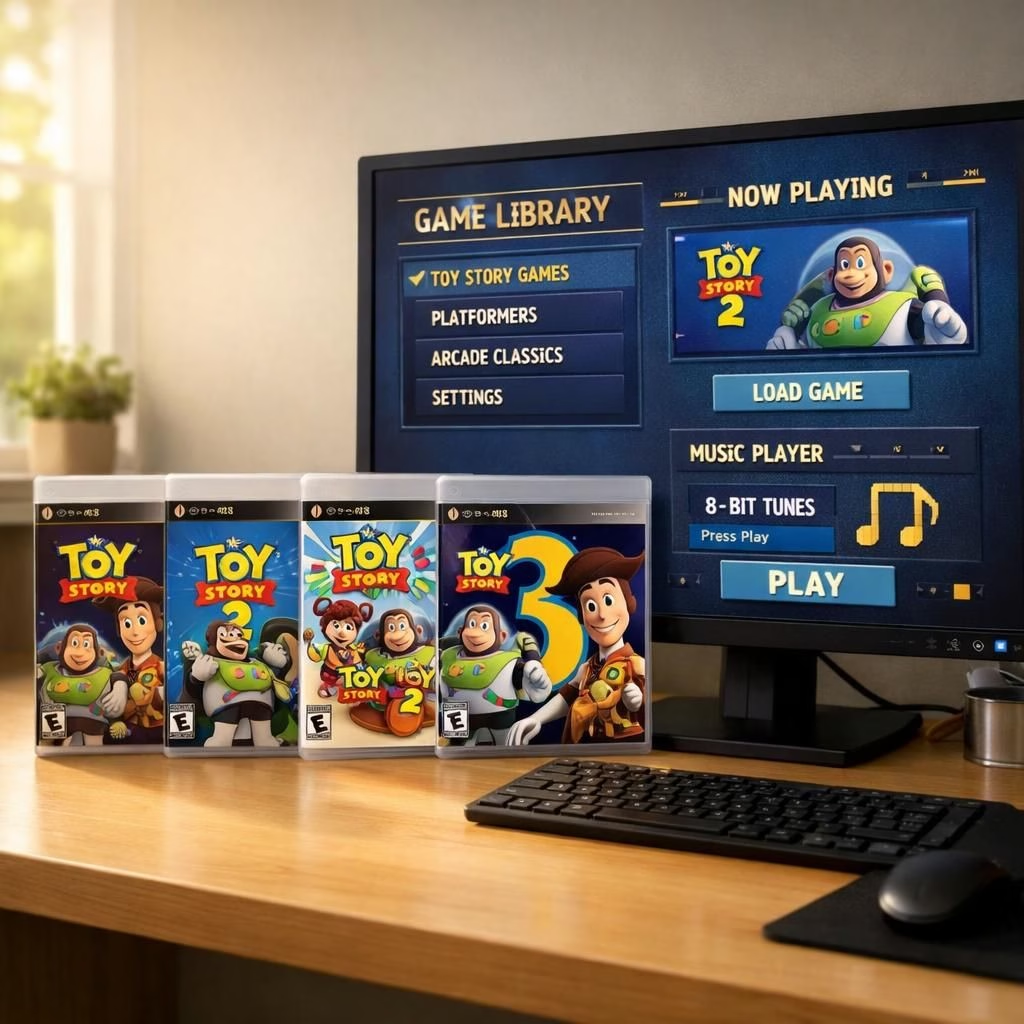
Toy Story fans and Remaster enthusiasts woke up to a cheerful reboot of memory lane. Digital Eclipse has announced a plan to Remaster six retro Toy Story games, with a PS3 classic making a welcome late entrance to the party. This isn’t a tiny patch job; it’s a full, lovingly crafted overhaul that preserves the original charm while smoothing the edges for modern screens and fresh players. The first wave of details promises Toy Story 2: Buzz Lightyear and other beloved chapters getting a modern glow, with familiar voices and familiar levels kept intact but polished. For both longtime collectors and curious newcomers, this lineup delivers nostalgia with careful engineering, not a rough Remaster sprint. If you worried your childhood would stay perfectly pixelated on a shelf, worry no more: Toy Story is back, and the Remaster wave is rolling with confidence.
Toy Story Remaster Roundup: Six Classics Jump to Modern Screens
Six retro Toy Story adventures are getting a modern polish. The PS3-era title is part of the package, proving that even a console long retired can still host a lively reunion. Expect the usual suspects to return—Toy Story 2: Buzz Lightyear and friends—along with a Retro Roundup that stitches together moments from multiple Toy Story games into a cohesive, friendly Remaster. Nintendo Switch 2 and Nintendo Switch make appearances in the lineup, signaling that Nintendo players aren’t left out of the party. And yes, Xbox timing matters here: for the first time ever, several Toy Story games are heading to Xbox platforms, expanding access for fans who built a library around the green-tinted success screen rather than the blue one.
The game design philosophy behind this Remaster push is playful but practical. The visuals get a touch of modern brightness, while input latency and load times are trimmed so players can jump back into Woody’s world without frustration. This isn’t about chasing the next-gen lightning; it’s about honoring the original feel and ensuring it remains approachable in a 2026 context. The Toy Story titles in this Remaster cycle are crafted to respect the source material while integrating contemporary polish, so both veterans and new players can enjoy the same heart and humor that made the series iconic. In short: the Remaster approach here blends reverence with accessibility, a balance that often eludes big nostalgia projects.
Alongside the PS3 classic, other entries in the Toy Story Remaster lineup promise improved controls, sharper textures, and more forgiving camera work. The Toy Story 2 chapter, long loved for its charming set pieces and cheeky humor, benefits from modern rendering techniques that keep the color pops intact while easing jaggies. The Retro Roundup concept stitches separate Toy Story episodes into a more cohesive experience, making it feel less like a museum tour and more like a well-paced adventure through a familiar toy store. And for players on Nintendo’s systems, the Switch 2 and the current Switch get a front-row seat to the action, highlighting how this Remaster wave respects both legacy and platform variety.
Why Toy Story and Remaster Fans Should Smile in 2026
If you’ve ever worried that Remaster would erase what made a game special, this is a reminder that a well-executed Remaster can amplify, not erode. The Toy Story projects are designed to keep the whimsy intact, preserving the signature humor, character charm, and a sense of discovery that made the original toy shop world feel magical. The Remaster effort makes it easier for casual players to enjoy the adventures without fighting through stubborn polygon soup or clumsy controls. In this sense, Toy Story and Remaster become a bridge across generations: a playful invitation to introduce new fans to the franchise while giving old fans a fresh experience that still feels like home. If you’re a collector, you’ll appreciate the attention to detail—correct sound cues, preserved dialogue, and a gentle fidelity boost that never feels like it’s trying to outshine the original era. If you’re a newcomer, you’ll encounter a welcoming entry point into a universe that once felt like a small, personal adventure, now scaled for modern screens but still anchored in classic design principles.
The cross-platform approach matters too. Toy Story titles landing on Nintendo Switch 2 and Nintendo Switch broadens accessibility for families and solo players alike. Xbox brings its own audience into the fold, a sign that the Remaster wave understands how digital libraries evolve with every year. The overall message is clear: Toy Story isn’t a relic; it’s a living universe that deserves ongoing care, cross-generation appeal, and thoughtful upgrades. That’s precisely what the Remaster initiative promises: a respectful re-release that invites a new wave of fans to experience the whimsy and wonder that defined early modern 3D platformers, while letting longtime enthusiasts relive the best moments without compromise.
Beyond the games themselves, the rollout signals a broader shift in how studios approach nostalgia. Instead of a quick HD coat or a one-off anniversary patch, this Remaster series treats Toy Story as a heritage property worth revisiting with design discipline, QA discipline, and a clear release strategy. It’s a model that recognizes that “remaster” is not just a buzzword; it’s a commitment to quality, accessibility, and respect for the source material. The result is a collection that feels deliberate and celebratory, not opportunistic—a distinction that matters when you’re revisiting a beloved franchise with a long memory and a hopeful future.
As the year 2026 unfolds, fans will be watching for the little touches—a corrected animation seam here, a preserved joke there, a subtle UI improvement that makes the game feel modern without betraying its origins. If Digital Eclipse can maintain this balance across six titles and multiple platforms, the Toy Story Remaster project could become a touchstone for how to handle nostalgia responsibly in a crowded market. It’s not just about re-releasing a favorite game; it’s about reintroducing joy in a way that respects the past while inviting new stories to unfold in a familiar, friendly world.
Special thanks to the original reporting that sparked all of this discussion. For readers seeking the most direct source material, you can explore the initial coverage at Game Informer, which laid the groundwork for this thoughtful Remaster journey and the Toy Story revival that’s capturing headlines across outlets. Thank you to the teams who keep these memories alive and inviting for future generations.
Have thoughts about Toy Story and Remaster? I’d love to hear your take in the comments and hear how you’d like to see this Remaster wave expand in 2026 and beyond.
Acknowledgment: This article includes attribution to the original reporting and ongoing coverage from trusted outlets such as Game Informer, Video Games Chronicle, Kotaku, Nintendo Everything, and Pure Xbox. Special thanks for the initial reporting and ongoing coverage that informed this expanded view on Toy Story and Remaster in 2026.
Original source attribution: Game Informer — thank you for the groundwork that inspired this deeper look at Toy Story and Remaster in 2026.