

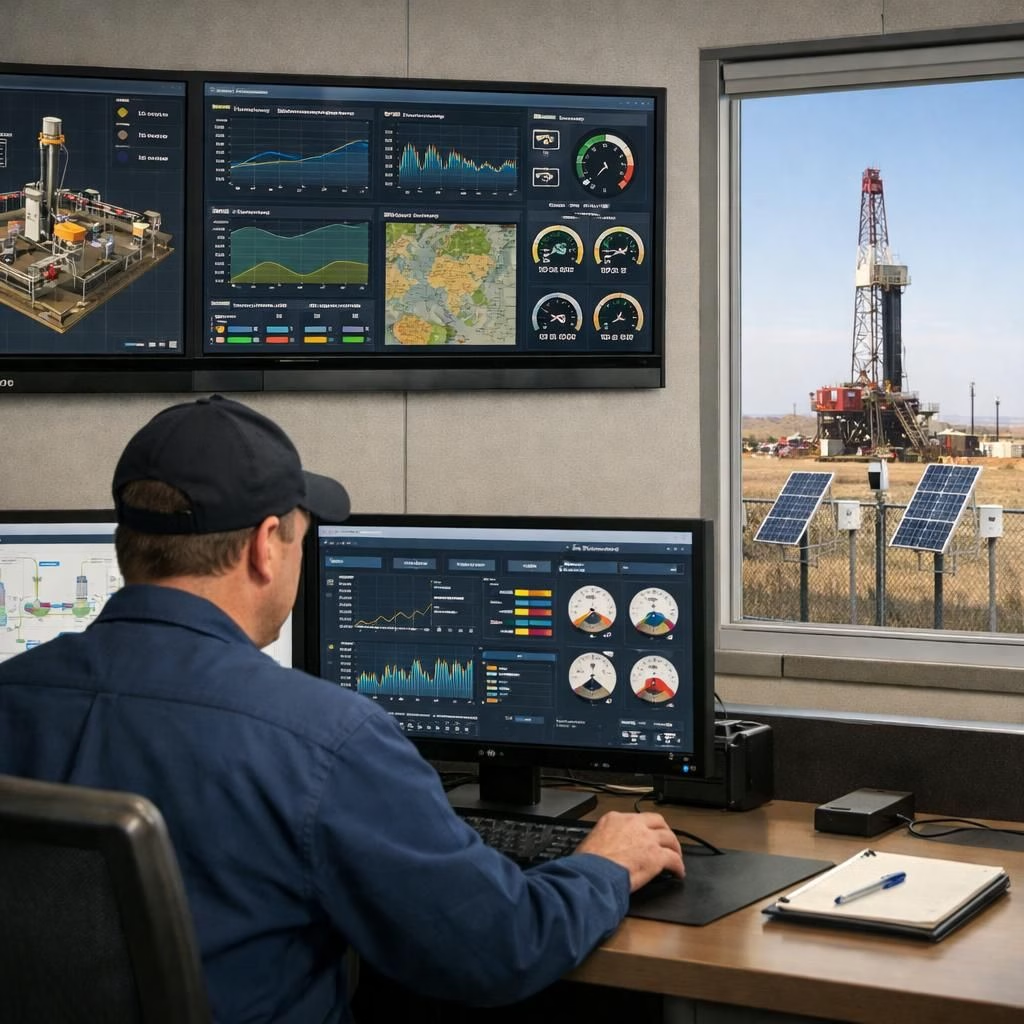
Oil Digital Oilfield signals Oil India’s 2026 leap into real-time AI analytics, predictive maintenance, and edge-to-cloud efficiency. Oil India Limited has activated a large-scale digital monitoring network across 77 wells spread over 46 plinths in the northeast, deploying Kellton’s Optima Digital Oilfield Platform to bring real-time visibility to operations. The December 2024 contract, valued at about $2.5 million, was delivered in six months.
The technology stack centers on Emerson field instrumentation and Amazon Web Services cloud infrastructure. The system connects 482 field devices, including 390 wireless and wired sensors, gauges, secure telemetry gateways, and solar-powered instruments. These devices form a unified edge-to-cloud environment, enabling real-time access to operational data that previously sat in silos. The shift from manual data capture to digital dashboards reduces latency and helps operators stay ahead of the curve.
Beyond mere monitoring, Optima delivers AI-driven production analytics, predictive maintenance insights, intelligent workflow automation, integrated asset lifecycle management, and Digital Oilfield twin environments. The expected outcomes include production efficiency gains, faster decision-making, and a scalable foundation for the future of intelligent oilfield operations. Kellton positions itself as an AI-led digital transformation partner, and has rolled out Optima in energy operations across India, the United States, Saudi Arabia, Libya, Iraq, Peru, and Ecuador, among others.
Oil Digital Oilfield: Real-time intelligence for operators
In practice, engineers and managers now access dashboards that pull data from hundreds of sensors and gateways in near real-time. The edge-to-cloud architecture helps data travel quickly to the AWS cloud and return with actionable insights. Operators can spot anomalies, predict equipment wear, and automate routine workflows with minimal human intervention. This approach aligns with a broader industry shift toward resilient, data-driven decisions that reduce downtime and extend asset life.
Oil Digital Oilfield: Global footprint and future-proofing
Optima’s implementation in India is part of Kellton’s broader digital transformation push globally. The platform’s digital twin functionality supports what-if scenarios, allowing Oil India and partners to test maintenance plans without disrupting field operations. The mix of Emerson instrumentation and cloud-native analytics provides a robust, scalable foundation for future expansions and new use cases. This is not a mere tech toy; it is a strategic upgrade that reduces downtime and improves safety margins across remote locations.
- Optima Digital Oilfield Platform
- Emerson field instrumentation
- AWS cloud infrastructure
- 482 field devices (390 sensors and gateways)
- Edge-to-cloud data orchestration
- AI-driven analytics
- Predictive maintenance
- Digital twins and lifecycle management
As a note on the broader industry context, Kellton’s footprint in multiple markets demonstrates the viability of Digital Oilfield ecosystems rather than isolated pilots. The success here speaks to the potential of real-time data pipelines, better asset management, and smarter automation to reduce operational risk and cost. In 2026, the blend of domain expertise with modern cloud and AI capabilities is a practical path forward for national oil and gas players seeking modernization without compromising reliability or safety.
Practical steps for adopting Digital Oilfield
- Inventory existing sensors, gateways, and instrumentation to map data sources.
- Define data governance, access controls, and security requirements for edge-to-cloud data flows.
- Pilot an edge-to-cloud deployment in a representative set of wells to validate latency and analytics.
- Establish a rollout plan that scales from pilots to full-field operations with clear KPIs.
FAQ about Digital Oilfield and edge-to-cloud
- What is Digital Oilfield?
- It refers to an integrated approach that combines real-time sensing, edge computing, cloud analytics, and digital twins to optimize oil and gas operations.
- What are the main benefits?
- Improved uptime, faster decision-making, predictive maintenance, and better asset lifecycle management.
- How does edge-to-cloud improve reliability?
- Data is processed near the source to reduce latency, while cloud analytics provide scalable insights and cross-asset comparisons.
- Are there risks?
- Security, data governance, and change management are key factors; a phased deployment helps manage them.
Have you worked with digital oilfield solutions, or do you have questions about edge-to-cloud architectures? Share your thoughts in the comments below, and we’ll explore practical implications together.
Original article: Thanks to Times of India for the source material: Times of India.
Further reading and sources:
References