

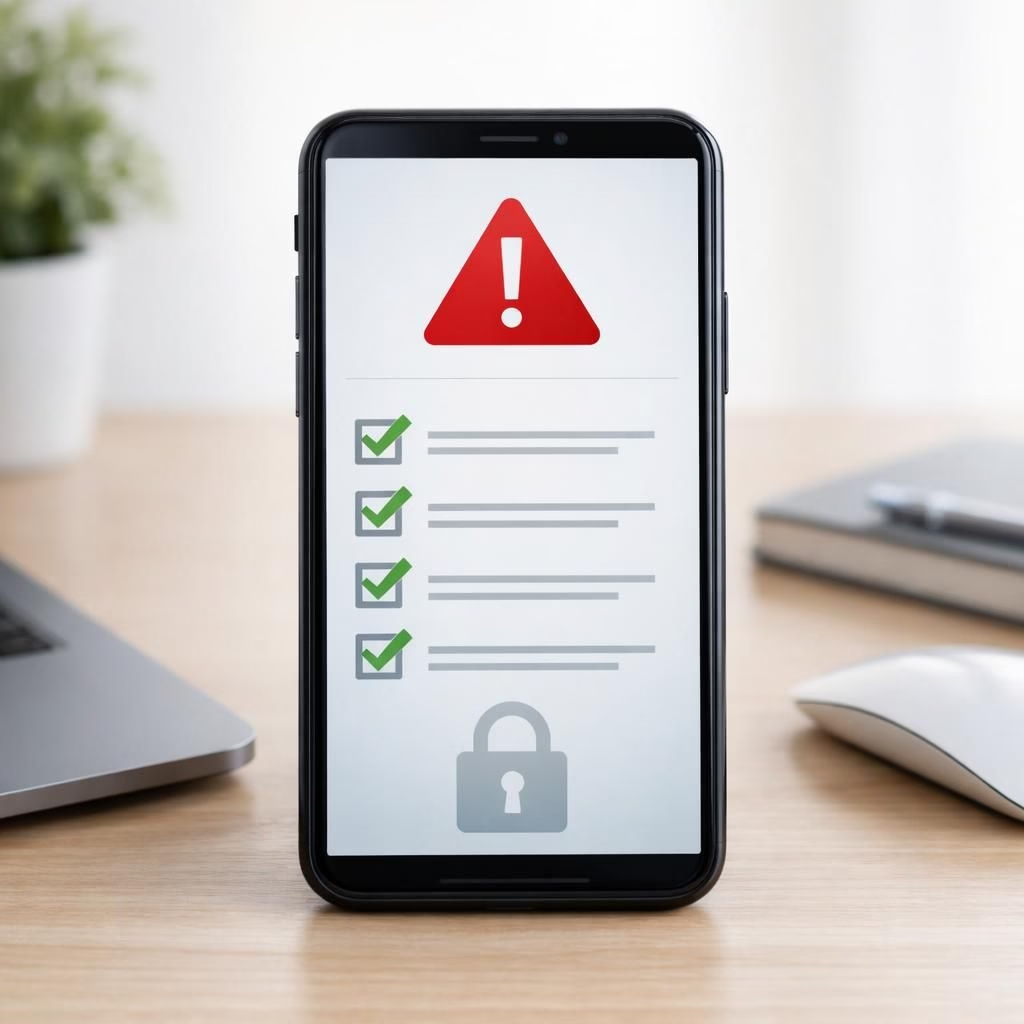
Welcome to a clear-eyed look at an FBI alert you may have seen in headlines. In 2026, this warning isn’t doom — it’s a practical nudge toward better habits. Think of it as public service with a newsroom twist, not a panic button. The core truth remains: certain apps can collect data and may share it overseas. That’s important to know before you tap install. This piece keeps the facts intact and adds a hopeful twist. If you remember one thing, keep security-tips-2026 and apps-data-security in mind as your two guardrails for smarter device use.
security-tips-2026: What the FBI warning really asks you to do
The warning isn’t a ban on apps. It’s a practical nudge toward awareness. The FBI isn’t sounding the alarm to scare you; it encourages you to review what apps are allowed to access and how data moves across borders. You’re not overreacting; you’re protecting your privacy. In 2026, the tech landscape is noisy: many apps, frequent updates, and data centers around the world. The core advice is simple: review permissions, revoke what isn’t needed, and keep your devices updated. Why? Apps rely on data, and some features people value—personalized content, easier logins—depend on data collection. But there’s a trade-off. You can still enjoy conveniences while keeping control. This is the balance the two tags remind you about: security-tips-2026 as a living checklist, and apps-data-security as a daily habit. If you think of data as a currency, you’ll spend wisely.
- Review app permissions and revoke access you don’t genuinely need.
- Uninstall apps you rarely use; a lean phone runs smoother and safer.
- Keep OS and apps updated; updates close doors to crooks just as locks get refreshed.
- Favor reputable stores and trusted developers; avoid shady side-loading unless you’re conducting an experiment in risk management.
- Turn on privacy settings that limit advertising identifiers and data sharing with third parties.
Yes, it’s a bit of a chore, but it’s mostly routine. The FBI’s warning, viewed through the lens of 2026 tech, invites you to swap panic for play: you still enjoy the features you love, you just do it with a clearer map of where your data goes. The two tags appear frequently enough to stay top of mind: security-tips-2026 and apps-data-security.
apps-data-security: How to protect data without turning your life into a conspiracy board
Data isn’t just a number on a dashboard; it’s the trail you leave behind your digital self. Some apps transmit information to servers abroad, and that reality can feel abstract until you think about what, exactly, is crossing borders. In practical terms, think about where your data lives, who can access it, and how long it’s kept. The key is to tailor settings to your comfort level. If your app asks for location, camera, or contacts, ask yourself: do I actually need it at all times? The apps-data-security frame encourages you to set boundaries with quiet confidence rather than loud suspicion. You don’t have to block every feature; you just want to know what’s happening behind the curtain and opt in when the payoff is worth the risk.
When a service ships data overseas, you gain a potential risk vector. You don’t become paranoid; you become a responsible navigator. The two tags help here too: security-tips-2026 remains a reminder to check the small print, while apps-data-security stays your practical playbook for daily decisions. In this section, you’ll find a handful of concrete steps that fit into real life:
- Limit data sharing in app settings; look for “personalization,” “ads,” and “data sharing with partners.”
- Enable two-factor authentication everywhere possible; a second factor is the digital equivalent of a bouncer who actually knows you.
- Use built‑in privacy dashboards to review what data is collected and how long it’s kept.
- Consider a privacy‑minded browser and a reputable VPN for sensitive tasks on public networks.
- Review privacy policies with a pragmatic eye; most are long, but you can skim for “data retention” and “data transfer.”
It’s not about living in a bubble; it’s about designing your device life with intent. In 2026, it’s realistic to protect your data while still enjoying apps that improve your day. The concept of apps-data-security isn’t a barrier to fun; it’s a set of guardrails that prevent data drifts from becoming a weekend hero’s headache. If you search your mental bookshelf for a parallel, you’ll find the best analogy is a well-tuned car: you want the engine to hum, the GPS to guide you, and the airbags to deploy only when needed. That balance is precisely what the two tags advocate: keep the ride smooth with security-tips-2026 and stay mindful of apps-data-security at every turn.
In practice, you can make the daily routine simple: a weekly audit of installed apps, a quick permission check after every major OS update, and a small notepad entry about what you changed. Small habits compound into real protection over months and years. The FBI warning becomes less of a headline and more of a friendly checklist you consult when you unlock your phone, log into a service, or download a new game. In the grand scheme, the two tags are not about fear; they’re about empowerment and clarity. Put another way: security-tips-2026 is your little coach, and apps-data-security is your practical manual.
As we celebrate the small wins in digital hygiene, remember to stay curious and measured. The goal isn’t perfection; it’s progress you can explain to a friend who’s still unsure why privacy settings matter. In 2026, the best approach is calm, informed, and a bit playful. If you’re tempted to roll your eyes at yet another warning, flip it to a game: how many privacy settings can you tighten in ten minutes? You might be surprised at how much peace you gain—and how light your phone feels when it stops hoarding data like a dragon with a treasure hoard.
Original article attribution and thanks: Special thanks to Forbes for the original reporting that inspired this rewrite. You can read the source here: Forbes.
Have thoughts? Please share them in the comments below. Your insights help others navigate the tricky world of app safety in 2026.
FAQ: security-tips-2026 in daily practice
- What exactly should I review on my phone?
Focus on permissions, data-sharing settings, and whether your OS and apps are up to date.
- Do I need to delete apps to stay safe?
Not necessarily—audit what you keep and limit access rather than mass-deleting.
- Is two‑factor authentication enough?
It’s a strong layer, but combine it with careful privacy controls for best results.
- Should I use a VPN on public networks?
Yes for sensitive tasks, and choose a reputable provider with clear privacy terms.