

In 2026, driver-monitoring and autopilot safeguards stand as the road’s silicon guardians, yet a cheeky trend from China shows even strong guardrails can meet a clever workaround. This piece expands the discussion with practical context so readers stay informed and safe.
driver-monitoring: The safety-first guardrail
The system relies on a cabin camera and sensors that track gaze, head position, and attentiveness. The Wired report described people placing objects in front of the camera to simulate a paying-attention stance. In practice, the goal of driver-monitoring is to verify a present and alert driver; it’s not about catching a momentary lapse but about preventing a chain reaction of inattention on the highway. When distraction is detected, warnings appear and, in some cases, autopilot usage can be limited or paused.
autopilot in practice: The lines between assist and attention
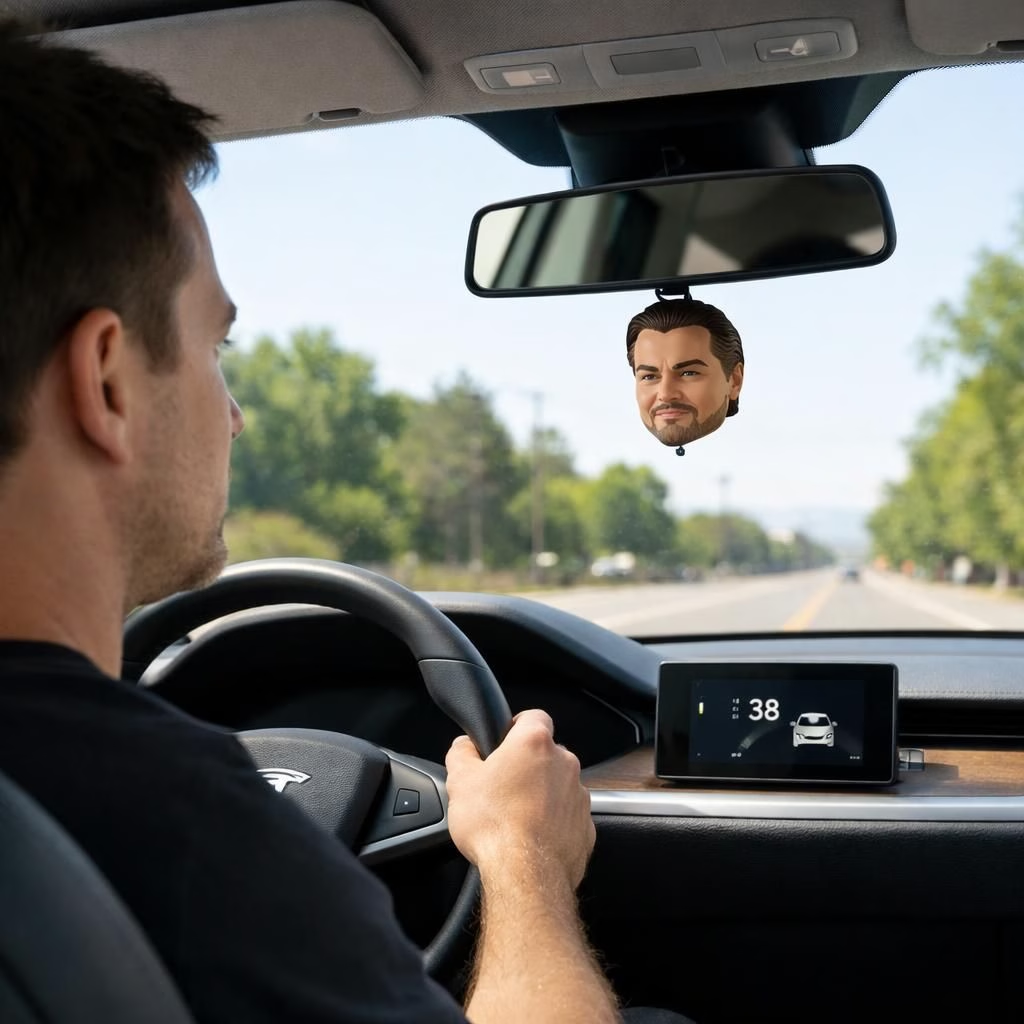
In China, autopilot features are limited to approved routes rather than full self-driving. The latest chatter centers on prop-based distractions: small plastic heads resembling celebrities, photos, blinking cards, and tiny displays that loop blinking head motions. These items are inexpensive and sold on Chinese platforms, often between $10 and $40. The idea is to create an illusion that a driver is looking at the road, allowing autopilot to stay active longer. The discussion goes beyond mischief; it probes how real-time safety checks interact with user expectations of automation.
Some devices go further: a display that plays a looping video of a person blinking or turning their head. Sellers claim tests across several Tesla models show the gadget can fool the monitoring system. The practical takeaway is that bypasses exist, challenging the safety guarantees behind driver-monitoring and the safety promises of autopilot.
More tricks around driver-monitoring
- Plastic heads placed near the rearview mirror to block the camera
- Photographs or lenticular cards that imitate eye movement
- Small displays cycling a blinking-head video to simulate attention
- Listings remain niche, with many buyers using items as curios rather than regular solutions
Safety, policy, and the human factor
Critics worry that these make-shift devices undermine safeguards meant to reduce distracted driving. They remind us that automation still hinges on human responsibility. For policymakers and automakers, the question is how to strengthen protections without stifling innovation. The China-centered discussion echoes a broader global debate: can autopilot driver-monitoring keep pace with evolving user behavior and increasingly sophisticated technologies? The answer likely lies in better sensors, smarter analytics, and multi-sensor validation, not clever props.
Across markets, the theme is consistent: the driver remains the hinge point. Even as autopilot advances, the car cannot replace attentiveness. The monitoring system is only as good as the data it receives and the rules it follows. If drivers treat it as a game, the system loses its punch. If manufacturers tune it to respond quickly and fairly to distraction, the road becomes safer for everyone. The 2026 landscape invites ongoing dialogue among drivers, carmakers, safety advocates, and regulators about the best balance between convenience and responsibility.
Reflections on 2026 tech culture
What we’re really watching is a design philosophy in action. Automation promises ease, but responsibility remains in the hands of drivers. The range of devices—from low-tech to high-tech—shows that the core question is not simply about bypassability but about how to design systems that foster safe habits without turning the wheel into a trap or a toy. The industry might pursue stronger safeguards, better on-road feedback, and clearer boundaries between driver control and automated assistance. The result could be a more resilient, user-friendly safety net that respects both innovation and human judgment.
As we close, the take-home message is straightforward: treat autopilot and driver-monitoring as complementary tools that work best when a driver remains engaged. The discussion in 2026 will keep shaping how these features evolve, how they communicate with users, and how they balance safety and convenience for real road use. If you have experiences or thoughts to share, we invite you to join the discussion in the comments below and contribute your perspective on this evolving safety landscape.
Original reporting by Wired on Chinese drivers and prop tricks deserves a thank-you note. Thank you to the Wired team for the original coverage that sparked this discussion and helped illuminate the human factors at play. Source attribution: Wired coverage on Tesla cabin monitoring and bypass discussions.