

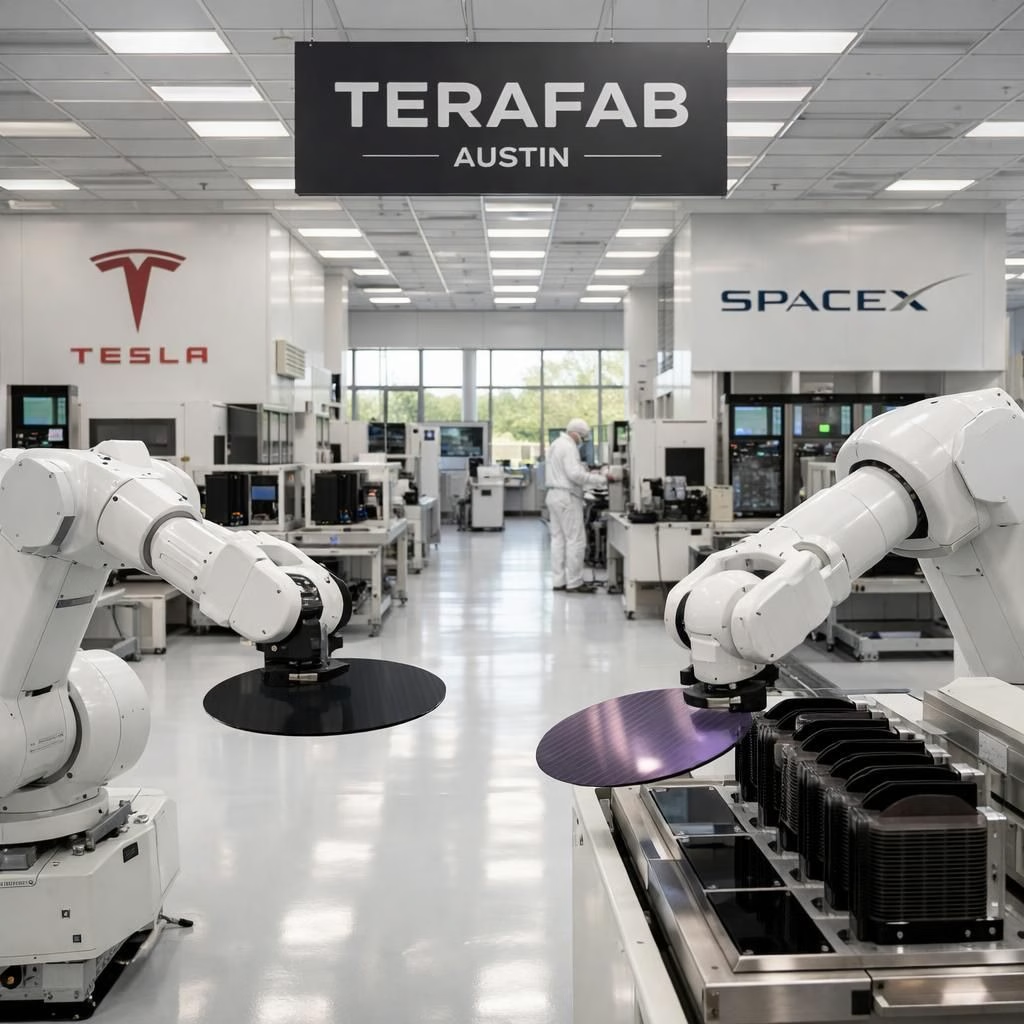
Terafab has moved from rumor to mission status in Austin. Elon Musk unveiled a bold hardware bet uniting Tesla, SpaceX, and his Tag B, focusing on an expansive fab dedicated to silicon capable of testing a range of designs. It starts as an advanced technology fab that can test different architectures. Musk argues the global semiconductor industry moves too slowly to meet robotics and autonomous driving needs. The question is simple: we must build Terafab, or we risk not having the chips. The tone here blends optimism with pragmatism, a rare combo in mega-capital projects.
What is the Terafab? It is Tesla’s plan to build its own colossal chip factory. Musk has described it as a gigafactory, but way bigger. The focus is on Tag B, especially the fifth-generation AI5. AI5 is designed to power Full Self-Driving and robotics solutions. Public statements tease scale and speed despite early timeline uncertainties. The ambition reads like a tech epic: if you want autonomous fleets and clever robots, you need silicon that can keep up.
The broader supply chain reality looms large. He points to existing relationships with Samsung, TSMC, and Micron, yet argues output won’t hit the pace needed for Terafab’s ambitions. He hopes to bridge gaps with in-house design and fabrication, a move that could reshape the supplier landscape—if the economics cooperate. The logic is simple: control key steps where possible, and reduce the risk of a brittle supply chain restricting growth. The conversation lingers on cost, capacity, and cadence, not just cool tech dreams.
Musk has also floated a speculative mini Tag B data center satellite. A constellation could scale from 100 kilowatts to megawatt-level power, enabling more ambitious workloads in orbit. The vision blends terrestrial fab work with space-based compute, a combination that sounds like science fiction when spoken aloud, yet plausible in his storytelling. Space-based compute would be a separate layer, but the Terafab foundation would remain the core for silicon reliability and chip design excellence.
Terafab ambitions: a chip-fab quest
The Terafab quest targets multiple manufacturing nodes and thinner process geometries. He has referenced 2-nanometer ambitions in the past, though timing remains uncertain. The project would supplement, not replace, the current supply chain. Partnerships with Samsung, TSMC, and Micron would likely be part of the plan, alongside internal development and process optimization. A space-grade data layer would demand large capital and patience, but the payoff could be enormous if the physics hold up. The team sizes up risk with a calm confidence, acknowledging that yield rates, defect control, and supply chain resilience will determine the timeline more than glossy renderings.
AI chips and the Terafab roadmap to abundance
Beyond the fab, the dream is clear: amazing abundance in chip supply. Musk imagines satellites and mass drivers on the moon helping to move data and power compute. He frames this as a long-term aspiration, not a short sprint. The practical path will require breakthroughs in yields, cost control, and energy efficiency, but the core idea remains energizing: Terafab will push Tag B toward scale without starving the rest of the tech stack. In parallel, the AI5 design will receive continued refinements aimed at outperforming current autonomous driving benchmarks and robotic control loops.
The plan acknowledges risk. It would require capital, talent, and regulatory navigation. Yet the team remains optimistic that Tag B at Terafab-scale can accelerate Tesla’s autonomy, robotics, and AI services. In parallel, they continue refining AI5 and exploring next-gen nodes while evaluating the environmental and social footprint of such a large fabrication footprint. The broader message is that the future may demand a dual strategy: tighter internal control over critical silicon and smart external partnerships to keep the silicon flowing.
Original reporting by Bloomberg is acknowledged here. Thank you to Bloomberg for the original coverage of the Terafab plan and its context. Read the original article at Bloomberg for more details.
For broader context on the chip-supply challenge, see industry reporting from Bloomberg and analysis from MIT Technology Review.
Terafab: Practical steps to track progress
- Monitor official statements from Tesla, SpaceX, and xAI about funding and timelines for Terafab.
- Watch supplier collaborations with Samsung, TSMC, and Micron for capacity updates.
- Track milestones on the AI5 design and any in-house test results at the advanced fab.
- Evaluate regulatory, environmental, and community considerations for construction and operation.
FAQ about Terafab and AI chips
- What is Terafab and why pursue it now?
- Terafab is a proposed, large-scale chip fabrication facility intended to accelerate silicon supply for Tesla, SpaceX, and xAI. The goal is to reduce dependency on external foundries and increase autonomy-ready compute throughput, especially for AI-driven systems.
- How does the AI5 chip fit into the plan?
- AI5 is the fifth-generation design intended to power Full Self-Driving and robotics. It serves as the core around which Terafab builds its internal silicon capabilities and testing ecosystem.
- What are the main risks?
- Capital requirements, talent acquisition, and navigating regulation are key risks. Yield, defect control, and the ability to scale production are also critical factors that will shape timelines.
- When could production realistically begin?
- timelines remain speculative. The project hinges on securing funding, partners, and the necessary manufacturing breakthroughs, plus regulatory approvals.
References