

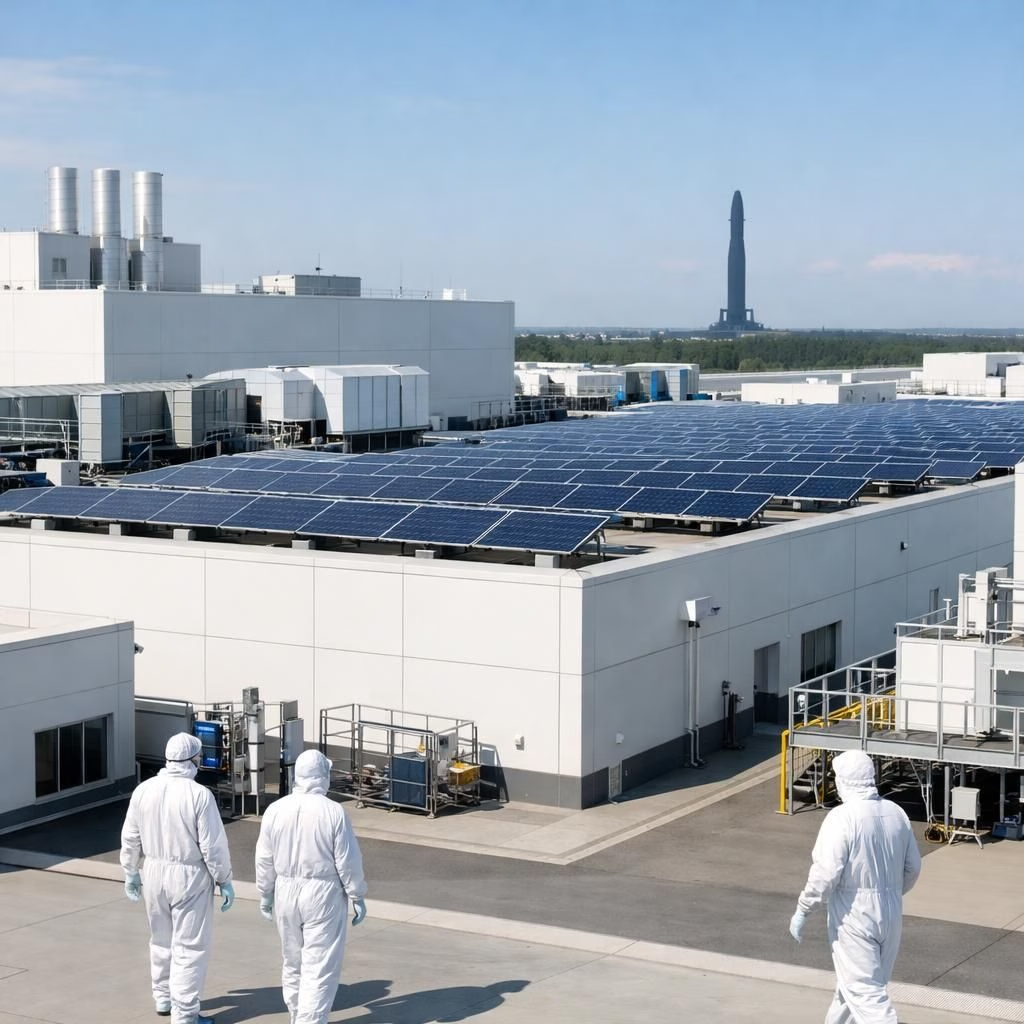
Terafab is real in the sense that Musk announced it, and chip manufacturing dreams now wear a cape. The Terafab project stitches Tesla, SpaceX, and xAI into one audacious venture to build the largest chip manufacturing facility the world has seen. In 2026, the plan reads like a blockbuster for engineers and investors alike. It runs on sun powered optimism and a timetable that refuses to blink.
Money matters, and the figure is striking: at least twenty billion dollars. The plan starts with the Advanced Technology Fab in Austin, Texas, where Terafab will churn out two chip types—one terrestrial for Full Self-Driving and its robot kin, and another tougher, space-grade design. If you’re curious about space ambitions, SpaceX filed an FCC application to launch a million satellites for an orbital data center. Promises are bold, but history shows some plans overpromise. This approach to chip manufacturing will require careful execution and tight collaboration with suppliers.
Terafab is envisioned as a network, not a single factory. The plan places Austin as a launchpad and then blossoms into an ecosystem of suppliers, engineers, and logistics partners. The aim is smarter silicon, smarter chip manufacturing, and a timetable that avoids needless delays. Musk has framed Terafab as a practical fix for shortages, not a sci-fi fantasy in a lab coat.
Chip manufacturing at scale: a reality check
chip manufacturing at scale is more than a single factory; it’s a network of halls, teams, and machines that must sing in harmony. The Terafab project keeps the tempo, citing two chip types—one terrestrial for ground use and another space-grade—and a plan to run both lines in tandem. The dual-chip concept reads as practical risk diversification and a nod to SpaceX ambitions, since space-grade chips would need radiation tolerance and long life in space. The FCC filing signals a tangible path forward beyond mere speculation. For Terafab, aligning terrestrial needs with space-grade resilience could redefine reliability across both domains.
Supply chain realism enters the conversation with a friendly shout-out to established players. Samsung, TSMC, and Micron are acknowledged as partners, not mere logos on a slide deck. The collaboration story is the quiet backbone of chip manufacturing growth here. It is not just about building new metal and clean rooms; it is about knitting together the complex fabric that makes big projects move from storyboard to silicon. In this sense, Terafab is less a myth and more a carefully scaled experiment in global manufacturing pragmatism, guided by an executive with a penchant for ambitious visuals and measurable milestones.
Critics are quick to point out a familiar pattern: grand promises, then year-by-year progress that tests patience. The record shows Hyperloop iterations, a pricey Cybertruck, and autonomous driving bets that faced hiccups. Yet the Terafab narrative stays buoyant, framing hiccups as stepping stones rather than tombstones. The tone remains constructive: this is not a fatal flaw, but a checkpoint that invites new optimizations, smarter contracts, and clearer benchmarks. If anything, Terafab nudges the industry toward a more transparent conversation about cost, timeline, and impact—without turning every update into a press release about a miracle cure for silicon shortages.
As the project unfolds, observers will watch how Terafab interacts with the broader tech economy. The terrestrial chip would power everyday autonomy like Full Self-Driving and Optimus robots, while its space-grade cousin would test limits in radiation tolerance and long life under space conditions. The orbital vision is bold: a data center that floats above us, connected through a constellation of satellites and robust ground stations. If the plan lands, chip manufacturing at scale could become more integrated, more resilient, and less beholden to any single supplier. If it misses the mark, the debate will still produce valuable lessons on risk management, public perception, and the practical realities of manufacturing at the edge of space and earth.
Beyond the numbers, Terafab invites a broader dialogue about national and corporate priorities. It asks how much risk a single collaboration should bear, how quickly a supply chain should adapt to rising demand, and how we balance moonshot projects with near-term reliability. The conversation remains lively because the stakes feel personal for many engineers, investors, workers, and fans. Terafab thus serves as a case study in how big ideas travel—from gleaming slides to concrete buildings—and how the world judges the journey between those two poles.
Finally, the original inspiration for this piece deserves acknowledgment. Terafab is a story that intertwines the ambitions of Elon Musk, the manufacturing prowess of established chip players, and the ever-present lure of space-age computing. The image of a sun-powered fab in Austin, connected to satellites orbiting high above, is both dazzling and humbling. We watch, we analyze, and we cheer for practical progress even as we keep our curiosity intact.
Original article: Thank you to the original source for material.
If you have thoughts, observations, or a friendly critique, please share them in the comments. We love a good discussion about Terafab, chip manufacturing, and the future Musk hints at in 2026.
Practical takeaways
- Monitor capacity milestones for the Austin Fab and nearby supply-chain activities.
- Follow announcements from major suppliers and partners involved with Terafab.
- Understand the difference between terrestrial and space-grade chips and why both matter.
External context
- FCC — Satellite licensing context for orbital data centers.
- NASA — Space-environment considerations for long-life hardware.
- Reuters technology coverage — Market and supply chain perspectives.