

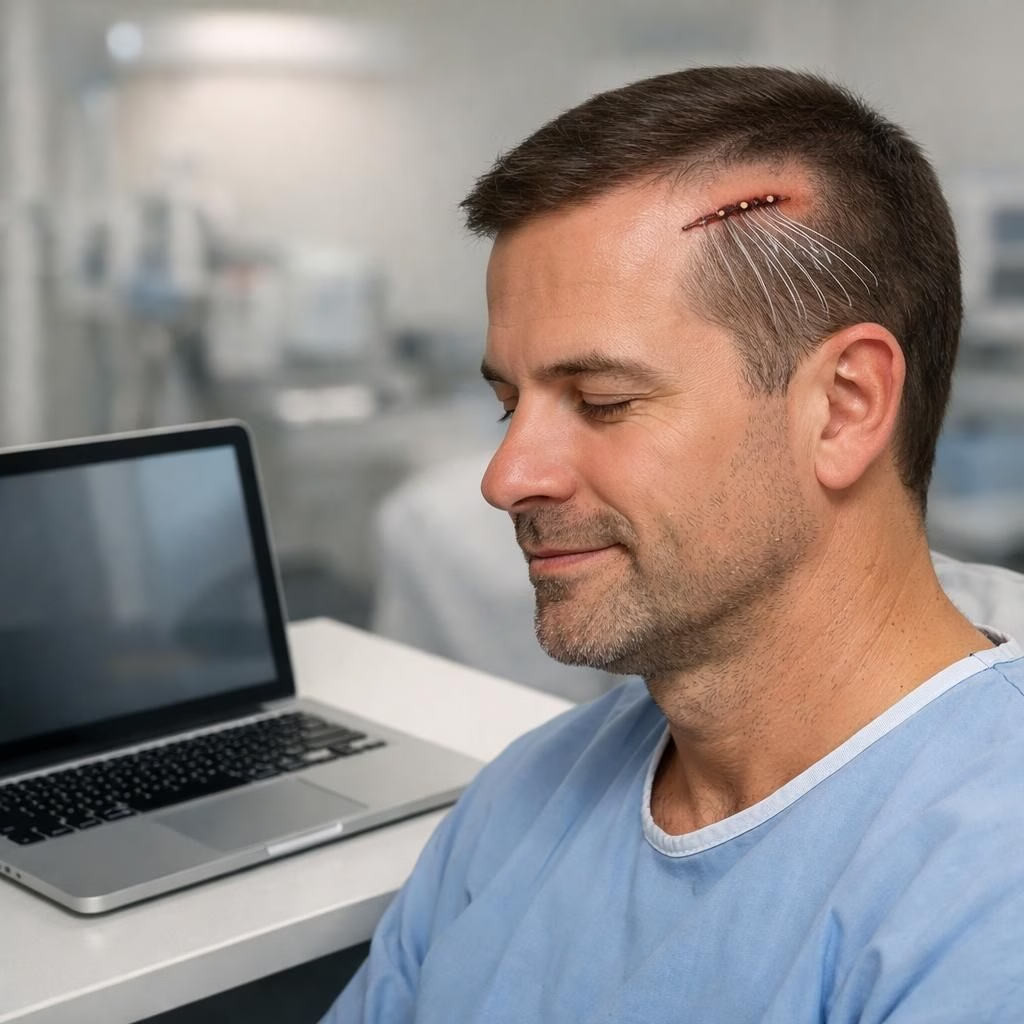
Neuralink and BCI are no longer lab chatter. On day 0 of Arbaugh’s 100-day journey, surgeons used quick general anesthesia, a tiny incision, and a robotic system to place 1,024 ultra-thin threads into Arbaugh’s motor cortex. The moment the device activated, the world began to look different. Arbaugh describes it as science-fiction arriving at his doorstep, turning a heavy medical chair into a cockpit for daily tasks. The Neuralink hardware and BCI software open a door to independence that many believed would stay theoretical.
By Day 7 the scar faded, and calibrated signals began to travel from Arbaugh’s thoughts to a MacBook in front of him. The first cursor moves arrived after a brisk calibration session. He calls the moment the start of a learning curve, but the curve felt friendly. He could move the cursor, scroll, click, and type with intention. The Neuralink team guided him, and the BCI interface listened with precision, translating thought into action.
Neuralink milestones: 100 days with a live BCI
Week 2 brought a milestone: Arbaugh paired the implant with a brand-new Apple MacBook—the first machine he owned. He describes calibration as a conversation between brain and device, not a test. Within a few minutes he shifted from Mac novice to power-user, simply by thinking. The experience stayed smooth and steady; there was no lag, only action that felt natural. The team tracked safety and performance, but Arbaugh focused on control and confidence. By Day 80 the big moment arrived: World of Warcraft for the first time, hands-free. The initial raid was awkward, but once brain signals and the implant aligned, the game snapped into focus. He raided and explored Azeroth at full speed, with no mouse or keyboard, just intention. The freedom, he writes, is addictive and transformative.
BCI empowerment: Mac navigation and World of Warcraft
The Mac workflow grows in steps. Early days show scrolling and clicking becoming second nature. He notes he went from Mac novice to power-user faster than expected. The BCI helps with everyday tasks—emails, browsing, research—while keeping a human touch. The WoW sessions illustrate what a hands-free interface can do: you aim with thought, focus to move, and cast with intention. The experience remains rare but tantalizingly close for more people who could benefit.
What Arbaugh shares beyond the thrill is a sense of practical possibility. This is not a one-off demo, but a signal that neural interfaces could expand independence for people with paralysis. The device remains in clinical trial mode, and the path ahead requires robust safety data, privacy safeguards, and long-term maintenance plans. Yet the tone of the updates—candid, grateful, and gently humorous—reminds us that progress can be human-scale and humane.
From a design perspective, Neuralink and BCI teams focus on clean integrations. The hardware sits quietly beneath the skin, while software translates neural activity into precise actions. The result could extend beyond gaming to daily life: controlling home devices, drafting messages, or assisting with communication for those who struggle with physical input. Arbaugh’s 100-day snapshot hints at a future where neural interfaces are less of a sci-fi dream and more of a practical toolkit for autonomy.
As the community responds—with curiosity, questions, and optimism—the story remains a chorus of voices asking about ethics, safety, and access. The potential benefits are meaningful, but so are the responsibilities that accompany such transformative tech. The Neuralink team continues to publish updates that strike a balance between excitement and caution, and Arbaugh remains a vivid, relatable guide through the journey.
Original article: Read Noland Arbaugh’s complete post here. Thank you to the original source material for inspiring this write-up and helping us reflect on the human side of innovation.
We’d love to hear what you think about brain-computer interfaces and the long arc of independence. Share your thoughts in the comments below.
Practical takeaways for readers
- Hands-free control is progressing. When paired with calibration, simple tasks can be mapped to thought with increasing precision.
- Daily life can expand gradually. From Mac navigation to messaging, progress is personal and incremental.
- Privacy and safety matter. Real-world use requires safeguards and ongoing monitoring.
FAQ about Neuralink N1 and the journey ahead
- What is Neuralink N1? A brain-implant device designed to translate neural activity into computer commands, enabling hands-free interaction.
- How soon could this help people with paralysis? Trials continue to assess safety and effectiveness; broader access will depend on long-term data and regulatory review.
- What safety concerns exist? Surgical risks, data privacy, long-term stability, and device maintenance are key considerations for real-world use.
External perspectives
- Neuralink official site for background on the N1 technology and ongoing trials.
- Brain-computer interfaces: a brief explainer for broader context on the field.
References
Original article: Times of India – 100 days update