

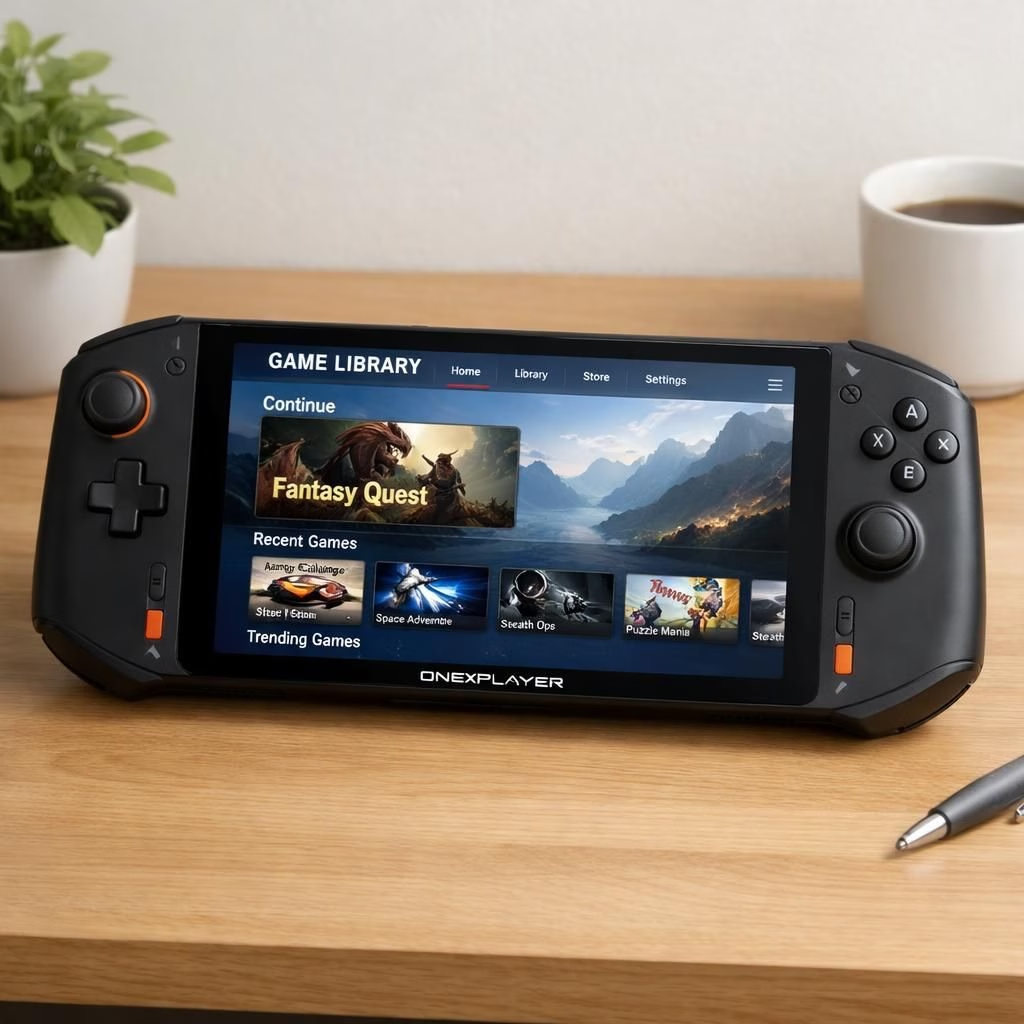
In 2026, the handheld and gaming landscape shifts under the glow of pocketable power. The ONEXPLAYER lineup teases Ryzen AI Max+ 395 hardware but nudges expectations with a 388 SKU, while the base model starts at 2,399 — a price that signals the device is not a Switch 2. This article breaks down what that means for players who want speed, style, and a dash of AI-assisted performance on the go.
From the outside, the device remains a compact slab that slips into a backpack like a secret weapon. For handheld fans, battery life and heat management become central concerns as you plan on-the-go sessions. Inside, the Ryzen AI Max+ 395 appears as 388 in a lower tier model, a deliberate tiering choice that lets shoppers choose based on budget and willingness to compromise. The base price, at 2,399, signals premium ambition, especially as AI acceleration and graphics performance become more relevant for gaming on the go. The market comparison to the Switch 2 highlights a segment that prioritizes speed, responsive controls, and quick loads, but also acknowledges that portable power comes with heat and battery tradeoffs. Real value shows up in practical tests: sustained frame rates, efficient cooling, bright displays, and a smooth software experience.
handheld revolution meets Ryzen AI power
This design keeps the handheld form factor approachable: a compact slab that slides into a bag and pulls desktop-like power on demand. The Ryzen AI Max+ 395 is dialed back to 388 in a trim model, a deliberate tiering choice that lets shoppers choose based on budget and willingness to compromise. The base price of 2,399 signals premium ambition, especially as AI acceleration and graphics performance become more relevant for gaming on the go. The market comparison to the Switch 2 spotlights a segment that prioritizes speed, responsive controls, and quick loads, but also acknowledges heat and battery tradeoffs in tight handheld chassis. Real value shows up in practical tests: sustained frame rates, efficient cooling, and a user experience that remains smooth across software updates.
gaming momentum and practical takeaways
For gaming sessions, the OneXPlayer lineup has proven that desktop-like performance can live in a pocketable shell. The 2,399 base model price is a premium package, but it pays off with fast SSD throughput, a crisp screen, and a control layout that feels natural after a brief acclimation period. If you value AI-assisted upscaling and real-time enhancements, Ryzen AI becomes appealing—though you should calibrate expectations about frame rates in the most demanding titles. The reality is that this segment thrives on a blend of portability and performance, and the ONEXPLAYER team leans into that sweet spot while acknowledging the weight, heat, and long-session considerations.
For gaming on the road, the decision often boils down to tradeoffs: on-the-road reliability versus the comfort of a home theater setup. A premium portable device can deliver solid frame rates while preserving battery life and gracefully handling docks and wireless peripherals. Cooling solutions and chassis design matter more than ever—compact does not mean loud, and these devices are learning to balance heat with quiet operation. AI capabilities add another layer, offering upscaling and scene analysis whether you’re plugged in or on the move. The ecosystem around these machines is expanding too, with docks, peripherals, and cloud options enabling a flexible setup for work breaks, quick multiplayer bursts, and creative tasks.
Beyond raw specs, the market shows a broader ecosystem forming. Developers optimize games for portable performance, while accessory makers chase cooling solutions and ergonomic grips. The result is a renaissance of sorts: compact machines that feel less like toys and more like portable workstations for productivity and spontaneous multiplayer sessions. Price remains a factor, but buyers increasingly weigh durability, warranty, and vendor support as heavily as FPS numbers. In other words, portable power is becoming a practical reality that can sit on a coffee table and still be ready for a quick session on the couch when the mood strikes. For those who want mobility, gaming remains the core appeal.
Have you tried any of these devices yet? Share your thoughts in the comments below, and tell us how you balance handheld mobility, price, and performance in 2026.
Original reporting and thanks to VideoCardz.com. Original article: VideoCardz.com article on ONEXPLAYER Ryzen AI Max+ 395.
handheld tests: battery, heat, and ergonomics
Practical checks you can perform before buying include running a light game loop, measuring sustained temperatures, and testing the comfort of the grips. The goal is to see if the chassis stays cool and quiet during longer sessions, not just short bursts.
- Battery endurance across typical titles and brightness levels
- Heat behavior under continuous load
- Ergonomic grip comfort during extended play
- Portability versus performance when docked
gaming performance benchmarks to expect
Expected frame rates vary by title, resolution, and tuning. In many cases you’ll see smooth experiences at moderate detail levels with AI upscaling helping to maintain visuals on the go.
- SSD speed and responsiveness for quick loads
- Display brightness and color accuracy in diverse lighting
- Controller latency and palm comfort during long sessions
Frequently asked questions
- Does the 388 SKU mean significantly slower performance? The 388 SKU is a tiering choice. It targets a balance between power and price while offering AI-assisted features, not a dramatic drop in everyday gaming performance.
- Is the base $2,399 model worth it for on-the-move gaming? It depends on your needs. If you value fast storage, a bright display, and efficient cooling, it can be compelling for portable use, especially with AI features.
- Will this replace a Switch 2 for portable play? It’s a different category: higher-end portable power with desktop-like capability, at a higher price and with different game libraries and input options.
In short, portable power is becoming a practical reality that fits on a coffee table and travels easily to the couch for quick sessions.