

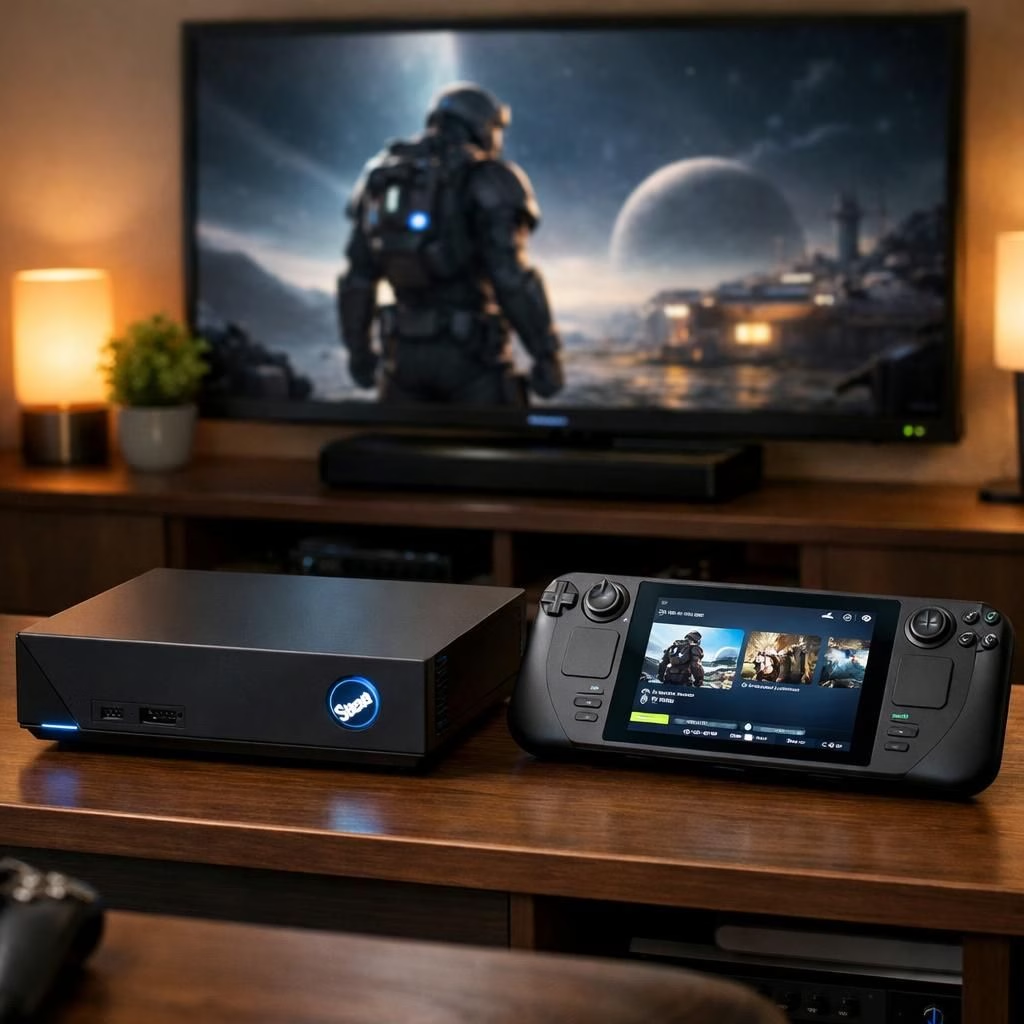
Welcome to a sunny, lighthearted tour of Valve’s latest hardware chatter. The stars are Steam Machine and Tag B, two familiar names that keep surfacing in living-room tech talk. Valve says the Steam Machine will ship this summer, a bold claim that could use a few optimistic shavings from the calendar. Tag B remains the quiet engine behind the scenes, handling libraries, drivers, and compatibility checks with the calm competence of a sysadmin on coffee. If you crave dramatic launches, this isn’t it; if you want practical readiness, buckle up.
From a product-design angle, Valve is framing the Steam Machine as a platform rather than a single box. The news comes with a window: this summer, as reported by major outlets, and with a promise that Tag B is already tuned for a broad range of Steam Deck verified games. The reliability angle matters because gamers care less about a flashy tease and more about plug-and-play reality. The ecosystem already has Steam Deck verified titles, and that compatibility is the hinge on which the Steam Machine‘s future rests. Expect fine-tuning of input lag, power draw, and the inevitable questions about cooling in a compact chassis.
Steam Machine: Launch Window and Practical Reality
Analysts watch import patterns as fans hope for a Summer Game Fest 2026 reveal. The timing hints Valve wants to align the hardware with a broader ecosystem push, perhaps syncing with updates to the software layer and the catalog cadence. The pace of shipments depends on region and supply lines, but the framing stays sunny: this isn’t vaporware, it’s a measured ramp with a built-in audience. The practical work involves polishing driver support, ensuring reliable streaming, and confirming cross-device compatibility with a growing catalog. The messaging remains optimistic, pragmatic, and nerdy about cables and power budgets.
Beyond the hype, the real conversation centers on how such a machine sits in homes. People want a device that simply works, not a sci-fi misfire. Valve is signaling that the core software stack—the operating experience, store integration, and game compatibility—will be ready ahead of a broad hardware push. In short, the launch window is about confidence, not a carnival. Expect a staged rollout that prioritizes dependable updates and a clear path for developers to bring titles to a family of connected devices.
SteamOS and Deck-Verified Games: A Friendly Guide
The second wave of detail sits on the software side. While the hardware cadence gets most of the headlines, the real glue is how well Tag B interfaces with a library of Deck-verified games. If the ecosystem can deliver a smooth experience across devices—whether you’re on a compact living-room console, a desktop PC, or a handheld like the Steam Deck—the chance of broad consumer uptake improves dramatically. The narrative leans into accessibility plus fidelity: easy installation, straightforward updates, and reliable compatibility checks that save users from endless driver hunts. This is software engineering as a community project, with hardware as the support beams rather than the loudest trumpet in the band.
For gamers, this means a realistic performance. You won’t get a miracle of overnight compatibility, but you should see a steady march toward a stable, curated experience. The team appears to be prioritizing a low-friction onboarding path, a clear game catalog, and predictable firmware updates that won’t surprise users with every quarterly shift. In practical terms, this translates to fewer mystery fixes and more time spent playing, streaming, and sharing tips with friends in the living room battle stations that you proudly call your own.
When you step back, the picture looks less like a single gadget and more like a coordinated ecosystem. Valve’s strategy seems to favor openness and integration: a platform that invites developers to ship once and support across the Steam Machine family. The result could be a smoother journey from unboxing to first game launch, with fewer headaches from driver mismatches or silly compatibility roadblocks. That’s good news for families and roommates alike, who want a device that adds value without asking for a manual longer than a novella.
Beyond the dual naming of the hardware and software, the conversation now centers on timing, supply chains, and a reality-based cadence for announcements. The Summer Game Fest 2026 window remains a plausible milestone, not a promise of fireworks without flame. If Valve keeps a steady hand, the Steam Machine could become a practical option for living-room gaming, alongside a thriving Steam Deck ecosystem and a robust Tag B software stack.
For readers who enjoy the occasional speculative angle, there’s always room for questions about regional availability, warranty coverage, and the long tail of supported peripherals. The real test will be how smoothly certified titles run, how friendly the user experience remains across updates, and whether the overall package stays aligned with what households want: a simple, reliable, and occasionally zany gateway to their favorite games.
Want to weigh in with your own predictions or experiences? Share your thoughts in the comments below to keep the conversation lively and constructive. And a big thank you to Kotaku for sparking this discussion with their original reporting that set the stage for these reflections.
Original material courtesy of Kotaku: Kotaku — Thanks for the foundational reporting and context.
Steam Machine Setup: Quick-Start Tips
- Connect to a TV or monitor with HDMI; enable HDMI-CEC if available.
- Power on and verify you have the latest updates for the Steam Machine software stack.
- Pair a wireless controller or keyboard and adjust input mapping for comfort.
- Sign in to Steam and confirm Deck-verified titles appear in your library.
SteamOS Setup: Quick-Start and Compatibility
- Open the Tag B settings to ensure automatic updates are enabled.
- Navigate to the Deck-verified catalog and pin favorites for quick access.
- Enable streaming to other devices if your home network supports it.