

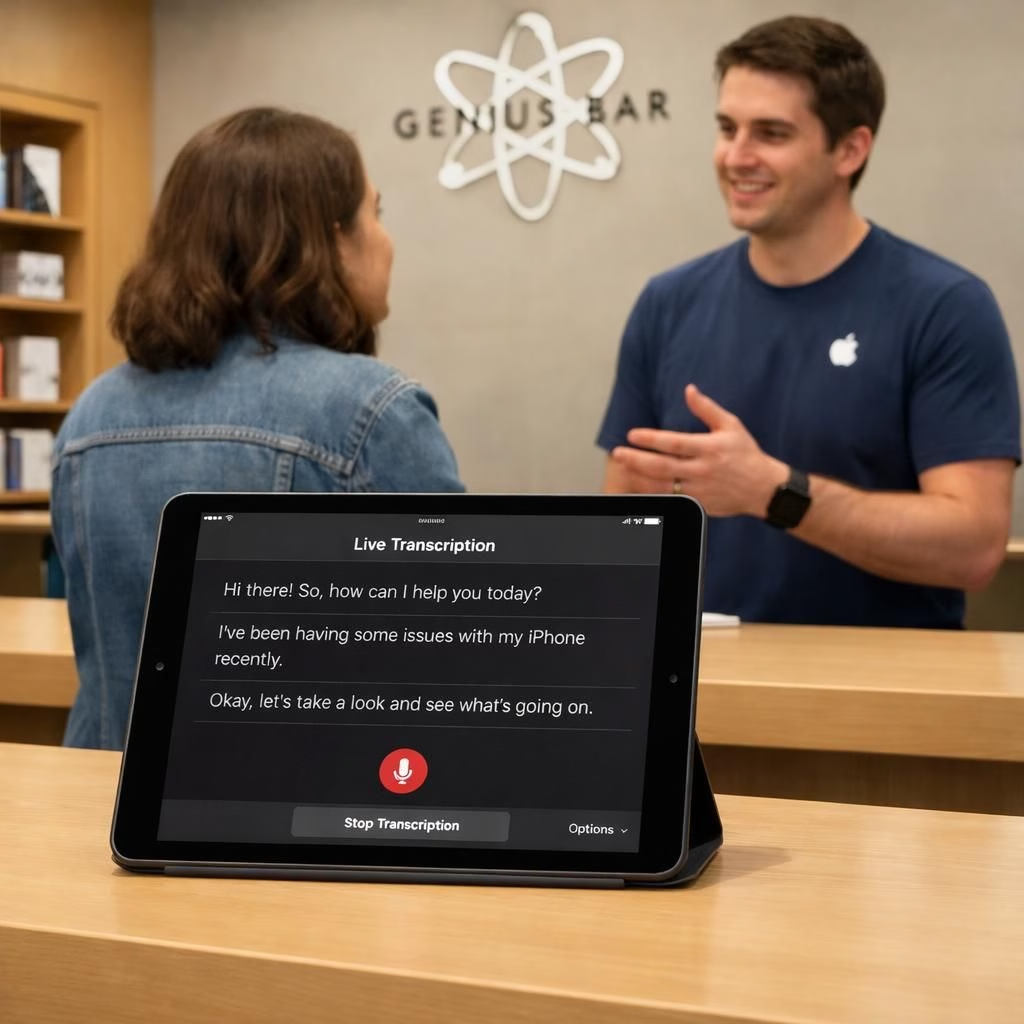
Apple is testing an AI-powered LiveNotes feature that transcribes conversations between Genius Bar staff and customers in select stores. The system is opt-in, requiring consent from both sides, and transcripts land on the employee’s iPad as part of the repair session record—designed to help staff stay focused on the customer rather than jotting down notes.
Bloomberg’s Mark Gurman notes the pilot is limited to stores chosen for the experiment. The transcript is saved to the employee’s iPad as part of the repair session record, creating a reference that doesn’t pull attention away from the customer. The result is a smoother flow during a repair since staff can listen and respond rather than constantly writing.
AI in Action: LiveNotes at the Genius Bar
In practice, this means a quiet shift in the dynamic of the Genius Bar. The AI engine behind LiveNotes captures what is said, assigns timestamps, and preserves context for later review. The opt-in requirement helps ensure consent from both the customer and the staff member. For customers, it can mean greater accuracy when describing issues and a clearer post-appointment summary. For staff, it reduces the cognitive load of note taking, allowing more eye contact and effective troubleshooting.
Why AI, Why LiveNotes: Reframing the Job
The idea is to reframe the job from note taker to problem solver. With LiveNotes you can focus on listening, asking clarifying questions, and showing empathy. The technology acts as a memory aid rather than a surveillance tool, especially when customers opt in. In this setup, AI assists but does not replace human judgment, and LiveNotes helps staff recall details after the appointment without forcing them to rely on memory alone.
What this means for the customer experience
For the customer, consent is central. The opt-in model means participation is voluntary, and customers can request that transcripts stay private or be deleted after a defined period. The system is designed to help with the repair narrative and to produce a cleaner log of what happened during service. The combination of LiveNotes can reduce rework by giving technicians a reliable written record to compare against hardware symptoms.
Implementation Details, Privacy, and Policy Realities
From a policy standpoint, leadership emphasizes opt-in and limited use. Data stay on devices and are not streamed in real time unless consent has been provided. The transcripts are stored locally on the iPad and later treated as part of the service record. The design deliberately avoids broad surveillance and aims to preserve trust between staff and customers. The plan also covers retention windows and deletion options to address privacy concerns, with hard caps on how long transcripts can live in the system.
On the ground, staff receive minimal training for this feature. They learn to explain the opt-in option, reassure customers about privacy, and demonstrate how LiveNotes can help with recall during complex repairs. The AI engine processes speech into searchable text with timestamps, making it easier to gather facts and confirm details. The result is fewer misunderstandings and a faster path to solutions.
Future prospects and practical realities
Publishers, developers, and service teams watch how this approach scales. If the pilot expands, Apple may offer granular controls for customers to tailor what is captured and what remains private. The principle remains simple: let the human listening lead, while the AI-driven LiveNotes maintains a careful, auditable record. The balance between usefulness and privacy will determine adoption across stores, and perhaps beyond the Genius Bar into other service lines.
We invite readers to share their thoughts in the comments. For now, a nod to the original coverage and thanks to the source: Special thanks to Bloomberg’s Mark Gurman for the original reporting. Original Bloomberg article.
Practical steps for customers and staff
- Before your appointment: Review privacy settings and confirm whether LiveNotes transcription will be active during the session.
- During the visit: The staff will present the opt-in option. You can request that transcripts stay private or be deleted after a defined period.
- After the visit: If you prefer, set a retention window or request deletion of the transcript, especially for sensitive issues.
FAQ
- Is the LiveNotes feature optional for every customer?
Yes. Participation requires mutual consent, and customers can opt out at any time during the appointment.
- Where are the transcripts stored?
Transcripts are stored locally on the iPad used during the session and are treated as part of the service record, not streamed in real time without consent.
- Can transcripts be deleted after the appointment?
Yes. The policy provides defined deletion windows, allowing customers to remove or restrict access to their transcripts.
- Will this scale to other Apple service channels?
The pilot is designed to scale, with granular privacy controls that could extend beyond the Genius Bar if adoption proves beneficial.
Conclusion
In short, the LiveNotes pilot signals a careful balance between usefulness and privacy. When customers opt in, staff gain a reliable record to guide repairs, while the human element—listening, questioning, and solving—remains central to the experience. If the approach proves scalable, it could inform broader service workflows while preserving trust.
References
External references to deepen context:
Original source: https://www.macrumors.com/2026/07/19/apple-testing-live-notes-feature-at-genius-bar/