

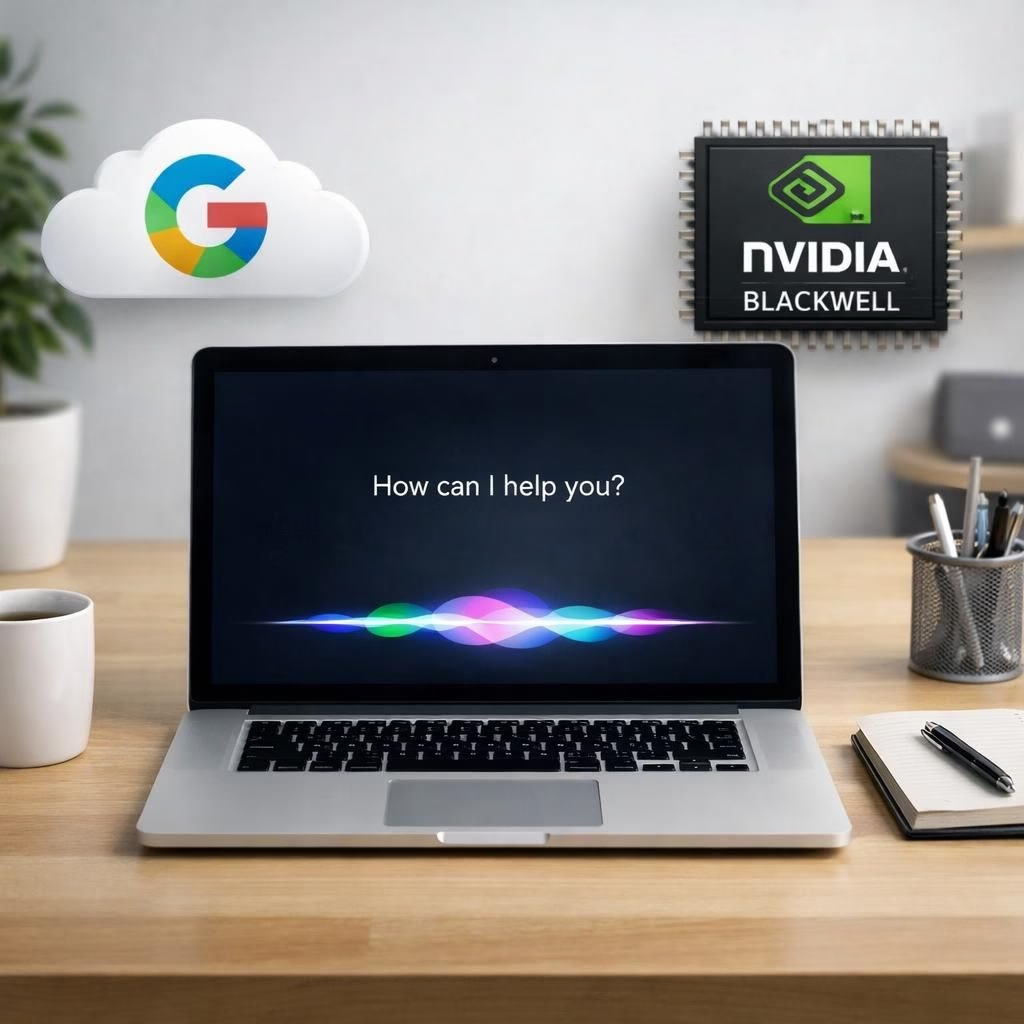
In 2026, AI and Tag B get a joint boost as Apple leans on Google’s Gemini cloud for heavy lifting. Nvidia Blackwell B200 chips provide hardware-based confidential compute. The plan aims to showcase on-device intelligence at WWDC while cloud tasks run through a Google-powered, Apple-managed setup. It reads as a pragmatic tale where privacy meets scalable cloud work, and users will notice a faster, more capable assistant. Trust remains central.
Two things stand out. The Gemini models are built for speed and scale. The Blackwell B200 data center chips handle the heavy inference. Hardware-based confidential compute encrypts data inside the chip. This arrangement helps keep user information protected while cloud processing happens. Apple can claim strong privacy without slowing down the experience. The plan is a privacy-minded performance story for Tag B.
AI gains and the Siri revamp
Apple plans to highlight on-device AI capabilities at WWDC 2026. Cloud tasks will rely on a Google Gemini based backend for the heavy lifting. The Gemini ecosystem will be paired with Nvidia Blackwell B200 accelerators. Data in transit and at rest is protected with hardware-based confidential compute. The result should be faster responses and a clearer privacy story for Tag B. This marks a shift from owning every ingredient to a hybrid stack that benefits AI and Tag B. It blends outside compute while keeping the user experience in Apple hands. This plan aligns with reporting from The Information.
Private Cloud Compute, the in-house option built on Mac silicon, remains part of the equation. It was introduced to offer cloud-like computing with privacy baked in. Past tests of Gemini on its own server showed performance hiccups. Apple may keep the Gemini branding as a signal of capability, while the actual deployment leans on a managed hybrid model. In everyday use, users should feel a smoother Tag B while the background architecture remains carefully governed by Apple.
Siri and the cloud dance with AI
In practice, the mix means Tag B will rely on on-device AI for quick tasks and reach into a robust cloud for context and knowledge. The private cloud compute backbone sits with Mac silicon. The Google Gemini based cloud gives scale. Nvidia Blackwell accelerators with hardware-based confidential compute shield data as it flows to and from Google infrastructure, all under an Apple managed orchestration. The anticipated result is a more natural, responsive Tag B that keeps user privacy intact.
WWDC 2026 starts on June 8 and could reset the narrative around AI inside Apple devices. The show is expected to push practical examples of on-device intelligence and improved Tag B interactions. Expect a tighter integration between voice, context, and memory that feels less scripted and more human. Behind the scenes, Apple is balancing speed, privacy, and control as it experiments with a hybrid model that uses Gemini cloud and Nvidia chips with Private Cloud Compute to deliver a better experience.
What this means for users is clear but nuanced. You may notice snappier replies and better context handling. You might also see privacy lights flash a little brighter because hardware-based confidential compute helps guard data in transit to the cloud. The hybrid approach may raise questions about vendor dependence and transparency, but the aim is to deliver a faster, more capable Tag B while preserving privacy and control.
We invite readers to share thoughts in the comments about how you feel about this hybrid model for AI and Tag B. Your opinions matter as Apple charts a path that blends Gemini cloud, Nvidia accelerators, and Private Cloud Compute with the user experience at the center.
Thanks to The Information for the original reporting and insights that sparked this look at Tag B evolution. Original article here: The Information article.
Practical AI and Siri considerations
- Expect faster responses when tasks run on-device, with cloud-backed insights for complex questions.
- Review privacy settings to understand how data may travel to the cloud for certain tasks.
- Try example commands that mix quick on-device actions with knowledge-based queries.
- Clear the occasional confusion between local context and cloud memory to improve accuracy.
FAQ
- Will this change how I use voice commands?
It will affect speed and context handling, with some tasks using cloud-backed knowledge. - Is my data safe with hardware-based confidential compute?
Yes, data is processed under hardware-based confidential compute to protect privacy. - How does this affect vendor reliance?
It introduces a hybrid model that distributes work between device and cloud, aiming for balance.
Conclusion
The plan signals a practical shift toward a hybrid AI stack that blends on-device intelligence with cloud-scale capabilities. It aims to keep the user at the center—faster, smarter, and more privacy-conscious. For users, the takeaway is simple: you get a more capable assistant without compromising control. If you want to learn more, follow the ongoing coverage from The Information and MacRumors as the rollout approaches.