

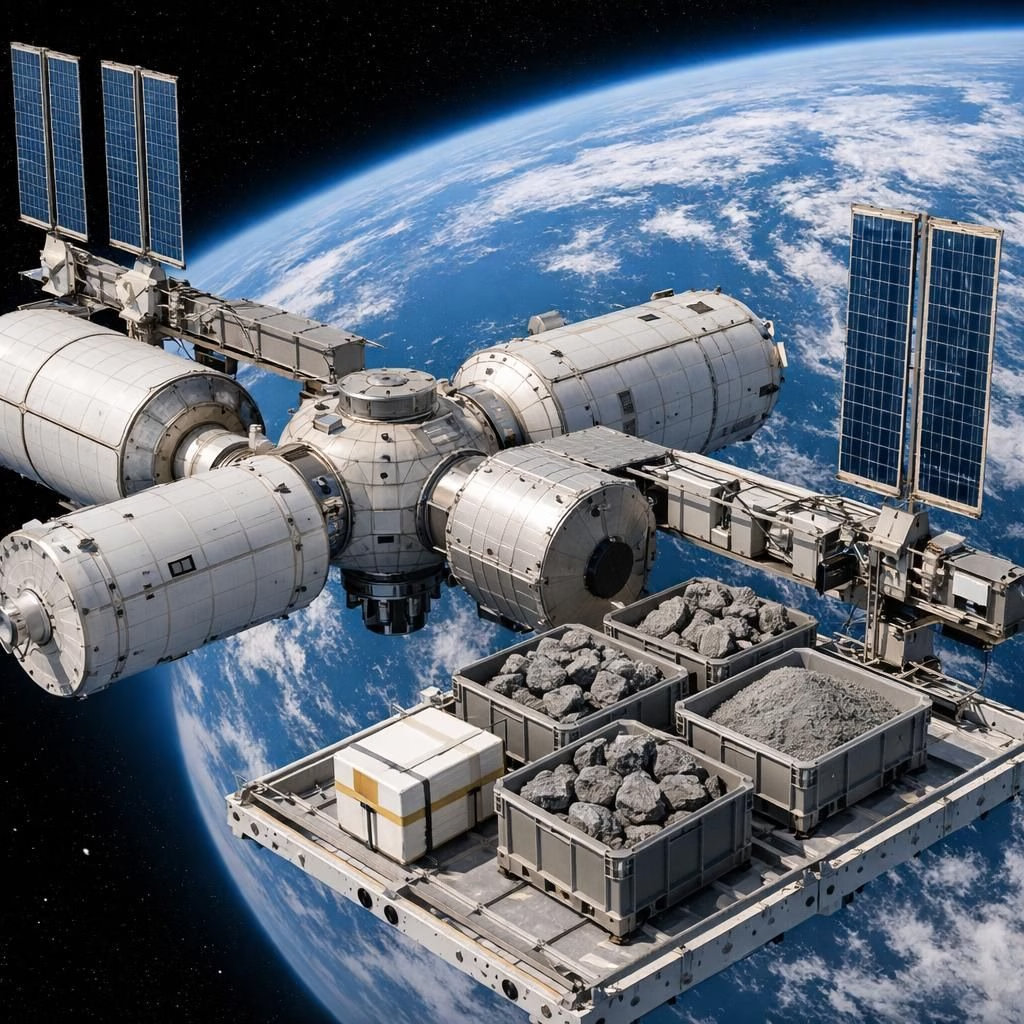
Space living and near Earth ideas have long lingered in sci‑fi magazines and budget spreadsheets alike, but Jeff Bezos has framed them as a serious tomorrow. In a 2023 Lex Fridman interview, he described a future where many people would prefer life near Earth rather than up in orbit, with ambitions to extend human activity beyond a single home world. He suggested that a large population could thrive using space as a factory floor and an energy-rich frontier, rather than being stuck on a shrinking blue marble. In this hopeful forecast, space stations could become self-contained worlds, assembled from lunar or asteroid-derived materials, hosting cities, farms, and thriving industries. The core idea is simple, if you squint: preserve Earth, shift heavy industry off-planet, and unlock a new level of innovation in the extra-atmospheric sandbox.
space living on a practical track: Giant Stations as Friendly Cities in Space
Bezos isn’t selling a sci‑fi dream; he points to practical steps: lower the cost of space travel, harvest space resources, and design modular stations built from lunar and asteroid materials. The idea is to turn space into more than a checkpoint; it could host cities, farms, and universities, with energy and materials flowing more freely than a crowded elevator at 4 p.m. He is quoted as saying, ‘I would love to see a trillion humans living in the solar system.’ The math? A trillion faces to feed, educate, and culture to craft; the solar system becomes a living studio where Mozart and Einstein might stroll between habitats. The plan hinges on space living becoming a production hub, while preserving Earth from heavy industry’s footprint.
Near Earth Ambitions: Why the Planet Remains Our Anchor as We Step Out
Bezos argues that planetary surfaces are simply too small to host the scale he imagines; to achieve this future, giant space stations are essential. The Earth acts as a cherished home base, and the idea is to move energy, materials, and manufacturing off-planet to preserve Earth’s biosphere while expanding human creativity. If we can slash the cost of space travel and tap space resources, near Earth life could bloom with minimal friction. The framing is optimistic: space is not just a frontier; it’s a new neighborhood where life, work, and culture can coexist with Earth’s stewardship guiding the entire enterprise.
From Vision to Practical Steps in 2026
In 2026, many of the steps sound less like fantasy and more like engineering roadmaps: reusable propulsion, in-situ resource utilization, modular habitats, and scalable energy networks. The Bezos framework suggests that cost curves, collaboration, and policy alignment could unlock a pipeline of space-based industries. The idea of a trillion residents remains aspirational, yet the logic of enabling dense, energy-rich habitats—while keeping Earth intact—has gained traction among researchers and entrepreneurs who like big ideas wrapped in near-term milestones. This space living approach is not about escaping Earth; it’s about extending life in a sustainable, well-paced way.
Practical Realities and a Positive Outlook for 2026
Reality check: the path to giant stations and orbital cities is long but not impossible. Engineers are testing modular habitats, robotics, and advanced materials that could grow into scalable ecosystems. The affordability curve matters most, and the lessons from space agencies and private firms suggest that a careful, repeatable series of launches and in-situ resource use could push costs down. Bezos’s emphasis on self-contained worlds is aspirational, yet his framing centers on creative collaboration and sustainable growth rather than conquest. The solar system would become a network of connected habitats, energy grids, and agricultural zones that keep each player focused on efficiency, safety, and energy balance, while Earth remains the cradle and the compass.
As we ponder this near‑term future, what do you think about space living and near Earth expansion? near Earth life could bloom with minimal friction. Share your thoughts in the comments below to keep the conversation lively and constructive. If you found this exploration valuable, a nod to the original material is welcome as well.
Original article attribution: Thank you to Lex Fridman and Jeff Bezos for the inspiration. Original source: Lex Fridman Podcast – Jeff Bezos on Space Living.
References
- Times of India — When Amazon founder Jeff Bezos said he sees a future where most people may not necessarily live on Earth but near Earth
- Lex Fridman Podcast – Jeff Bezos on Space Living