

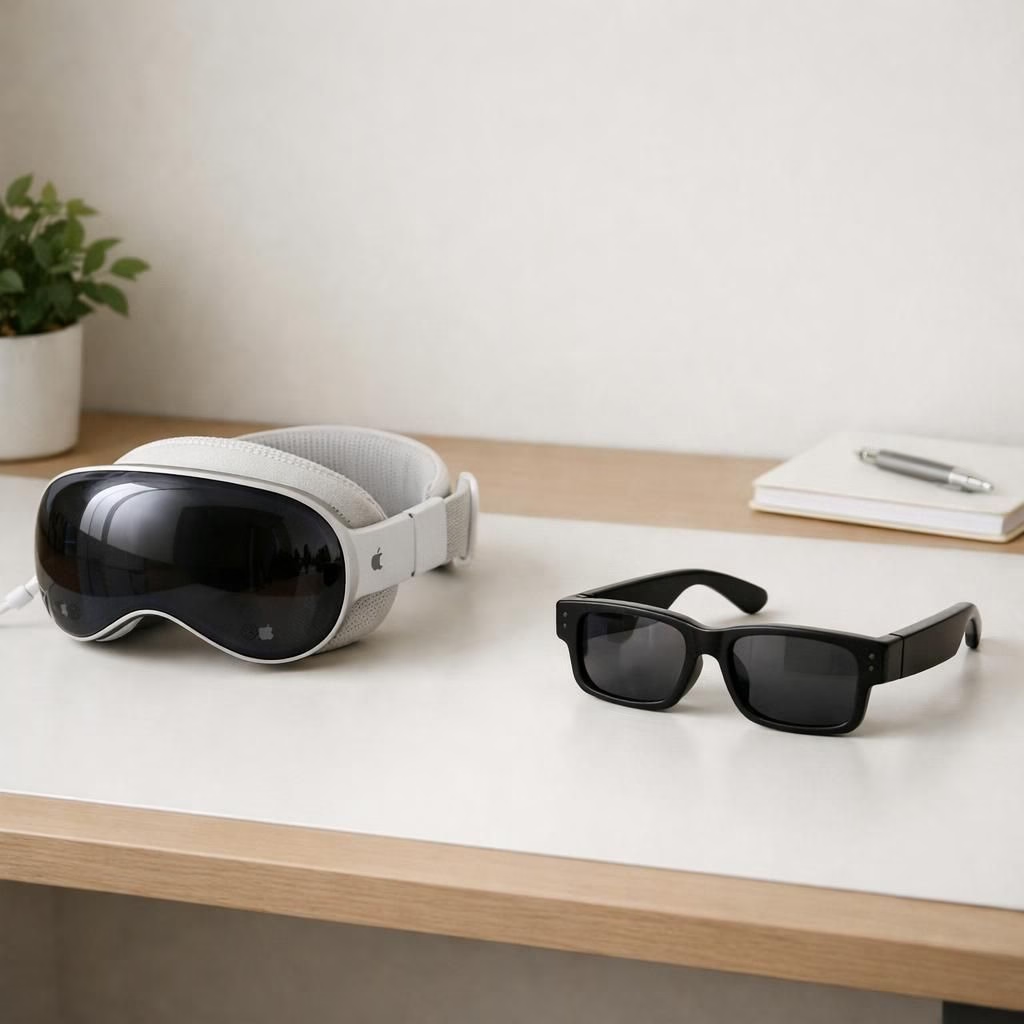
In 2026, incoming Apple CEO John Ternus is signaling a bold revision of Apple Vision Pro and smart glasses, consolidating toward two mass-market bets that aim for broad appeal instead of boutique bravado. The move trims a sprawling roadmap into a simpler, more focused plan: an AI smart glasses lineup designed to rival Meta’s Ray-Bans, and a display-equipped AR glasses set that uses optical waveguides to project content in front of your eyes. The shift is as much about speed as about clarity, and it comes with a wink for anyone who has been following the rumor mill since the days of seven product lineups and ambitious demos.
According to well-known Apple watcher Ming-Chi Kuo, the two-product plan has supplanted a broader slate. The two products in development are the AI smart glasses and the display AR glasses with optical waveguides. Kuo notes that the broader Vision Pro family has been pared back, and the long-gestating Vision Air appears to have faded away. In his view, the Vision Pro line is not only reframed; it might also be considered a legacy chapter rather than a continuing saga. The practical implication is clear: Apple is choosing to pour resources into two entries that could reach a wider audience more quickly, rather than chasing multiple specialized skins of the same concept. The emphasis, in short, is mass appeal with a tech backbone that can be explained in a coffee-break pitch: AI brains in glasses and a display overlay available to more people than ever before. The two-pronged strategy makes the most of what Apple does best—hardware polish paired with a healthy dose of software smarts—and it aims to keep Apple Vision Pro and smart glasses in the same conversation, but with sharper edges and a clearer target audience.
Some observers praised this lean approach. Ming-Chi Kuo argued that removing the overstuffed roadmap was the right call because it shifts resources toward something with greater mass-market potential rather than maintaining a sprawling product family. The lesson here is simple and somewhat cheeky: the fewer gizmos, the fewer excuses for delays. The two remaining products—Apple Vision Pro somewhere in the orbit of smart glasses and the display AR glasses using optical waveguides—are engineered to deliver practical value in everyday life, not just in a lab demo. Kuo noted that the original seven-product lineup is no longer a useful reference since the strategic pivot, which makes the two-product plan easier to explain to consumers, developers, and even the Wall Street crowd. The core message is that clarity often beats complexity when you want a product category to actually take root in households and pockets alike.
From a technical perspective, the plan hinges on two different but complementary approaches. The AI smart glasses are expected to arrive in 2027 and are designed to be a lightweight, socially acceptable form factor that can run on-device AI features and cloud-assisted services. The goal is to offer information on tap, contextual cues, and light assistance without sacrificing style or comfort. On the other hand, the display-equipped AR glasses that use optical waveguides are slated for a later horizon, not before 2029 at the earliest. Optical waveguides pair a micro-display with a guiding structure that makes virtual images appear to sit at a natural distance, while the lenses stay transparent so real-world views aren’t lost. The user’s eyes perceive a seamless overlay of digital content, whether they’re checking a map, reviewing a document, or catching a quick notification as they walk down a street. The separation of timelines here is deliberate: AI glasses target near-term adoption and practicality, while AR glasses with waveguides aim for a different kind of long-tail success that benefits from new display innovations and software ecosystems.
Bloomberg’s Mark Gurman has added color to the narrative, noting that Vision Air was discontinued in 2025 and that the standalone Vision Pro line may be in limbo. Gurman also predicts a Vision Pro 2 being tested but describes the category as on ice for the moment. The more speculative piece is a cheaper, lighter Vision Pro device that could surface later, but his sources suggest that such a device would not likely ship before late 2028 or 2029. In short, the company is not abandoning the concept; it is rethinking the balance of price, form factor, and use case to find a sustainable market. The leadership change looms in the background as John Ternus is slated to become Apple’s CEO on September 1, 2026, with Tim Cook continuing as Executive Chairman. This transition period might affect how aggressively Apple pushes the Vision Pro and smart glasses, but the two-product focus seems designed to endure beyond any one executive timeline.
Apple Vision Pro pivot: two-pronged smart glasses strategy
Apple Vision Pro pivot: two-pronged smart glasses strategy
At the core, Apple Vision Pro and smart glasses form the heart of a redesigned product family that emphasizes practicality and everyday use. The AI smart glasses are pitched as an always-on assistant, capable of understanding context, answering questions, and providing quick insights without forcing the user to pull out a phone. This is not a niche appliance; it is the kind of device that could sit comfortably on a desk, a coffee table, or a commuter’s face, while slipping in and out of pocketable convenience. The messaging around Apple Vision Pro and smart glasses stays clear: the two devices together should deliver a coherent software and hardware experience, with AI features powering the glasses that will compete with the convenience of Meta’s Ray-Bans and similar offerings. The goal is to make the concept approachable, not intimidating, for a broad audience. In practice this means better integration with iOS, smoother voice interactions, and a more intuitive interface that emphasizes what people actually do with wearable tech in daily life. The AI glasses, in particular, are aimed at being practical, reliable, and easy to adopt, rather than a high-end gadget that requires a PhD to operate. Apple Vision Pro and smart glasses, when paired, should reduce friction and increase the kind of ubiquitous, helpful computing that underpins the firm’s hardware strategy.
Smart glasses: practical everyday wear
smart glasses: practical everyday wear
The second pillar of the plan is the display AR glasses with optical waveguides. When paired with smart glasses technology, these devices promise a more immersive AR experience while preserving transparency of the real world. The waveguide approach has long been a preferred method for overlaying digital content without heavy optics, and Apple plans to leverage this for crisp imagery, minimal weight, and a comfortable fit. The development timeline is conservative for good reason; devices must perform well in real life—on sidewalks, in offices, and during travel.
Apple Vision Pro outlook in a lean era
The timing here is deliberate: AI glasses aim for near-term practicality, while waveguide AR glasses target a longer horizon with stronger display innovations and software ecosystems. This lean approach contrasts with years of expansive roadmaps and big demos, but it’s designed to build real-world traction rather than raise expectations too early. The leadership transition to John Ternus in 2026 adds a new dimension, yet the underlying strategy remains: fewer, better products with tighter integration and clearer use cases.
Original article: Thank you to Bloomberg and Ming-Chi Kuo for their insightful reporting on Apple’s evolving strategy. Original article reference: Bloomberg opinion and reporting. For more background and context, you may also explore other analyses from industry sources and tech analysts who have followed this story closely.
Thank you for reading. If you have thoughts, insights, or friendly critiques about Apple Vision Pro and smart glasses and how they might shape daily life in 2026 and beyond, please share your thoughts in the comments.
Frequently asked questions
- Q: When are the AI smart glasses expected to ship? A: Kuo’s timeline points to 2027, with caveats tied to development pace and market readiness.
- Q: Will there be a Vision Pro 2 or a cheaper variant? A: Gurman describes a Vision Pro 2 in testing, but the broader category remains “on ice” for now; a lighter model could appear around late 2028–2029.
- Q: How should consumers think about the two-product approach? A: Apple aims for mass-market appeal by combining practical AI glasses with AR glasses that use optical waveguides, tying hardware to a cohesive software ecosystem.
References
- MacRumors: Kuo Vision Pro successors nixed
- Apple Vision Pro overview
- Bloomberg coverage of Vision Pro strategy